Estimated reading time: 12 minutes
The Hidden Cost of an Ageing Mechanical Services Switchboard
An older mechanical services switchboard may continue operating for years, but the real cost of ageing is often found in the maintenance, fault finding, obsolete controls and undocumented changes accumulating behind the doors.
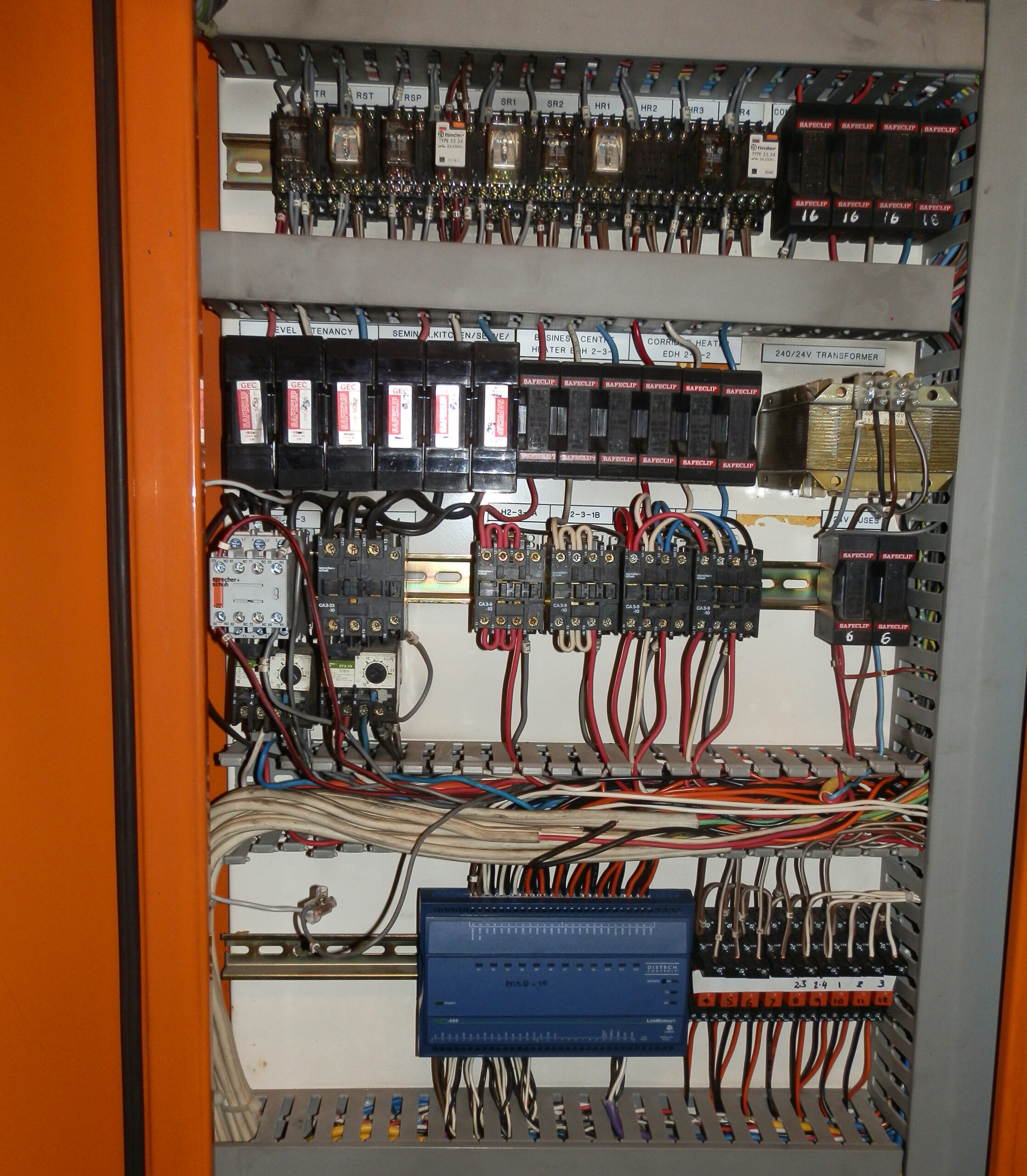
Mechanical Services Switchboards rarely fail all at once. More often, they deteriorate progressively. A relay fails and is replaced. A new fan is added. A control circuit is modified. A spare terminal is used because it is convenient. A circuit breaker is added and handwritten onto the schedule. A BMS interface is changed. A contactor is replaced with whatever will fit the available space. Individually, none of these changes necessarily represents a major problem.
Over twenty or thirty years, however, the switchboard can become very different from the board originally designed, manufactured and documented. The board may still operate every day, but increasingly it becomes more difficult to maintain, more difficult to understand and more expensive to modify. That is where the hidden cost begins.
Age Does Not Automatically Mean Replacement
An ageing Mechanical Services Switchboard does not necessarily need to be replaced. Many older boards were well constructed and may have a serviceable enclosure, chassis, busbars and general arrangement that can continue to be used. Depending on condition, refurbishment may involve replacing obsolete control equipment, contactors, relays, circuit protection, terminals, control wiring or other components while retaining suitable parts of the existing switchboard.
In other cases, the condition of the board, available space, electrical safety, accessibility or extent of previous modifications may make replacement the better long-term option. The important point is that the decision should be based on the actual condition and future requirements of the switchboard — not simply its age. The difficulty is that doing nothing also has a cost.
The False Economy of Deferring a Mechanical Services Switchboard Upgrade
A switchboard can continue operating while becoming progressively more expensive to own. This cost is rarely recorded against the switchboard itself.
Instead, it appears as another electrical callout, another HVAC fault, additional labour for fault finding, difficulty obtaining replacement parts, another temporary modification or a longer shutdown while somebody works out what a previous contractor has changed.
Eventually, relatively simple problems can become expensive because understanding the board takes longer than repairing the fault. This is particularly common with Mechanical Services Switchboards because they contain much more than electrical distribution.
They frequently include HVAC control circuits, fan interlocks, pumps, dampers, BMS interfaces, fire-system interfaces, time clocks, safeties, relays, contactors and plant operating sequences accumulated over many years.
The electrical drawings may tell part of the story. The switchboard often tells another.
Obsolete Control Equipment Becomes a Maintenance Problem
One of the first problems with an ageing MSSB is often not the switchboard enclosure itself, but the equipment inside it. Control relays, timers, contactors, overloads and other devices eventually become obsolete.
Finding the same component can become difficult, and even when a replacement is available, the physical dimensions, terminal arrangement, coil voltage or mounting arrangement may be different.
Something that was once a straightforward relay replacement can therefore become a small modification. That may mean modifying wiring, changing relay bases, installing additional terminals or finding space for a modern equivalent. Over time these small changes accumulate.
Relays themselves are mechanical devices. Contacts operate thousands or potentially millions of times during their service life. Contacts can deteriorate or burn, coils can fail and relay bases can loosen or wear after repeated replacement.
Mechanical-services controls can make this particularly noticeable because some relays remain energised for very long periods. A common example is the fire-mode interface within an MSSB.
Depending on the design, a relay may be continuously energised from the fire system, with loss of that signal causing the mechanical plant to move into its required fire operating condition. That relay can remain energised year after year.
Eventually the relay, its contacts or even the relay base may become another ageing component within an otherwise operating system.
The Drawings Slowly Stop Matching the Switchboard
Perhaps one of the biggest hidden maintenance costs is documentation.
Mechanical Services Switchboards are modified throughout the life of a building. Tenants change. Air-conditioning systems are altered. Fans are replaced. VSDs are installed. BMS controls are upgraded. New equipment is added. ire interfaces are changed.
Small control modifications are made to solve operational problems.
Unfortunately, the schematic drawings are not always updated each time work is completed. Initially, the difference may be minor. After many years, the drawings can become unreliable. Eventually they may disappear completely.
The result becomes apparent when a different electrician attends a breakdown.
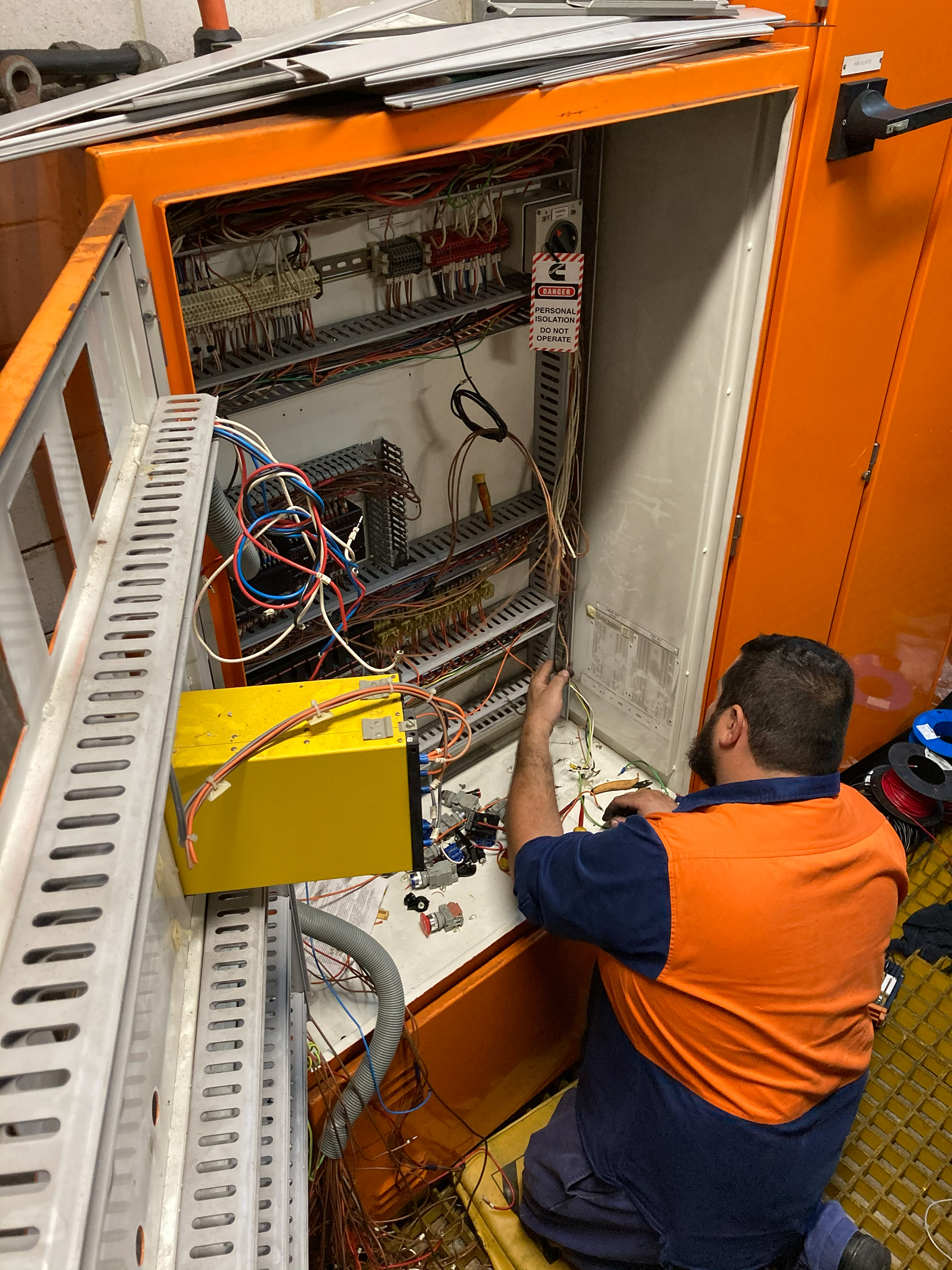
Instead of following an accurate schematic, the technician may have to trace control wiring physically through the board to understand what operates what. The cost of the repair is no longer just the failed component.
It is the time required to reverse-engineer the control circuit before the repair can even begin. The more complicated the mechanical system, the greater that cost can become.
Small Modifications Eventually Create Disorder
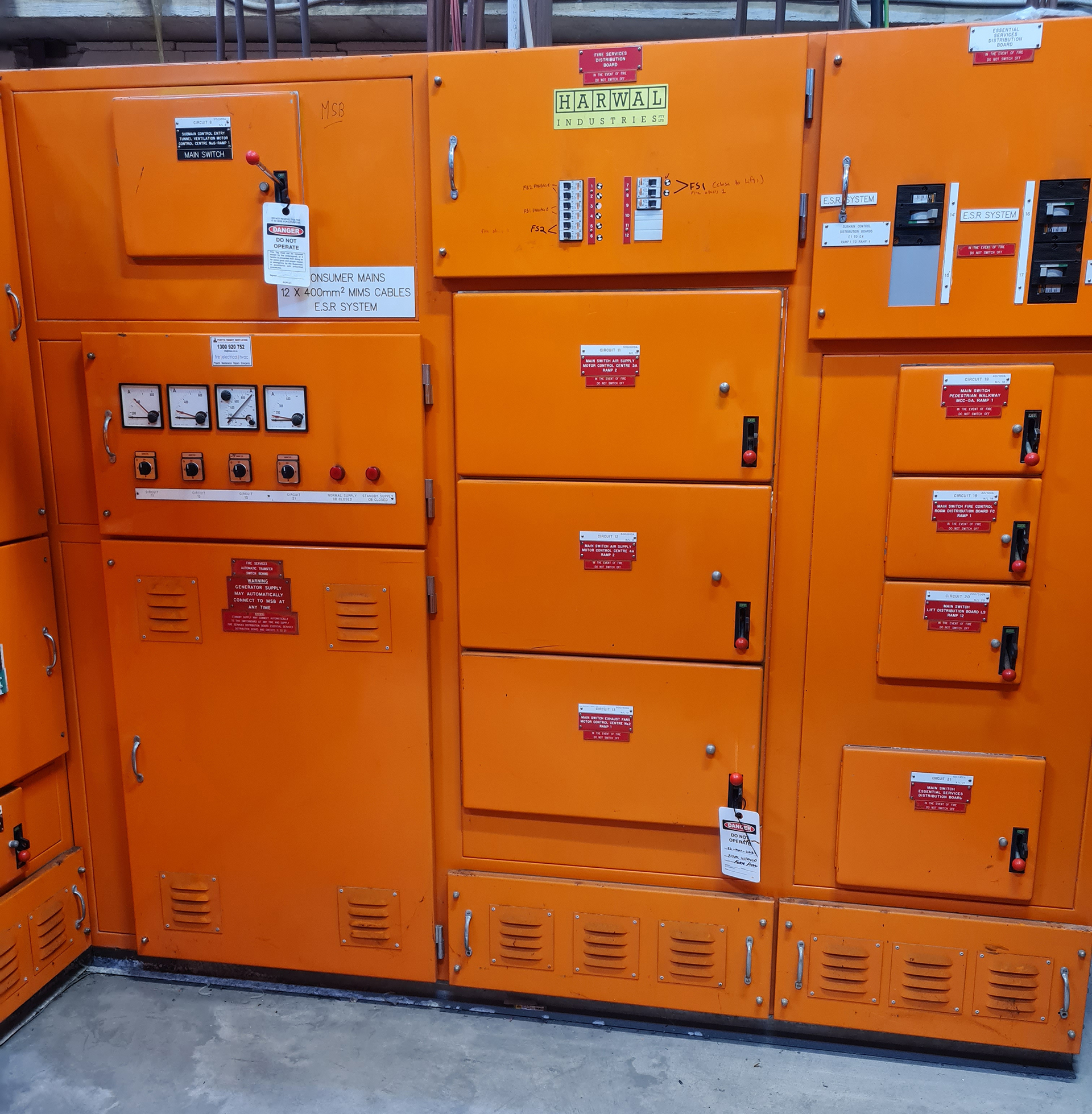
Switchboards generally begin their life in an organised condition. Circuit breakers are numbered. Neutral and earth bars follow a logical sequence. Terminals are labelled. Control wiring runs through duct. Schedules correspond with the installed circuits. Years of modifications can gradually undo that order.
A new circuit may be added and handwritten onto an existing breaker schedule. A spare neutral or earth terminal is used because it is physically convenient rather than numerically sequential.
Later another technician assumes the original sequence is still correct. Spare terminals disappear.
Conductors may eventually be doubled into terminals because no convenient position remains. Numbering and identification become inconsistent. Cable duct covers are removed for a modification and never replaced.
Over time, building wire that was once contained neatly within wiring duct becomes exposed throughout the switchboard. The board becomes increasingly difficult to visually inspect and increasingly difficult to work on.
None of these issues alone necessarily means the switchboard has reached the end of its life. Together, however, they tell a story about how maintainable the switchboard is becoming.
Physical Deterioration Is Often Gradual
The enclosure itself also ages.
Switchboard doors are opened thousands of times during the life of the equipment. Hinges wear.
Doors are occasionally leaned on, used to support tools or subjected to forces they were never designed to carry.
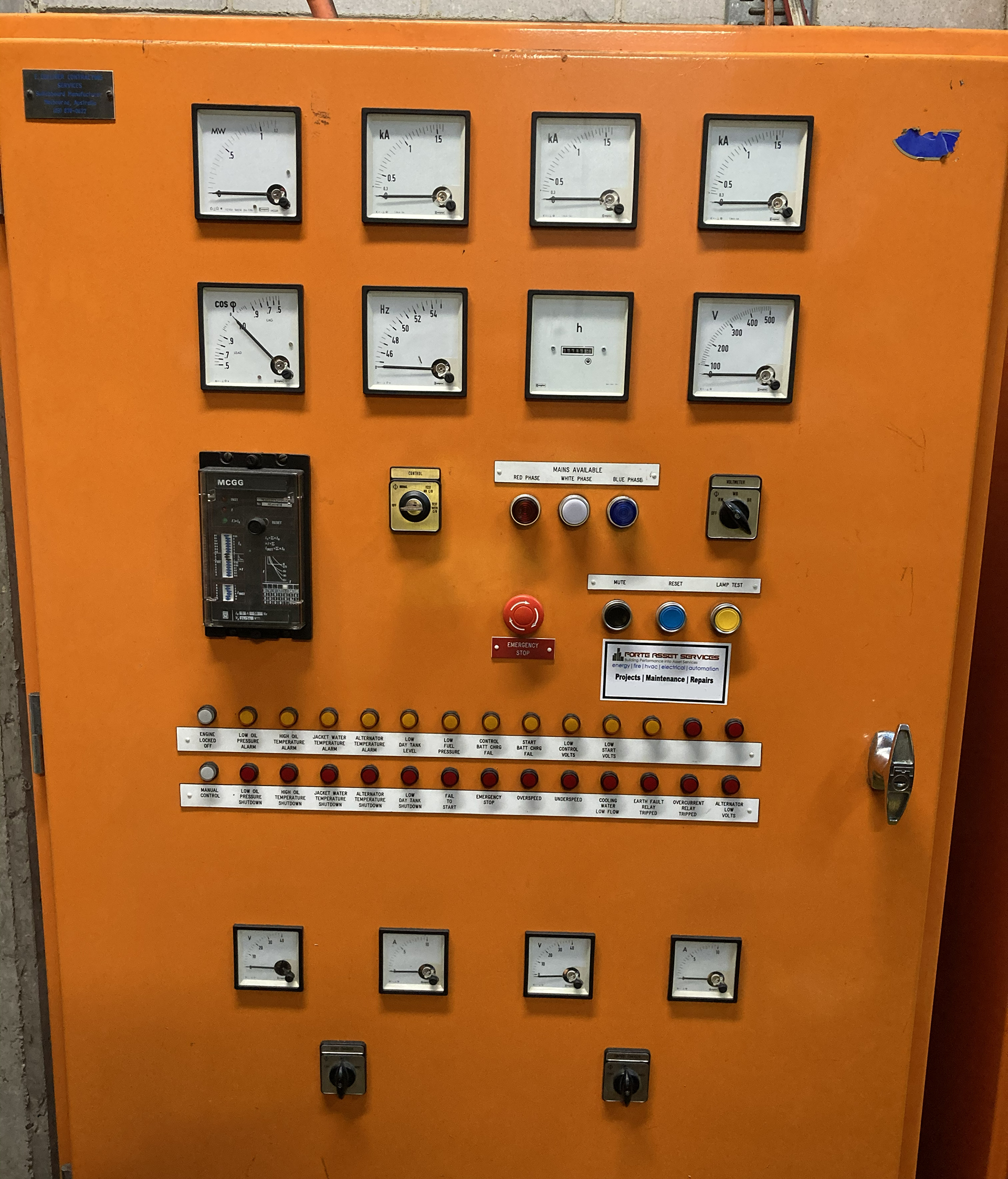
Eventually doors can sag or distort and may no longer close or latch correctly. Indicator lamps fail and are not always replaced. Labels fall off. Engraving becomes unreadable. Panel covers disappear. Internal duct covers are lost.
What was once a tidy and understandable control panel gradually becomes harder to interpret. Insulating materials also age.
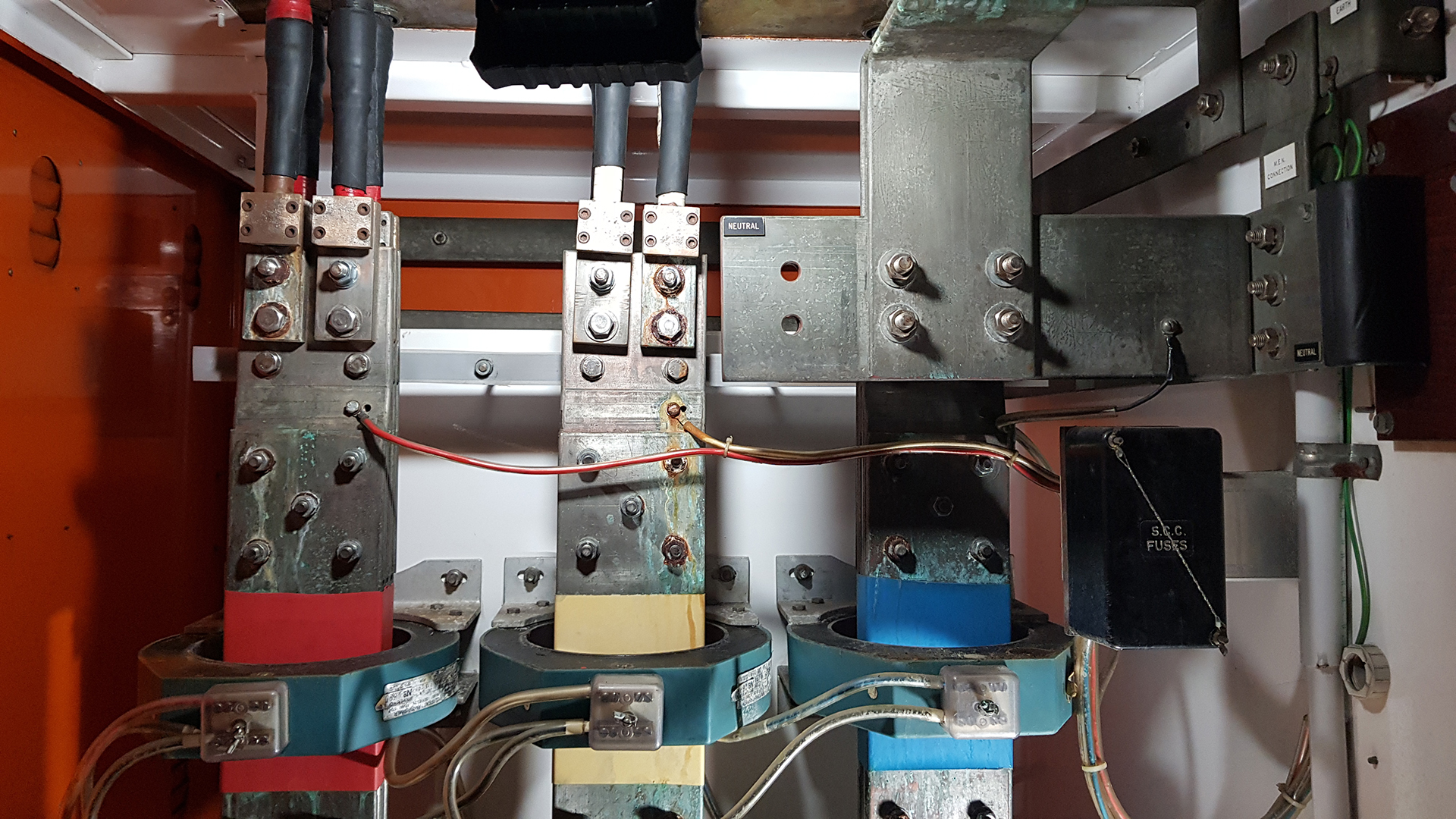
Older insulation, terminal barriers and insulating materials around chassis and busbar assemblies can become brittle with temperature, age and repeated disturbance.
Again, none of these conditions necessarily means immediate replacement is required.
They do mean the board deserves closer assessment rather than simply waiting for the next failure.
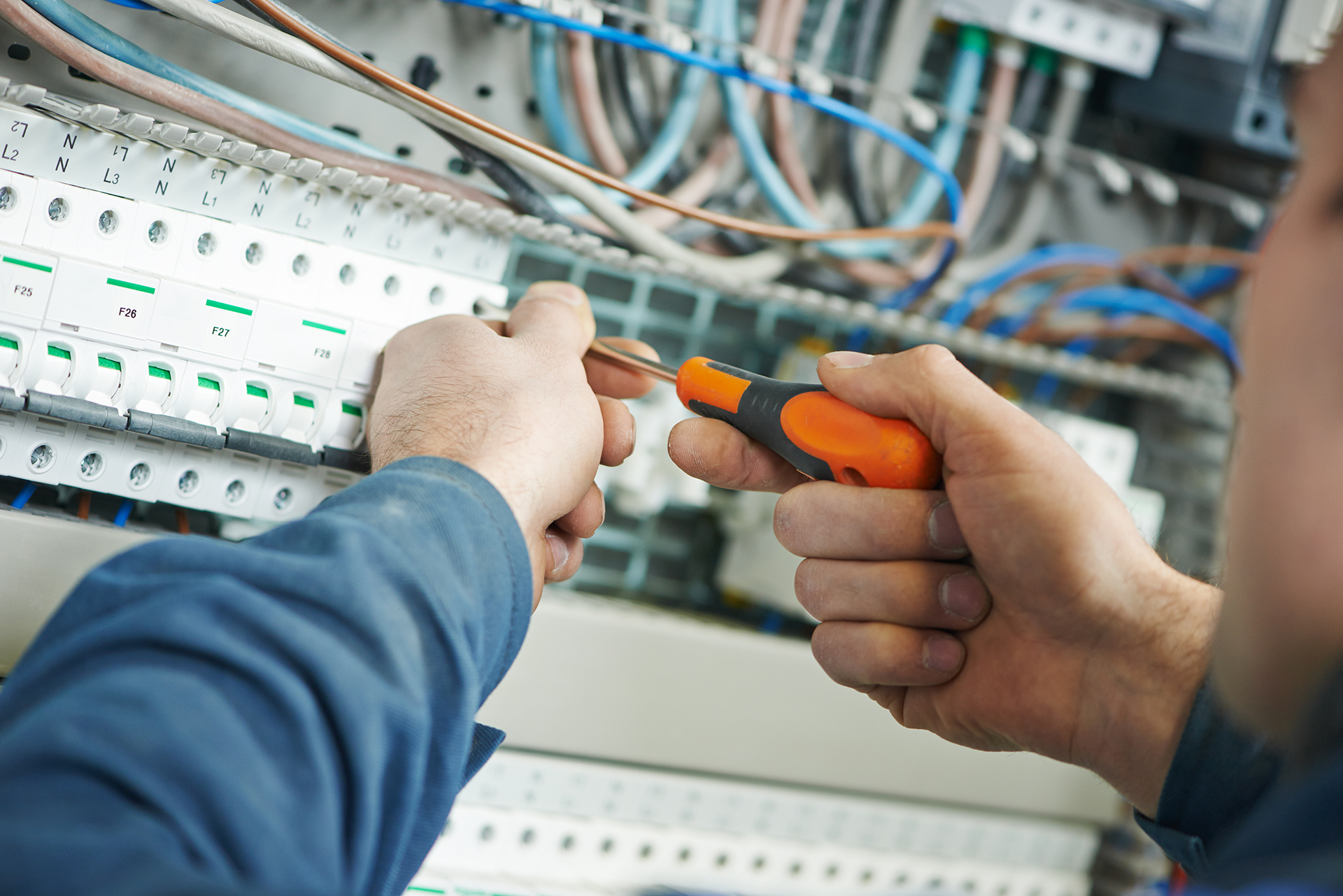
Temporary Repairs Have a Habit of Becoming Permanent
During a breakdown, restoring service is understandably the priority. A building may have lost ventilation. A pump may have stopped. Cooling may be unavailable. A critical fan may need to operate.The quickest safe solution may therefore involve a temporary control modification or a replacement component that is not identical to the original.
The problem occurs when the temporary solution is never revisited. Years later another temporary repair is added beside it. Then another. Eventually nobody remembers which modification was temporary and which formed part of the intended control strategy.
This is particularly important where the MSSB interfaces with the BMS, fire alarm system or other building services. A circuit may still operate, but that does not necessarily mean it operates as originally intended.
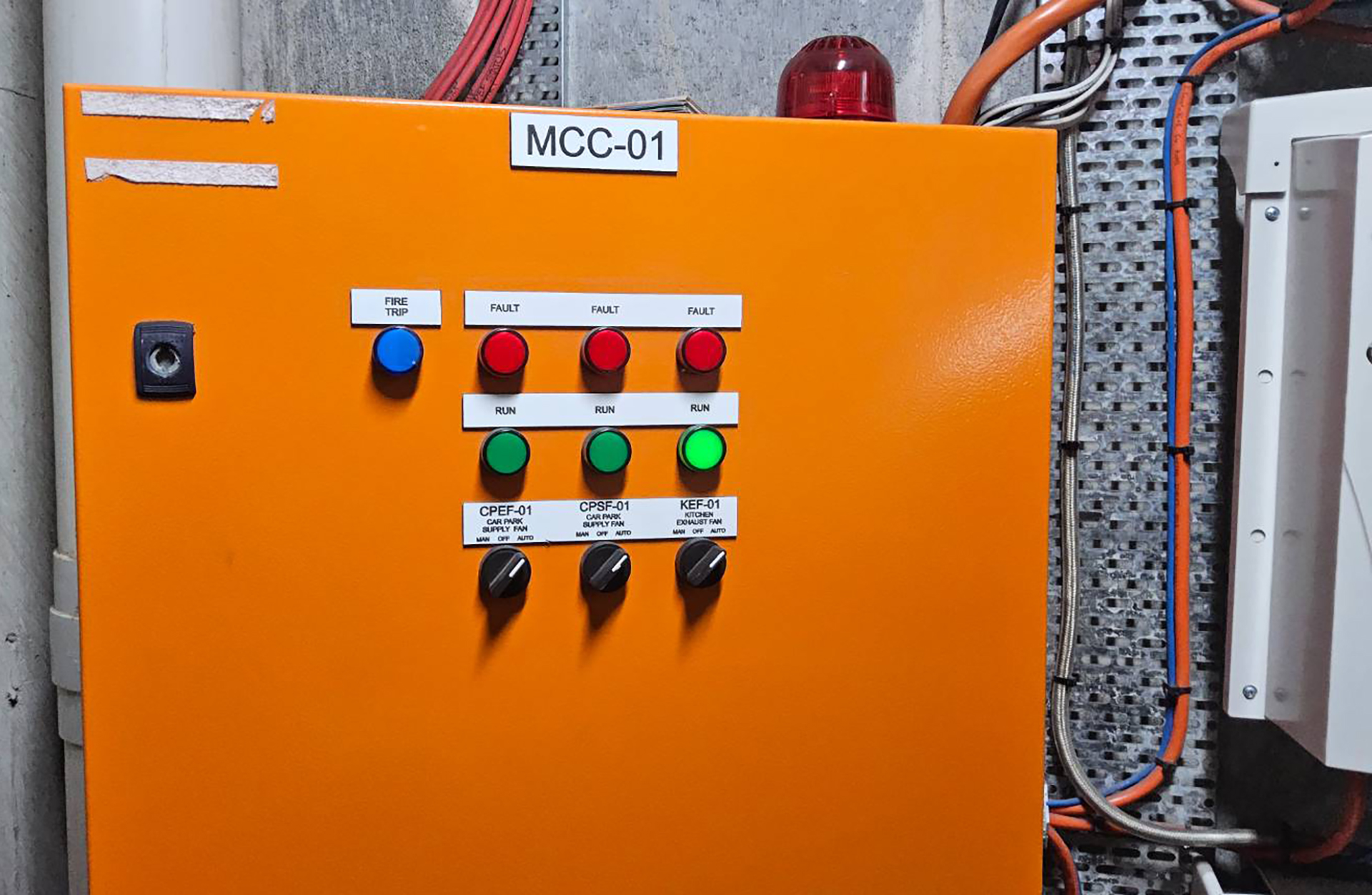
Indicator Lamps Are More Important Than They Look
Failed lamps and indication devices are often treated as minor maintenance items. They are inexpensive and the associated plant may continue running without them. But indicators are there for a reason.
They provide immediate information about equipment status, fault conditions, control modes and sometimes fire-system operation.
When lamps progressively fail and are not replaced, technicians lose one of the simplest diagnostic tools available to them. A board full of failed indicators also says something about the broader maintenance condition of the switchboard. It suggests that small defects are being accepted rather than corrected. That approach tends to compound with age.
The Cost Often Appears Somewhere Else
One reason ageing MSSBs remain overlooked is that their cost rarely appears on a single line in the maintenance budget. A failed relay might be charged against an air-conditioning breakdown. A contactor replacement might be recorded against the fan it operates.
Three hours tracing an undocumented control circuit may simply appear as electrical labour. A BMS technician may spend additional time determining why an interlock is not functioning.
A mechanical contractor may attend before discovering the fault is actually within the switchboard controls. Each individual invoice looks relatively small. Collectively, they can represent a significant ongoing cost caused by an ageing and increasingly difficult-to-maintain control system.
Refurbishment Can Restore Order as Well as Equipment
A well-planned MSSB refurbishment is therefore not simply about replacing old circuit breakers or installing new contactors. It provides an opportunity to restore the logic and maintainability of the switchboard.
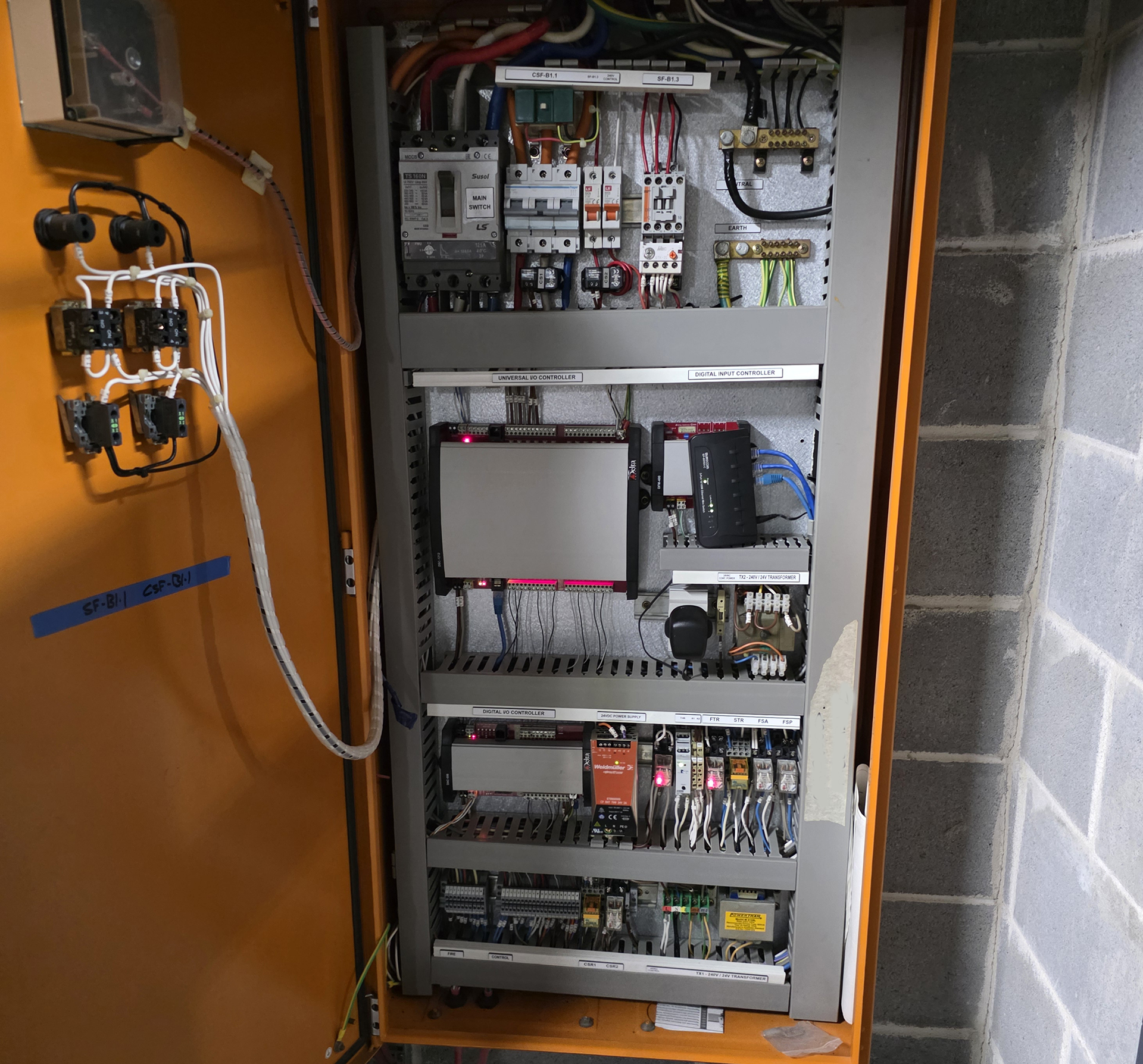
That may include reviewing the control philosophy, replacing obsolete equipment, reorganising terminals, correcting labelling, reinstating wiring duct, replacing failed indication, reviewing fire and BMS interfaces and documenting how the board actually operates. Importantly, the documentation should reflect the completed board.
Updated schematics, breaker schedules, terminal numbering and control information can be just as valuable as the physical equipment being replaced. The next electrician should not have to reverse-engineer the switchboard to understand it.
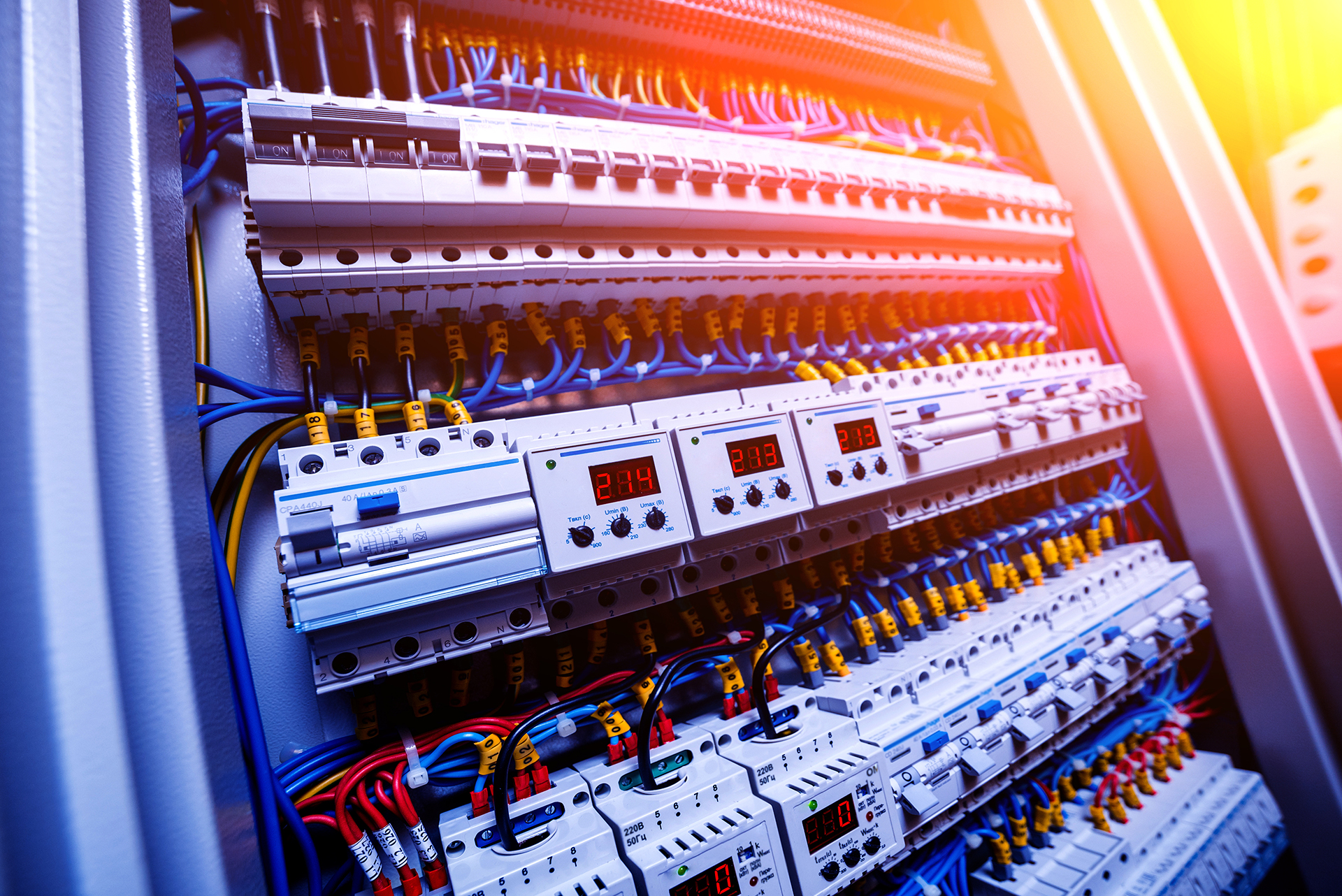
Refurbish, Upgrade or Replace?
There is no universal age at which a Mechanical Services Switchboard should automatically be replaced. Some older boards remain excellent candidates for refurbishment.
Others have been modified so extensively that continued alteration no longer makes financial or technical sense.
The decision should consider the condition of the enclosure and chassis, availability of replacement equipment, control-system obsolescence, electrical protection, internal wiring, documentation, available space, future plant changes and the expected remaining life of the building services connected to it.
For some buildings, a staged approach may also make sense. Obsolete control equipment can be replaced first. Documentation can be reconstructed. BMS interfaces can be improved. Sections of the board can then be upgraded progressively as plant is replaced or capital budgets become available.
The objective should not be to replace an old switchboard because it is old. The objective is to avoid carrying increasingly expensive maintenance problems forward simply because the switchboard has not completely failed yet.
An Ageing MSSB Is Often a Maintenance Problem Before It Becomes an Electrical Failure
The most expensive stage in the life of an ageing Mechanical Services Switchboard is not necessarily the day it fails. It can be the years beforehand.
Repeated callouts. Obsolete components. Burnt relay contacts. Worn relay bases. Missing drawings. Handwritten schedules. Unidentified modifications. Failed indication. Congested wiring. Lost duct covers. Doors that no longer close correctly.
And technicians spending increasing amounts of time trying to understand a control system that has evolved over decades. A switchboard can continue operating throughout all of this.
That does not necessarily mean it is economical to keep maintaining it in the same way. A condition assessment can establish what remains serviceable, what should be refurbished, what has become obsolete and whether staged upgrading or complete replacement represents the better long-term outcome.
For commercial buildings, that assessment can often identify opportunities to restore reliability and maintainability long before the switchboard becomes an emergency project.
Mechanical Services Switchboard Upgrades & Refurbishments
WR8Tech assesses, refurbishes, upgrades and replaces Mechanical Services Switchboards as part of broader HVAC, mechanical-electrical and building automation works.
Our approach is based on understanding the existing board and connected mechanical systems first — retaining serviceable infrastructure where appropriate and replacing equipment where condition, obsolescence, safety, future requirements or maintainability justify it.