
Unsupervised Building Monitoring Strategies

Unsupervised Building Monitoring Strategies

Explore the practical monitoring strategies, smart technologies and Building Management Systems that enable commercial buildings to operate efficiently with reduced on-site supervision, improving asset performance, energy management, contractor response and operational visibility.

Unsupervised Building Monitoring Strategies

How Building Management Systems, Smart Sensors, Automation and Operational Intelligence Work Together to Reduce the Need for Permanent On-Site Supervision

The concept of an unsupervised building often creates the impression that nobody is managing the property. In reality, the opposite is true.

An unsupervised building relies on technology to perform many of the routine observation and reporting tasks traditionally undertaken by a building manager, caretaker or facilities supervisor. Building Management Systems (BMS), smart sensors, people counters, energy meters, lighting controls, access control systems, and cloud-based monitoring platforms continuously collect data from the building and present it to facility managers, contractors and landlords in real time.

The objective is not to remove people from the process. The objective is to ensure human expertise is directed where it adds the greatest value while technology performs repetitive monitoring tasks twenty-four hours a day.
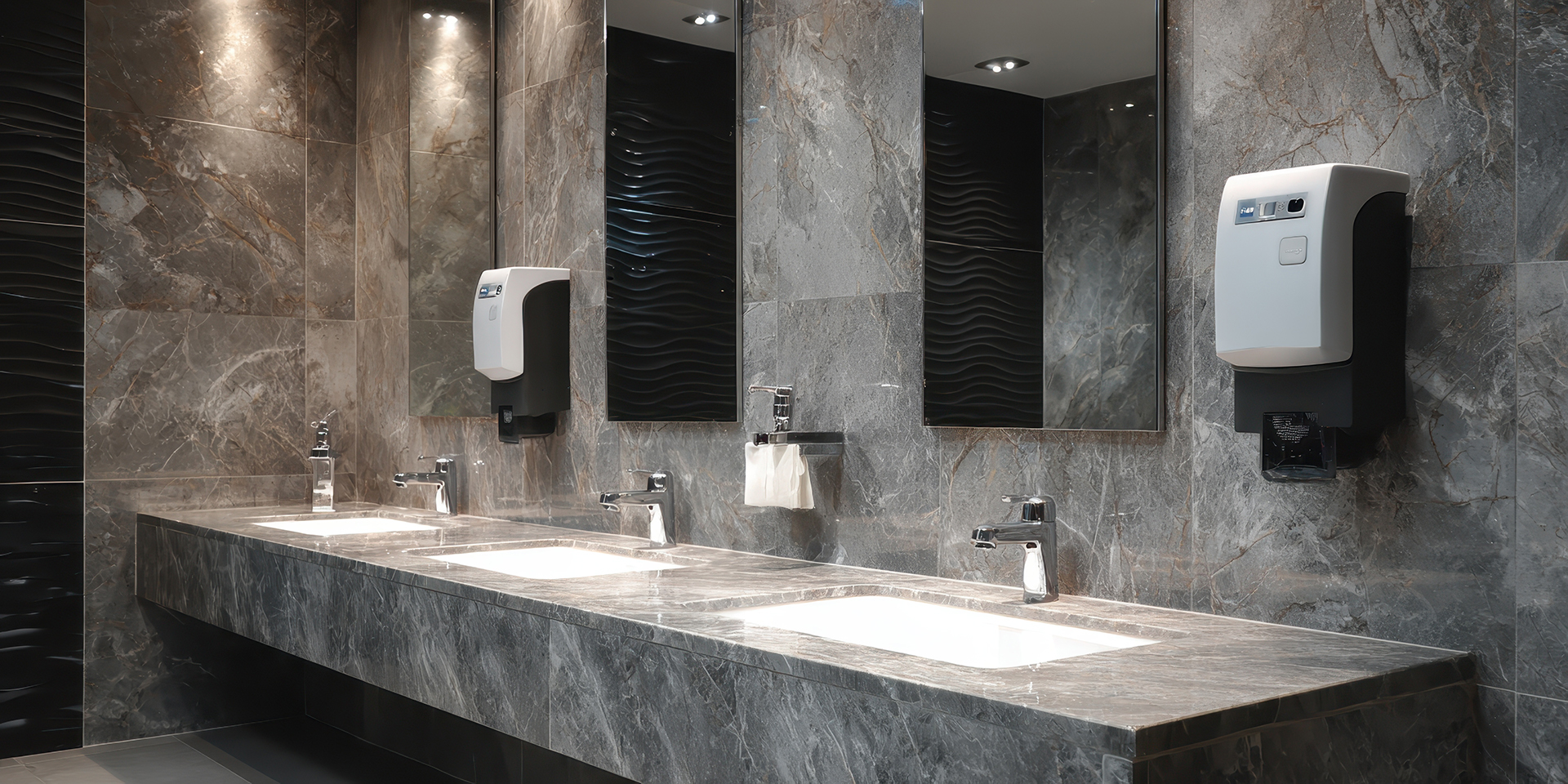
Unsupervised Buildings – Smart Bathroom Maintenance - 

A premium commercial bathroom featuring elegant finishes, modern handwash basins, polished stone benchtops, large mirrors, designer lighting, and high-end fixtures. The space is immaculately presented, reflecting the standards expected within a premium office tower, shopping centre, hotel, or public facility.

Subtle building technology elements are integrated throughout the image, representing an intelligent bathroom maintenance strategy within an unsupervised building environment. Near the exit and handwashing area, customer satisfaction buttons allow visitors to provide instant feedback by selecting "Satisfied", "Needs Attention", or "Not Satisfied". Occupancy sensors and people-counting technology discreetly monitor bathroom usage, while digital overlays display real-time cleaning metrics, occupancy trends, service requests, and maintenance alerts.

The image demonstrates how Building Management Systems (BMS), smart sensors, and remote monitoring platforms can improve cleaning response times and maintain high presentation standards without requiring constant on-site supervision. Data collected from patron feedback and occupancy levels is automatically analysed, triggering maintenance alerts when cleaning attention is required.

Representative of modern commercial buildings across Sydney, Melbourne, Canberra, Brisbane, Adelaide, and Perth, the image highlights the role of automation, analytics, and smart building technology in delivering cleaner amenities, improved occupant satisfaction, reduced operational costs, and more efficient facility management.

Bathroom Monitoring Strategy

Retail shopping centres provide an excellent example of how simple technology can improve service levels while reducing unnecessary inspections.

Three customer feedback buttons can be installed near the handwash basins:

  • Satisfied
  • Not Satisfied
  • Needs Attention

These buttons are positioned where patrons cannot miss them when leaving the amenities.

The Building Management System can monitor the number of button presses and compare this information against data collected from nearby people counters.

For example, if the “Needs Attention” button is pressed fifty times within an hour but the people counter records only ten visitors, it is likely someone is repeatedly pressing the button. This data can be ignored or filtered.

However, if the button is pressed fifty times and sixty people have visited the amenities during the same period, a notification can automatically be sent to the cleaning contractor requesting an immediate inspection.

Even without people counters, logic can be established to disregard multiple button presses occurring within a few seconds, helping eliminate false reporting.

This allows cleaning resources to be directed where they are genuinely needed rather than following a fixed inspection schedule.

Occupancy and Load Monitoring Strategy

Experienced building managers often understand when a building is becoming busy simply by walking through the property.

Technology can replicate this observation.

People counters installed at entrances, exits and key circulation areas can provide a real-time indication of building occupancy levels.

When occupancy exceeds predetermined thresholds, the Building Management System can automatically initiate additional responses, including:

  • More frequent bathroom inspections
  • Additional waste collection in food courts
  • Increased cleaning schedules
  • Escalator optimisation
  • Additional lift availability
  • HVAC load adjustments
  • Increased outside air ventilation

The same information can also support energy management strategies by allowing plant operation to respond to actual occupancy rather than assumptions.
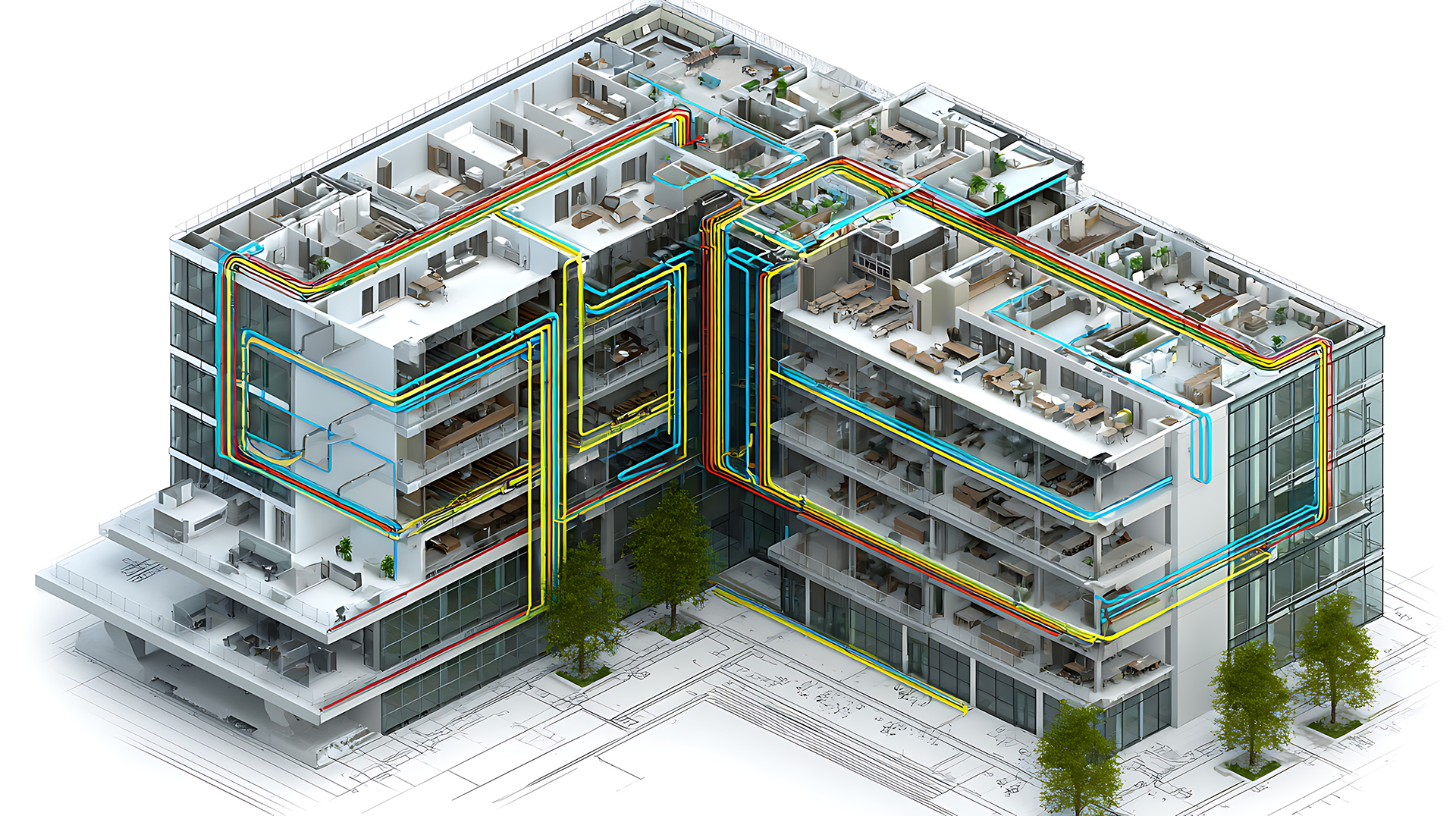
Unsupervised Buildings – Occupancy and Load Monitoring Strategy - 

A sophisticated architectural cutaway illustration of a modern commercial building, presented with transparent walls and floors that reveal the internal mechanical, electrical, and building services infrastructure. Red and blue pipework representing heating and cooling systems can be seen flowing throughout the structure, connecting air handling units, plant rooms, risers, tenancy spaces, and critical building assets across multiple levels.

The image highlights an advanced occupancy and load monitoring strategy, where Building Management Systems (BMS), smart sensors, energy meters, people-counting technology, and building automation platforms continuously analyse how the building is being used. Digital overlays display real-time occupancy levels, HVAC loads, energy consumption, floor-by-floor utilisation, indoor environmental conditions, and equipment performance metrics.

The transparent building design illustrates how occupancy data can be correlated with mechanical system demand, allowing chilled water, heating, ventilation, lighting, and other building services to automatically adjust in response to actual building usage. High-level interfaces (HLI), BACnet networks, IoT sensors, and cloud-based analytics platforms work together to optimise energy consumption, improve occupant comfort, and reduce unnecessary operating costs.

Representative of smart commercial buildings throughout Sydney, Melbourne, Canberra, Brisbane, Adelaide, and Perth, the image demonstrates how intelligent building technology can support the successful operation of unsupervised buildings. By understanding occupancy patterns and equipment loads in real time, facility managers and building owners gain valuable operational insights that improve sustainability, asset performance, energy efficiency, and overall building resilience.
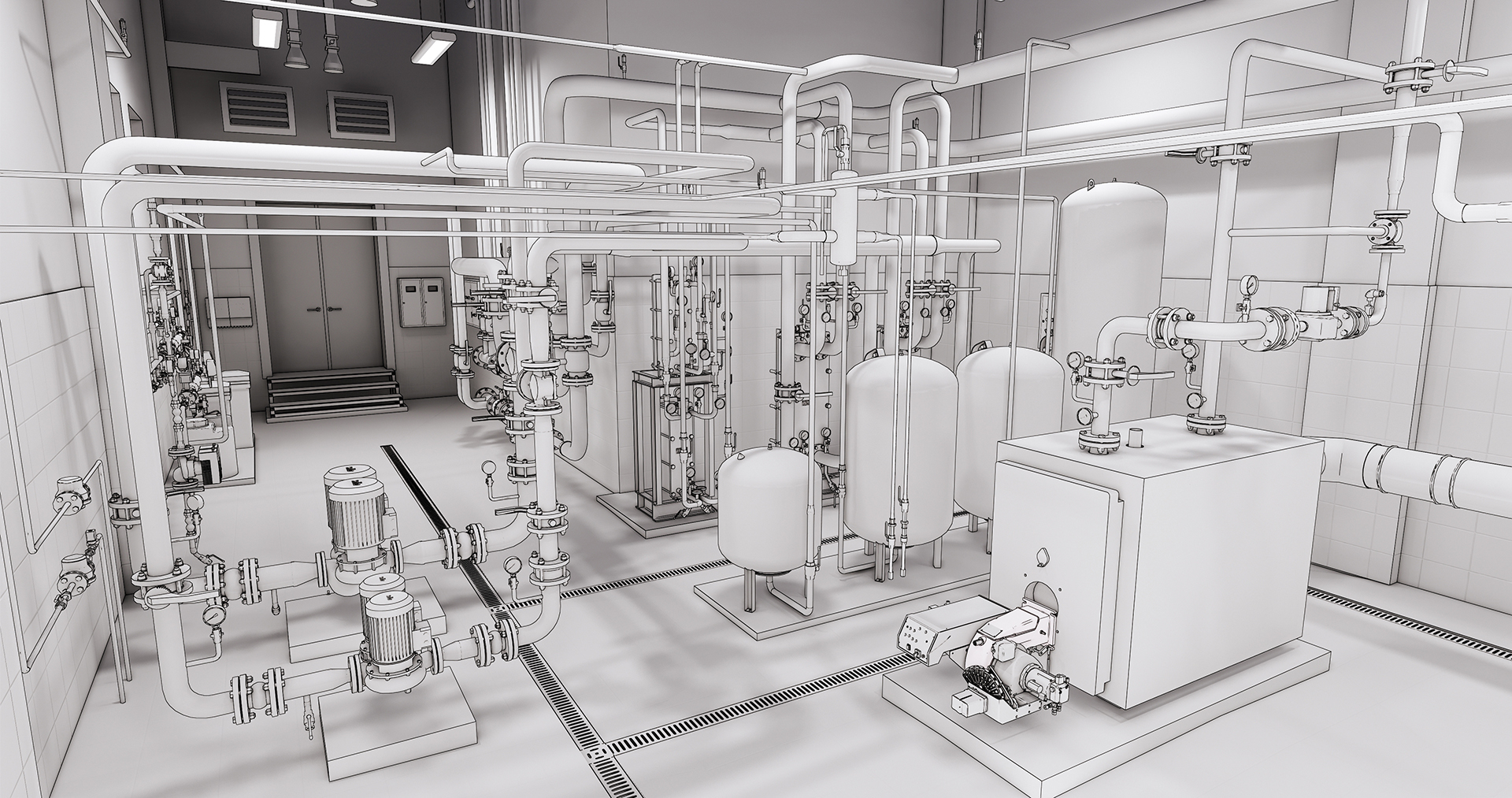
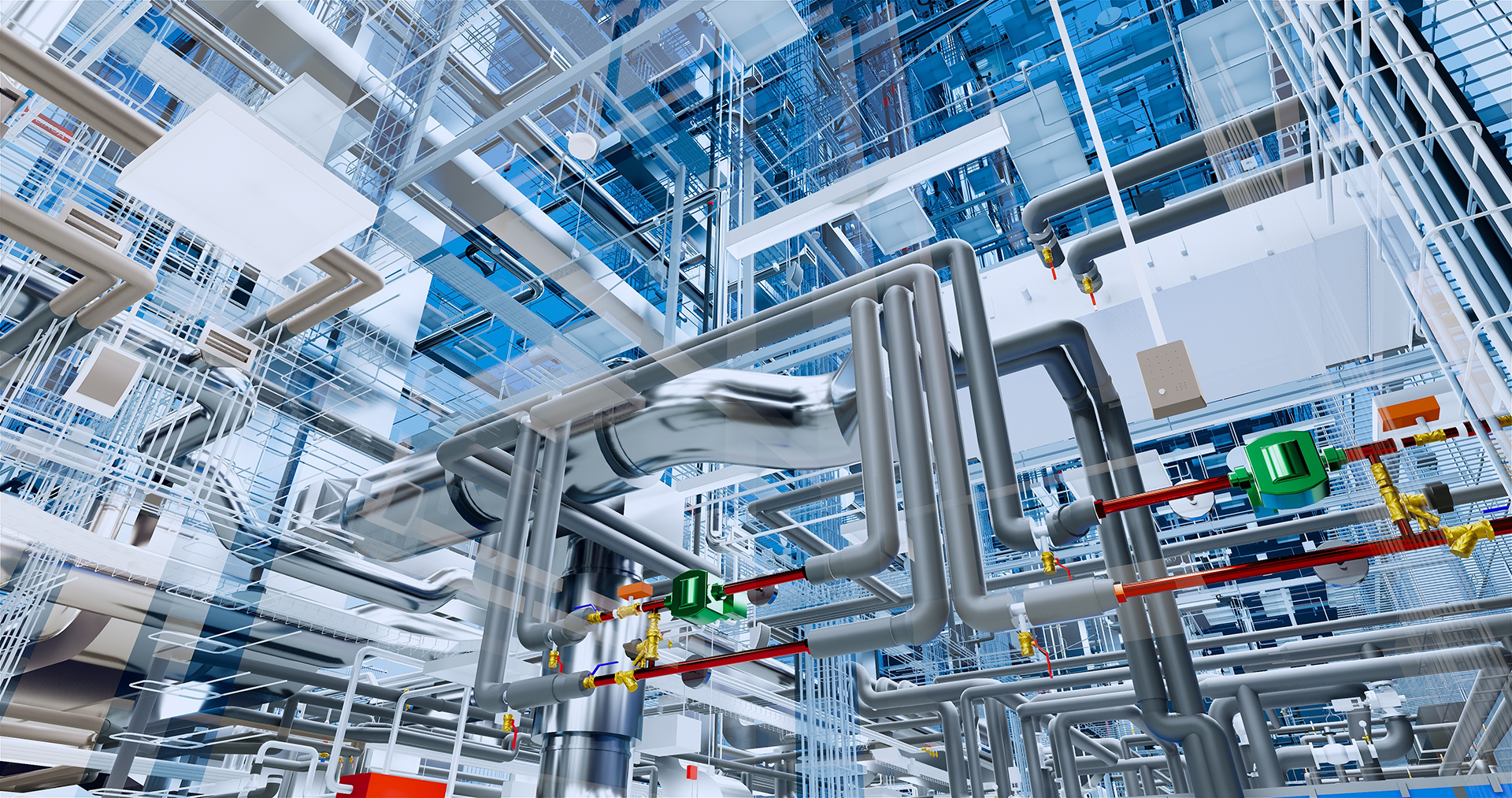
Unsupervised Building HVAC Plant Room – Black & White Technology Image Description

A striking black-and-white photograph of a modern commercial HVAC plant room operating within an unsupervised building environment. Large chilled water and condenser water pipework runs through the mechanical plant space, surrounded by pumps, valves, sensors, and automated control equipment. Digital Building Management System (BMS) technology is integrated throughout the plant room, with field controllers, communication networks, smart meters, and monitoring devices continuously collecting operational data.

The image conveys a sense of advanced remote building management, where HVAC systems are monitored and controlled without the need for permanent on-site staff. Industrial mechanical equipment is contrasted against subtle digital overlays displaying real-time performance metrics, energy consumption, temperatures, alarms, and equipment status. The monochrome presentation highlights the complexity of the infrastructure while emphasising reliability, automation, and predictive maintenance.

Representative of commercial buildings across Melbourne, Sydney, and Canberra, the image showcases how modern HVAC systems can be remotely supervised through cloud-based monitoring, smart analytics, and integrated building automation platforms. The scene reflects energy efficiency, operational resilience, asset protection, and the future of intelligent building operations.

High-Level Interface Strategy

The integration of major building assets through high-level interfaces significantly improves the effectiveness of an unsupervised building.

Typical equipment includes:

  • Chillers
  • Boilers
  • Elevators
  • Variable Speed Drives
  • Main Switchboards
  • Energy Meters
  • Fire Systems
  • Air Handling Units
  • Car Park Ventilation Systems
  • Generators

Consider a typical Melbourne or Sydney office building during a summer heatwave.

The outside air temperature and humidity sensors identify extreme weather conditions before occupancy begins. The BMS automatically starts HVAC equipment earlier than normal to maintain tenant comfort.

At the same time, Chiller No. 1 reports a compressor fault. The BMS automatically enables Compressor No. 2 and maintains cooling capacity.

An alarm is generated and forwarded to the facility manager.

The building continues operating normally and the repair can be scheduled during business hours rather than generating an expensive after-hours callout.

The same principles apply to elevators, pumps, generators and other critical assets.

If one lift fails in a building with four lifts, the fault may be monitored until the next business day. If the building has only one lift, an immediate response may be required.

Technology can automate some of these decisions while still allowing facility managers to maintain control.
Unsupervised Buildings – The Future of Commercial Building Operations

A professional executive in a business suit stands before a futuristic holographic cityscape, surrounded by glowing digital buildings, interconnected data networks, and advanced building technology interfaces. The sci-fi inspired image symbolises the evolution of unsupervised commercial buildings, where critical assets and building services are monitored remotely through intelligent Building Management Systems (BMS), cloud-based analytics, and real-time operational dashboards.

The holographic city represents a portfolio of commercial office buildings, retail centres, mixed-use developments, hotels, and industrial facilities operating efficiently without the need for permanent on-site supervision. Digital overlays display live building performance data, energy consumption trends, HVAC operation, security monitoring, contractor activity, fire system status, lift performance, and asset condition monitoring. The executive oversees the entire portfolio from a centralised platform, demonstrating how modern technology provides complete visibility and control across multiple sites.

This image reflects the future of commercial building management in Melbourne and across Australia, where smart building technologies, automation, fault detection diagnostics, predictive maintenance, and remote facility management reduce operating costs, improve asset performance, and enhance building reliability. It showcases the transition from traditional building supervision to technology-enabled operations driven by data, connectivity, and intelligent building controls.

Strategic Sensor Deployment

Strategically located sensors provide visibility into areas that would otherwise require physical inspections.

Water Leak Detection

Water sensors can be installed in:

  • Plant rooms
  • Lift pits
  • Basement levels
  • Stairwells
  • Car parks
  • Electrical rooms

If a chilled water pipe, hydrant main or domestic water service fails, sensors can quickly identify the issue.

Alarm logic can determine whether the event is isolated or widespread.

For example, one sensor detecting water may trigger an investigation. Multiple sensors detecting water simultaneously may trigger an emergency response.

Electrical Monitoring

Energy meters and voltage monitoring relays provide valuable information regarding power quality and supply reliability.

The system can distinguish between:

  • Local switchboard failures
  • Single phase loss
  • Brownouts
  • Building-wide outages
  • Utility supply interruptions

Rather than simply reporting “power failure”, the BMS can provide meaningful diagnostic information before anyone attends site.

People Counters

People counters provide occupancy data which can influence:

  • HVAC operation
  • Lift performance
  • Escalator operation
  • Cleaning schedules
  • Bathroom servicing
  • Security requirements

This becomes particularly valuable during peak summer and winter conditions when plant loading is highest.

Indoor Environmental Sensors

Temperature, humidity and Carbon Dioxide sensors provide real-time information about internal building conditions.

Carbon Dioxide monitoring is particularly important within commercial office environments.

Elevated Carbon Dioxide levels can impact occupant comfort, productivity and wellbeing while also indicating inadequate ventilation performance.

These sensors provide objective data regarding:

  • Legitimate tenant complaints
  • Tenant comfort
  • HVAC performance
  • Energy efficiency
  • Indoor air quality

Lighting Control and Light Harvesting Strategy

Lighting often represents a significant energy cost within commercial buildings and provides an excellent opportunity for automation.

Light sensors installed both inside and outside the building can continuously monitor available natural daylight.

When external daylight levels increase, the BMS can automatically reduce internal lighting levels in perimeter zones through dimming controls or staged lighting operation. This process, commonly referred to as light harvesting, reduces electricity consumption while maintaining comfortable lighting conditions for occupants.

External light sensors can also control:

  • Car park lighting
  • Façade lighting
  • Landscape lighting
  • Pathway lighting
  • Building signage

Instead of relying solely on time schedules, lighting operation can respond to actual environmental conditions.

During cloudy weather, storms or seasonal changes, lighting levels can automatically adjust to suit the conditions.

Combined with occupancy sensors and energy metering, lighting control becomes a valuable energy management strategy that improves tenant comfort while reducing operating costs and carbon emissions.

For unsupervised buildings, automated lighting control eliminates the need for manual intervention while ensuring lighting systems continue to operate efficiently and safely.


Unsupervised Buildings Technology Platform – Melbourne A futuristic microchip with gold-plated connection pins sits at the centre of a complex network of digital pathways, data streams, and intelligent building systems. Multiple lines flow into and out of the processor, symbolising the constant exchange of information between building assets, sensors, controllers, cloud platforms, and operational dashboards. The image represents the technological backbone of modern unsupervised commercial buildings, where advanced Building Management Systems (BMS), Artificial Intelligence (AI), automation platforms, and smart building technologies work together to provide real-time visibility and control. The microchip acts as the central intelligence hub, collecting data from HVAC systems, electrical infrastructure, energy meters, fire systems, security systems, lifts, water services, and contractor management platforms. AI-powered analytics continuously assess building performance, identify faults, predict maintenance requirements, and optimise energy consumption without the need for permanent on-site supervision. This image reflects the future of commercial building operations in Melbourne, where technology-driven facility management enables office buildings, retail centres, industrial facilities, hotels, and mixed-use developments to operate more efficiently, reduce operational costs, improve sustainability outcomes, and enhance asset performance. The gold connections symbolise reliability, precision, and the seamless integration of critical building systems through intelligent automation and data-driven decision making.
Unsupervised Building Monitoring – Melbourne A magnifying glass is positioned over a rising performance graph, symbolising the continuous monitoring and optimisation of an unsupervised commercial building in Melbourne. The upward trend line represents improved operational performance, reduced maintenance costs, enhanced energy efficiency, and proactive asset management achieved through remote monitoring technologies. The image reflects the role of Building Management Systems (BMS), energy metering, fault detection, and integrated building controls in providing real-time visibility of critical building services without the need for a permanent on-site presence. Ideal for commercial office buildings, retail centres, industrial facilities, car parks, and mixed-use developments throughout Melbourne, this image conveys data-driven building performance, operational transparency, and smarter facility management.

Alarm Prioritisation and Decision Making

Not all alarms require immediate attendance.

One of the most important functions of an unsupervised building is distinguishing between minor faults and major incidents.

Examples include:

Low Priority

  • One chiller compressor fault with redundancy available
  • One lift unavailable out of four
  • Minor temperature deviation
  • Isolated sensor fault

High Priority

  • Complete loss of cooling
  • Building-wide power failure
  • Significant water ingress
  • Fire system fault
  • Generator failure during utility outage

The objective is to ensure contractors attend site when genuinely required rather than responding to every alarm generated by the building.

AI and Predictive Monitoring

Artificial Intelligence (AI) is becoming a popular term within commercial building operations, but in reality many of the principles behind predictive monitoring have existed within Building Management Systems for years. The difference today is that modern software platforms can analyse significantly more data and identify trends that may otherwise go unnoticed.

Predictive monitoring uses historical building data, operational patterns and real-time information to identify abnormal conditions before they become major issues. Rather than waiting for equipment to fail or tenants to complain, the system can recognise patterns and notify facility managers when performance begins to drift from normal operating conditions.

Examples include identifying abnormal occupancy levels within a shopping centre, detecting a gradual reduction in chiller efficiency, recognising unusual water consumption that may indicate a leak, or identifying energy spikes that suggest equipment is operating outside expected parameters. The same principles can also be applied to contractor performance, measuring response times, attendance records and completion rates to ensure service providers are meeting agreed performance standards.

While AI can assist with identifying trends and highlighting anomalies, human expertise remains essential. Facility managers, engineers and contractors still make the operational decisions. The technology simply provides another layer of intelligence, helping building owners and operators make informed decisions sooner and with greater confidence.


Unsupervised Buildings – AI and Predictive Monitoring -  

A close-up image of an advanced microchip with the letters “AI” prominently displayed on its surface, symbolising the growing role of artificial intelligence in modern building operations. The chip is surrounded by intricate electronic circuits, digital pathways, and flowing data connections, representing the continuous stream of information collected from building systems and connected assets.

The image illustrates how artificial intelligence can support the operation of unsupervised buildings by analysing large volumes of data from Building Management Systems (BMS), energy meters, HVAC equipment, water meters, occupancy sensors, lighting systems, generators, lifts, and other critical infrastructure. Digital overlays suggest real-time monitoring, predictive analytics, automated alarms, and intelligent decision-making.

Rather than replacing building operators, the technology acts as an additional layer of insight, helping identify abnormal occupancy patterns, chiller efficiency drift, water consumption anomalies, unexpected energy spikes, equipment performance issues, and contractor attendance trends before they become costly problems. Machine learning algorithms continuously compare current performance against historical operating data to identify opportunities for improvement.

Representative of the next generation of smart building technology being adopted throughout Sydney, Melbourne, Canberra, Brisbane, Adelaide, and Perth, the image conveys innovation, automation, predictive maintenance, energy optimisation, and data-driven building performance. It highlights how AI can transform building data into actionable intelligence, improving operational efficiency, reducing risk, and supporting the effective management of unsupervised commercial buildings.
Unsupervised Buildings – The Future of Commercial Building Operations A professional executive in a business suit stands before a futuristic holographic cityscape, surrounded by glowing digital buildings, interconnected data networks, and advanced building technology interfaces. The sci-fi inspired image symbolises the evolution of unsupervised commercial buildings, where critical assets and building services are monitored remotely through intelligent Building Management Systems (BMS), cloud-based analytics, and real-time operational dashboards. The holographic city represents a portfolio of commercial office buildings, retail centres, mixed-use developments, hotels, and industrial facilities operating efficiently without the need for permanent on-site supervision. Digital overlays display live building performance data, energy consumption trends, HVAC operation, security monitoring, contractor activity, fire system status, lift performance, and asset condition monitoring. The executive oversees the entire portfolio from a centralised platform, demonstrating how modern technology provides complete visibility and control across multiple sites. This image reflects the future of commercial building management in Melbourne and across Australia, where smart building technologies, automation, fault detection diagnostics, predictive maintenance, and remote facility management reduce operating costs, improve asset performance, and enhance building reliability. It showcases the transition from traditional building supervision to technology-enabled operations driven by data, connectivity, and intelligent building controls.

In the Real World, How Does It Actually Work?

Different building types require different monitoring strategies.

Regional shopping centres throughout Australia provide an excellent example.

Many centres operate with relatively simple Building Management Systems controlling package units, supply fans, exhaust fans and lighting systems.

The shopping centre may still employ a roaming security guard who acts as the eyes and ears of the site.

If the BMS generates an alarm, the security guard can perform a simple visual inspection and provide information back to the facility manager.

This information often allows the facility manager to determine whether:

  • Immediate contractor attendance is required
  • The issue can wait until the next business day
  • Further investigation is required
  • The alarm can be safely monitored

This combination of technology, remote monitoring and limited on-site resources often delivers a practical and cost-effective alternative to full-time building management.

The Human Element

An unsupervised building is not a building without people.

It is a building where technology performs the routine observation tasks traditionally undertaken by building managers, allowing human expertise to focus on decision-making, contractor management, risk assessment and asset performance.

The objective is not to remove people from the process, but to ensure the right people attend the site only when their expertise is genuinely required.

Is Your Building Ready for Unsupervised Operations?

The technology to remotely monitor and manage commercial buildings already exists. The question is whether your building has the right systems, integration strategy and operational processes in place to take advantage of it.

Performance Facility Management can review your building’s HVAC systems, BMS, lighting controls, energy metering, security systems and contractor management processes to determine what is possible and where the greatest return on investment may be achieved.

Book a Building Operations Review today and discover how technology-driven monitoring strategies can improve building performance while reducing the need for permanent on-site supervision.

Customer Details

Name

G-Q8ZWYZD3WQ