
Estimated reading time: 11 minutes
Sustainability Through Building Automation
Using Your Existing Building Management System to Reduce Energy Costs, Improve Building Performance, and Support Sustainability Goals
For many commercial property owners and managers, sustainability can feel like an expensive capital project. In reality, some of the most effective sustainability improvements can be achieved using technology already installed within the building.
A Building Management System (BMS) is often one of the most underutilised assets within a commercial property. While many systems are used only for basic HVAC control, a properly configured and maintained BMS can become a powerful tool for reducing energy consumption, improving tenant comfort, extending equipment life, and supporting sustainability objectives.
Importantly, sustainability initiatives should be financially viable. Every improvement should have a clear business case, whether the objective is reducing operating costs, improving NABERS ratings, enhancing ESG reporting, or increasing the value of the asset.
Many opportunities require surprisingly little capital investment and can often deliver a return within 12 months.
Every Building Starts From a Different Position
Every commercial building has a different level of technology maturity.
Some buildings still rely heavily on manual intervention and time clocks. Others have partially integrated systems controlling HVAC, lighting, energy metering, and access control. Newer buildings may have fully integrated Building Management Systems incorporating BACnet, Modbus, MQTT, and other modern communication protocols.
Regardless of where a building sits on this spectrum, there are usually opportunities to improve performance using existing infrastructure.
The objective is not necessarily to install more technology. The objective is to obtain better outcomes from the technology already in place.

Older Buildings Are Not Automatically Obsolete
One of the biggest misconceptions in commercial property is that older buildings cannot benefit from modern automation strategies.
In many cases, existing systems can be upgraded, integrated, or supplemented without replacing the entire control system.
Older electrical installations, legacy BMS platforms, and even pneumatic control systems can often be connected to modern supervisory platforms through:
- BACnet gateways
- Modbus interfaces
- Relay-based monitoring
- Voltage signal conversion
- Pulse metering
- Electronic-to-Pneumatic (E/P) interfaces
- Third-party integration devices
Many successful energy reduction projects begin with improving visibility rather than replacing equipment.
This approach allows building owners to leverage existing assets while gradually introducing modern building technology.
Practical Sustainability Opportunities Through Your BMS
The opportunities available will depend on the building, its services, and the quality of the existing control system. Common improvements include:
Occupancy-Based Air Conditioning Control
Many buildings continue to condition areas that are vacant for significant periods of the day.
By integrating occupancy information, tenancy schedules, or access control systems with the BMS, HVAC systems can operate only when required.
Potential strategies include:
- Floor-by-floor control
- Tenancy scheduling
- Occupancy sensors
- Access card integration
- Meeting room demand control
Reducing unnecessary conditioning can significantly lower energy consumption while maintaining tenant comfort.
Demand-Controlled Ventilation
Many buildings introduce more outside air than required.
By incorporating additional carbon dioxide (CO₂) sensors and monitoring occupancy levels, ventilation rates can be adjusted automatically to match demand.
Benefits include:
- Reduced fan energy
- Reduced heating energy
- Reduced cooling energy
- Improved indoor air quality

Lighting Optimisation
Lighting systems can often be integrated into the BMS to provide greater control and visibility.
Examples include:
- Reducing lighting zone sizes
- Occupancy-based lighting control
- Scheduling
- After-hours lighting requests
- Energy reporting
These changes often deliver immediate energy savings with minimal disruption to tenants.
Equipment Scheduling and Optimisation
One of the most common issues discovered during audits is equipment operating outside required hours.
Examples include:
- Chillers operating overnight
- Air handling units serving vacant areas
- Exhaust systems running continuously
- Heating and cooling systems operating simultaneously
Simple scheduling improvements can deliver substantial energy savings without any capital expenditure.
Energy Metering Creates Visibility
You cannot manage what you cannot measure.
One of the most valuable additions to any Building Management System is energy metering.
Electrical sub-metering is often relatively inexpensive to install and provides valuable information about how energy is consumed throughout a building.
Common metering opportunities include:
- Main switchboards
- Mechanical services switchboards
- Chiller plants
- Tenant supplies
- Data rooms
- Lifts
- Car park ventilation systems
Once energy data is available, building managers can quickly identify anomalies, waste, and opportunities for improvement.
The data also provides evidence to support future capital expenditure decisions.
Visibility Is More Than a Dashboard
Many building owners invest in energy metering, dashboards, and Building Management Systems believing that visibility alone will improve building performance.
Unfortunately, visibility is not simply a screen full of numbers, graphs, alarms, and trend logs.
The true value comes from understanding the relationship between different data sources and identifying patterns that reveal opportunities for improvement.
A Building Management System might record chilled water valve positions. An energy meter records electrical consumption. The Bureau of Meteorology records outside air temperature and humidity. The access control system records occupancy. Individually, these data points have limited value.
When they are compared together, however, the building begins to tell a story.
For example, a building may appear to be operating normally, yet energy consumption remains unusually high.
By comparing:
- Outside air temperature
- Relative humidity
- Daylight hours
- Occupancy levels
- Chiller energy consumption
- Air handling unit supply air temperatures
- Chilled water valve positions
- Heating valve positions
- Fan speeds
- Electrical demand profiles
it becomes possible to identify hidden inefficiencies that would otherwise go unnoticed.
A common example is simultaneous heating and cooling.
On a mild spring day, a building may continue producing excessively cold supply air. The chillers consume energy to cool the air, while reheat coils throughout the building consume additional energy to warm it back up again.
The BMS records the activity.
The energy meter records the cost.
Only by comparing the information together does the opportunity become visible.
This is why collecting data is only the first step. The real value lies in interpreting that data and understanding what the building is trying to tell you.
Many commercial properties already possess enough information to identify substantial energy-saving opportunities. The challenge is not obtaining more data, but having the experience to analyse the relationships between the data and convert those observations into practical operational improvements.
The greatest opportunities are often hidden in plain sight.
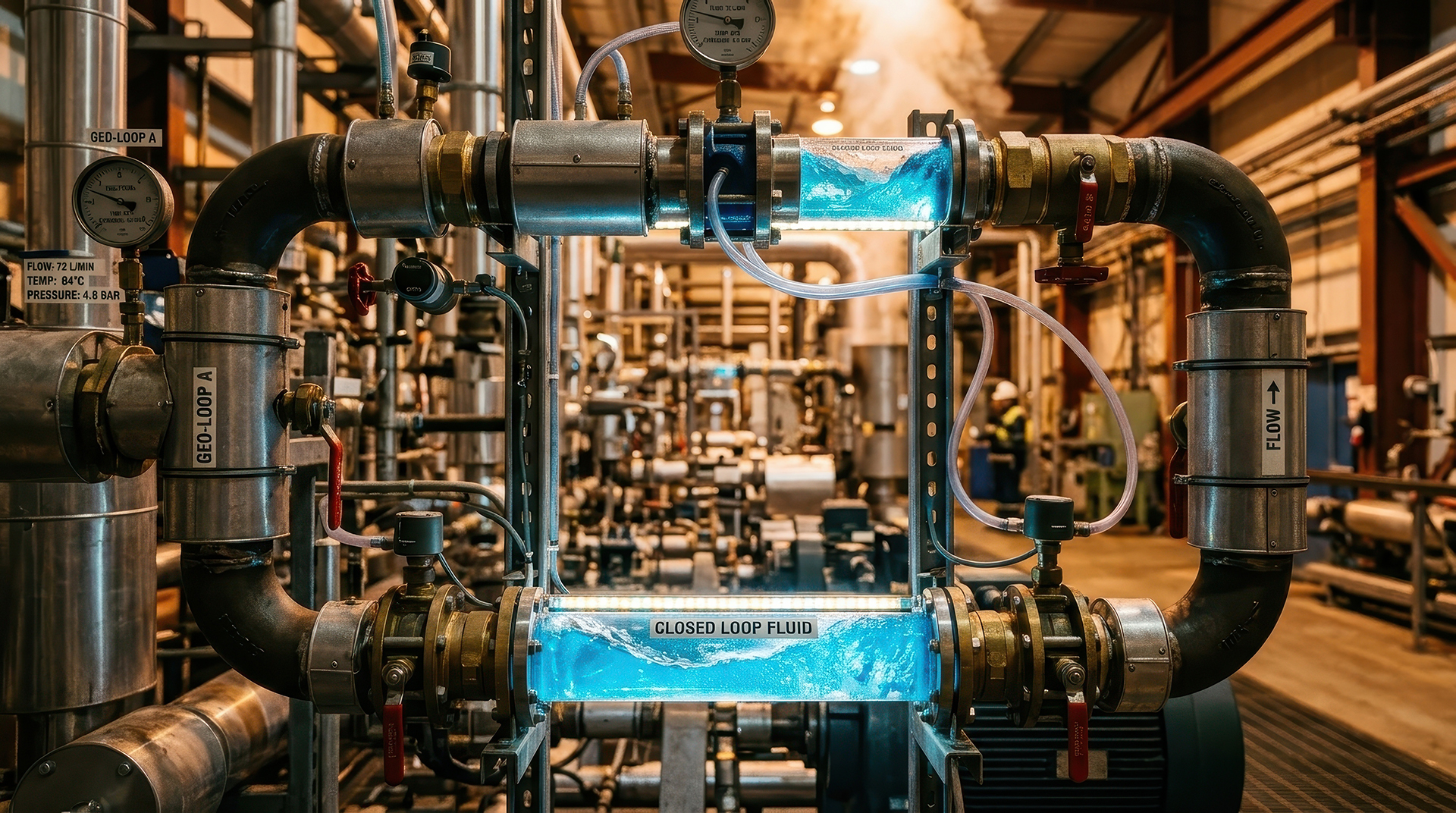
Fluid Energy Metering Reveals Hidden HVAC Losses
Electrical energy tells only part of the story.
Fluid energy meters measure the thermal energy transferred through chilled water, condenser water, and heating hot water systems.
These meters allow building owners to understand:
- Chiller efficiency
- Boiler performance
- Heat transfer effectiveness
- Pumping efficiency
- System balancing issues
Many hidden inefficiencies become visible once thermal energy data is available.
This information often forms the basis of larger optimisation projects and energy reduction programs.
Data Creates Better Business Cases
One of the biggest challenges facing property managers is obtaining approval for upgrades.
Building owners understandably want evidence before committing capital.
The BMS can provide that evidence.
When energy consumption is correlated with:
- Occupancy
- Weather conditions
- Humidity
- Seasonal changes
- Equipment run hours
- Tenant behaviour
it becomes much easier to demonstrate both the problem and the potential savings.
The result is a stronger business case and more informed investment decisions.

Most Buildings Already Have Enough Data
One of the most common misconceptions in commercial property is that improving sustainability requires more sensors, more software, more dashboards, or another technology platform.
In many cases, the opposite is true.
Most commercial buildings already generate enormous amounts of information every day.
The Building Management System records temperatures, pressures, valve positions, fan speeds, equipment run hours, alarms, and operating modes.
Energy meters record electrical consumption and demand profiles.
Access control systems record occupancy patterns.
Utility invoices provide historical consumption data.
The Bureau of Meteorology provides detailed weather information including temperature, humidity, wind conditions, and solar exposure.
The challenge is rarely a lack of data.
The challenge is understanding how all of these data sources relate to one another.
Many buildings contain years of trend logs that have never been reviewed.
Many energy meters faithfully record consumption every fifteen minutes without anyone investigating why consumption changes.
Many Building Management Systems generate alarms that are acknowledged and reset without understanding the underlying cause.
The information exists.
The opportunity exists.
What is often missing is the time, experience, and technical knowledge required to connect the dots.
For example, a property manager may see an increase in electricity consumption and assume the chiller plant is becoming inefficient.
An experienced review may reveal something entirely different.
The increase may actually coincide with a tenancy fit-out, extended operating hours, changes to outside air requirements, simultaneous heating and cooling, a failed sensor, or a control sequence that has gradually drifted away from its original design intent.
Without context, the data is simply information.
With context, the data becomes knowledge.
With knowledge, informed decisions can be made.
This is why successful sustainability programs are rarely driven by technology alone.
They are driven by people who understand buildings, understand building systems, and understand how to interpret the information already available.
Before investing in additional technology, it is often worth asking a simple question:
“Are we making full use of the information we already have?”
In many cases, the answer reveals some of the most valuable opportunities in the entire building.
Sustainability Is More Than Energy Reduction
Modern building automation can support broader sustainability objectives, including:
- NABERS improvement programs
- ESG reporting
- Carbon reduction strategies
- Indoor environmental quality
- Tenant wellbeing initiatives
- Asset lifecycle management
A well-managed BMS provides the data required to track, report, and verify performance improvements.
Sustainability Can Become a Marketing Asset
Most sustainability initiatives focus on reducing energy consumption and operating costs.
While these outcomes are important, many building owners overlook another significant benefit: sustainability data can become a powerful marketing and leasing tool.
Modern tenants increasingly ask questions about:
- Building performance
- Sustainability initiatives
- Energy efficiency
- ESG commitments
- Indoor environmental quality
- Carbon reduction strategies
Buildings that can demonstrate measurable outcomes often gain an advantage during lease negotiations and tenant retention discussions.
The same data collected through the Building Management System, energy meters, and sustainability programs can be repurposed into valuable marketing material.
Examples include:
- Leasing brochures
- Tenant welcome packs
- Investor reports
- Sustainability statements
- Building newsletters
- Website content
- Annual reports
- NABERS promotion
- ESG reporting documentation
Rather than simply reporting energy consumption, owners can communicate achievements such as:
- Reduction in annual energy use
- Carbon emission reductions
- Improved NABERS ratings
- HVAC optimisation projects
- Water savings
- Renewable energy initiatives
- Building technology upgrades
For portfolio owners, the benefits become even greater.
Performance data from one building can often be compared against other assets within the portfolio. Successful strategies implemented at one site can be replicated elsewhere, creating portfolio-wide improvements and demonstrating a commitment to continuous improvement.
Property managers also benefit from these outcomes.
Demonstrating measurable improvements in building performance highlights proactive management, technical capability, and a commitment to delivering value to both tenants and owners.
When used effectively, sustainability data becomes more than an operational tool. It becomes part of the building’s story.
The result is a win for the landlord, a win for the property manager, a win for the tenants, and ultimately a stronger, more competitive asset in the marketplace.
Making the Most of Your Existing Building Technology
The greatest opportunities are often hidden within systems already installed in the building.
Before investing in major capital works, it is worth understanding what your Building Management System is already capable of delivering.
Whether the building is controlled by a modern integrated platform, a legacy BMS, or even a combination of old and new technologies, there are usually opportunities to improve energy performance, reduce operating costs, and support sustainability objectives.
At WR8Tech, we help building owners, property managers, and facility managers understand what their existing systems are telling them, identify practical improvement opportunities, and develop realistic strategies that deliver measurable results.
[…] commercial buildings generate enormous volumes of data through HVAC systems, Building Management Systems (BMS), energy meters, lighting controls, mechanical services, electrical infrastructure and tenant […]
[…] key to performance is understanding the building as a single, integrated system — not isolated […]