
Sick Building Syndrome: When Your Building Management System Is Making Your Building Unwell
Poor BMS performance, rising energy costs, tenant complaints, and recurring equipment failures are often symptoms of a building that is operationally unwell.
Most commercial property professionals have heard the term Sick Building Syndrome.
Traditionally, the term has been associated with indoor air quality issues and occupant discomfort. However, from a building operations perspective, we often see a different type of sickness affecting commercial buildings.
A building may look perfectly healthy from the street, yet behind the scenes it is consuming excessive energy, generating tenant complaints, suffering repeated equipment failures, and costing the owner far more than necessary to operate.
In many cases, the Building Management System (BMS) is at the centre of the problem.
The good news is that many buildings suffering from operational Sick Building Syndrome are not fundamentally broken. They simply require investigation, optimisation, and a better understanding of how the building systems are interacting.

What is Sick Building Syndrome
By definition:
Sick Building Syndrome (SBS) is a term used when building occupants experience health or comfort symptoms that appear linked to time spent in a building, but no single, specific illness or cause can be clearly identified.
Is Your Building Really Healthy?
Consider two simple questions:
Does your building have a Building Management System that is frustrating to work with?
Are you obtaining meaningful operational and energy performance from your BMS, or is it simply functioning as an expensive time clock?
The answers often reveal whether a building is operating efficiently or showing signs of what we describe as Operational Sick Building Syndrome.
Many buildings with these symptoms are not fundamentally broken. They simply require investigation, optimisation, and a better understanding of how the building systems are interacting.
Does This Sound Like Your Building?
- The energy bills seem too high.
- The same tenants complain repeatedly.
- Contractors keep returning to the same equipment.
- Nobody completely trusts the BMS.
- The building feels harder to manage than it should.
- You suspect something is wrong but cannot prove it.
- The landlord keeps asking for explanations.
- Equipment appears to be operating normally, but costs continue to rise.
- The maintenance budget never seems to be enough.
If you answered “yes” to two or more of these questions, your building may be showing signs of Operational Sick Building Syndrome.
The Hidden Cost of an Unwell Building
A poorly performing building creates costs that extend far beyond the monthly electricity bill.
Cost to the Landlord
- Increased energy expenditure.
- Higher maintenance costs.
- Reduced asset performance.
- Increased capital expenditure.
- Reduced tenant retention.
- Lower asset value.
Cost to the Property Manager
- Increased tenant complaints.
- More contractor management.
- More reactive work.
- Difficulty obtaining meaningful information.
- Time spent explaining problems rather than solving them.
Cost to the Tenants
- Poor thermal comfort.
- Reduced productivity.
- Frustration with building services.
- Hot and cold complaints.
- Poor occupant experience.
Cost to the Environment
- Unnecessary energy consumption.
- Increased carbon emissions.
- Poor sustainability performance.
- Reduced NABERS outcomes.
Sometimes the Building Isn’t Broken — It’s Just Not Performing
One of the most frustrating situations for a Property Manager is a building that appears to be functioning but constantly consumes time, money, and attention.
The lifts work.
The air conditioning runs.
The lights come on.
The fire systems are compliant.
Yet every week there seems to be another issue.
Another tenant complaint.
Another call from a contractor.
Another discussion about energy costs.
Another explanation to the landlord about why expenses are increasing.
These buildings are often the most difficult to manage because there is no single catastrophic failure to point to. Instead, there are dozens of small issues that gradually erode the building’s performance and increase operating costs.
The building isn’t necessarily broken.
It is simply not performing as well as it should.
This is often where Operational Sick Building Syndrome begins.
The Property Manager Knows Something Is Wrong
Many Property Managers become experts in their buildings despite having no formal engineering background.
They know:
- Which tenants complain the most.
- Which contractors are called repeatedly.
- Which pieces of equipment fail every summer.
- Which areas are always too hot or too cold.
- Which buildings consume more energy than similar properties.
What they often lack is the technical evidence required to justify corrective action.
This creates a difficult position.
The Property Manager knows there is a problem.
The tenants know there is a problem.
The contractors continue to invoice for repairs.
But nobody can clearly identify the root cause.
Without technical evidence, the conversation with the landlord often becomes:
“Everything seems to be working, so why should we spend money investigating?”
The answer is simple.
Because the building is already costing money.
The cost is simply hidden within energy bills, contractor invoices, tenant dissatisfaction, and management time.
Common Symptoms of Operational Sick Building Syndrome
Over many years working with commercial buildings, we have identified several recurring warning signs.
1. Energy Bills Are Higher Than Expected
One of the first symptoms is excessive energy consumption compared to similar buildings of comparable size and use.
Many buildings consume far more energy than necessary simply because systems are operating incorrectly or continuously.
2. The Building Manager Doesn’t Trust the BMS
The BMS should provide answers.
Instead, many building managers find themselves questioning the accuracy of alarms, trends, schedules, and system data.
When the BMS cannot be trusted, operational decisions become difficult and reactive rather than proactive.
3. Regular Tenant Complaints
Complaints about areas being:
- Too hot.
- Too cold.
- Stuffy.
- Poorly ventilated.
are often indicators of larger control or mechanical issues.
Interestingly, the same zones frequently generate the same complaints repeatedly.
4. Equipment Running After Hours
It is common for us to discover:
- Air conditioning systems operating overnight.
- Fans running continuously.
- Pumps operating unnecessarily.
- Entire floors conditioned while unoccupied.
A properly configured BMS should identify and prevent these issues.
5. Lighting Operating When It Shouldn’t
Common examples include:
- Common area lighting operating during daylight hours.
- Car park lighting running continuously.
- Vacant tenancy lighting remaining energised.
These issues are often easy to identify and relatively inexpensive to correct.
6. Dirty Air Diffusers and Poor Indoor Air Quality
Black marks around supply air diffusers can indicate:
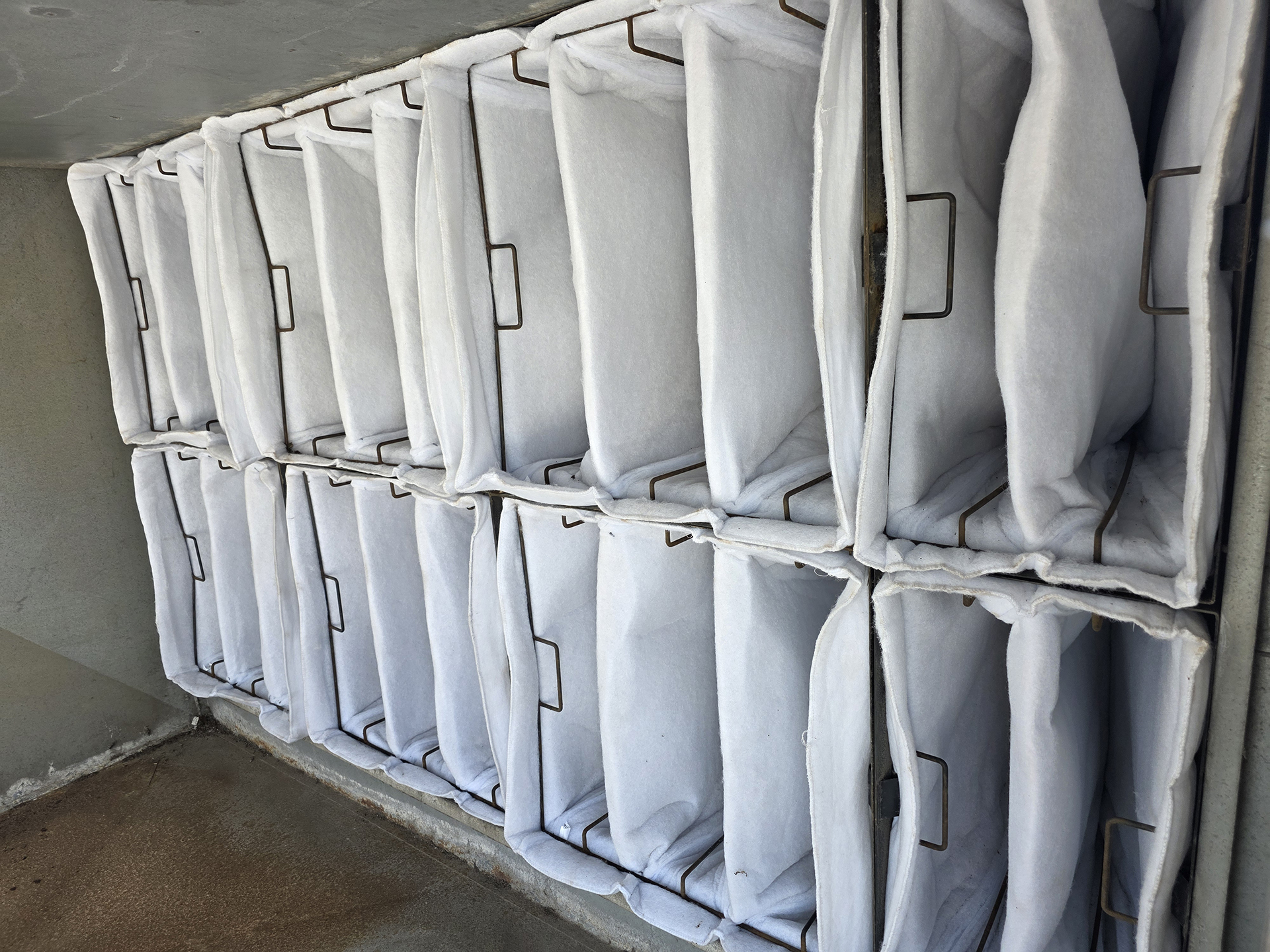
- Dirty air filters.
- Poor maintenance practices.
- Air leakage issues.
- Deteriorating HVAC performance.
Often these symptoms point toward larger maintenance and operational concerns.
7. Repeated Failure of the Same Equipment
If the same fan, pump, VSD, valve, sensor, or air conditioning unit continually fails, the building is usually trying to tell you something.
The root cause may be:
- Obsolete equipment.
- Poor maintenance.
- Incorrect control strategies.
- System design issues.
- Inadequate repairs.
Simply replacing parts without addressing the underlying issue rarely solves the problem.
The Most Expensive Problems Are Often Invisible
A failed chiller is obvious.
A failed fan is obvious.
A burst pipe is obvious.
The most expensive problems in commercial buildings are usually the ones nobody notices.
Examples include:
- Air conditioning operating two hours before occupancy every day.
- Heating and cooling systems fighting each other.
- Car park fans operating unnecessarily.
- Poorly calibrated sensors.
- Failed control valves.
- Simultaneous heating and cooling.
- Incorrect schedules.
- Equipment operating outside design parameters.
- Tenancies conditioning empty spaces.
- Lighting operating in unoccupied areas.
Individually these issues may appear insignificant.
Collectively they can waste thousands or even tens of thousands of dollars every year.
Many remain undetected because nobody is reviewing the data.
The Building Management System may already contain the evidence, but nobody is asking the right questions.
The BMS Already Knows the Answer
One of the most common statements we hear from Property Managers is:
“We have a Building Management System, but nobody really uses it.”
This is surprisingly common.
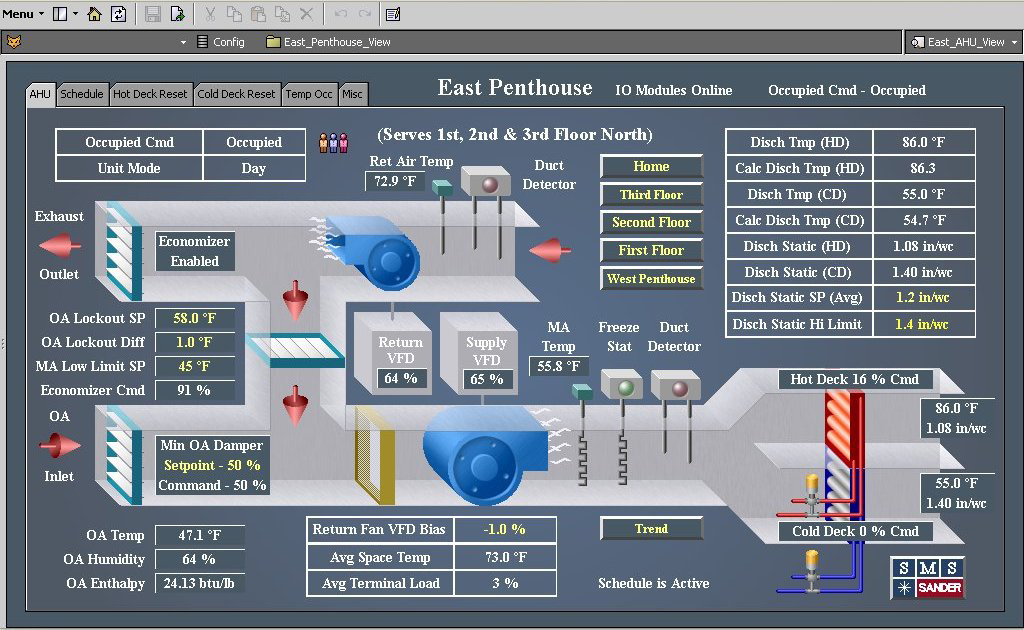
Many commercial buildings have sophisticated Building Management Systems capable of monitoring temperatures, run hours, alarms, energy consumption, equipment status, scheduling, and operational performance.
Unfortunately, having access to information and understanding what that information means are two very different things.
Most Property Managers are not control engineers.
Most Asset Managers are not HVAC specialists.
Many Building Managers have inherited systems that were installed years ago by contractors who are no longer involved with the building.
As a result, the BMS often becomes little more than an expensive time clock.
The information is there, but nobody has the time, training, or technical knowledge to interpret what the system is trying to communicate.
The BMS may be showing:
- A valve that has been hunting for months.
- A sensor that is reading incorrectly.
- A fan running outside normal operating hours.
- A VSD operating at 100% continuously.
- Simultaneous heating and cooling.
- A plant sequence that is no longer functioning correctly.
- Equipment that is short cycling.
- A gradual increase in energy consumption.
Yet these issues can remain unnoticed because they do not trigger a critical alarm.
The result is a building that slowly becomes more expensive to operate while everyone assumes the systems are functioning normally.
In many cases, the opportunity is not replacing equipment.
The opportunity is simply understanding what the Building Management System has been trying to tell the building team all along.
What the Landlord Sees
The Property Manager sees complaints.
The Building Manager sees faults.
The HVAC contractor sees equipment.
The landlord sees financial performance.
When operational issues persist, they eventually appear in financial reports through:
- Higher operating expenses.
- Increased maintenance costs.
- Capital expenditure requests.
- Reduced tenant satisfaction.
- Reduced tenant retention.
- Lower NABERS performance.
- Reduced building competitiveness.
A building suffering from Operational Sick Building Syndrome is often delivering lower returns than it should, even though all major systems appear to be functioning.
A Common Example We See
One of the most common issues we encounter involves cooling and heating systems competing against each other.
The central plant produces excessively cold supply air, causing local zones to activate heating to compensate.
The building effectively cools and heats the same space at the same time.
This condition can persist for years without anyone noticing, quietly wasting thousands of dollars in energy annually.
The BMS may be displaying all the information required to identify the issue, but nobody is reviewing the data, trend logs, or plant performance.
Knowing Your Building
Every building is different.
Different tenant types, different operating hours, different HVAC systems, different maintenance histories, and different control philosophies all influence building performance.
The most successful buildings are managed as complete systems rather than collections of individual assets.
Understanding how the HVAC systems, Building Management System, lighting, electrical infrastructure, energy meters, tenant operations, and maintenance practices interact is fundamental to maintaining a healthy building.
How WR8Tech Can Help
At WR8Tech, we specialise in identifying the root causes behind Operational Sick Building Syndrome.
Through HVAC audits, BMS audits, energy investigations, building performance reviews, and independent technical assessments, we help owners and facility managers understand:
- Why energy consumption is excessive.
- Why tenant complaints persist.
- Why equipment continues to fail.
- Why the BMS cannot be trusted.
- Why maintenance costs continue to increase.
- Where opportunities exist for optimisation.
In many cases, the solution is not major capital expenditure.
Often, relatively small adjustments to controls, scheduling, maintenance practices, or system configuration can deliver significant improvements.

Conclusion
Many building owners and property managers live with operational problems for years because the issues never become severe enough to trigger a major investigation.
Instead, the building slowly consumes more energy, requires more maintenance, and generates more complaints than it should.
The challenge is determining whether these frustrations are simply part of operating a commercial building or symptoms of deeper issues affecting building performance.
That is where an independent review can provide clarity.
At WR8Tech, we help landlords, property managers, facility managers, and building owners understand how their building is really performing by reviewing the HVAC systems, Building Management System, energy consumption, control strategies, maintenance history, and operational practices as a complete system.
Sometimes the outcome is confirmation that the building is performing well.
Sometimes the outcome identifies opportunities that save thousands of dollars annually.
Either way, the owner gains something valuable: confidence that decisions are being made based on facts rather than assumptions.
Talk to WR8Tech
If this article sounds familiar, your building may not be broken, but it may not be performing as well as it should.
Many of the issues discussed in this article can be identified during a simple site walk-through with an experienced building systems specialist.
Estimated reading time: 11 minutes
[…] conditioning systems consume more energy than expected. Car park ventilation systems operate continuously. Building Management Systems generate nuisance […]
[…] Sick Building Syndrome […]
[…] Sick Building Syndrome […]