Estimated reading time: 12 minutes
Mechanical Services Switchboard Upgrades & Refurbishments
Extending the Life of Commercial Building Infrastructure Through Safe, Practical Electrical Engineering
Mechanical Services Switchboards are often among the oldest pieces of electrical infrastructure in a commercial building. Many have been modified dozens of times over several decades, with little thought given to long-term maintenance, energy efficiency or future expansion.
At WR8Tech, we assess existing Mechanical Services Switchboards and provide practical engineering advice on whether they should be maintained, refurbished, upgraded or completely replaced.
Sometimes the existing enclosure can be retained, significantly reducing project costs. In other cases, the safest and most economical solution is a complete replacement.
Our role is to help building owners make the right decision—not simply sell a new switchboard.
Mechanical Services Switchboards in Commercial Buildings
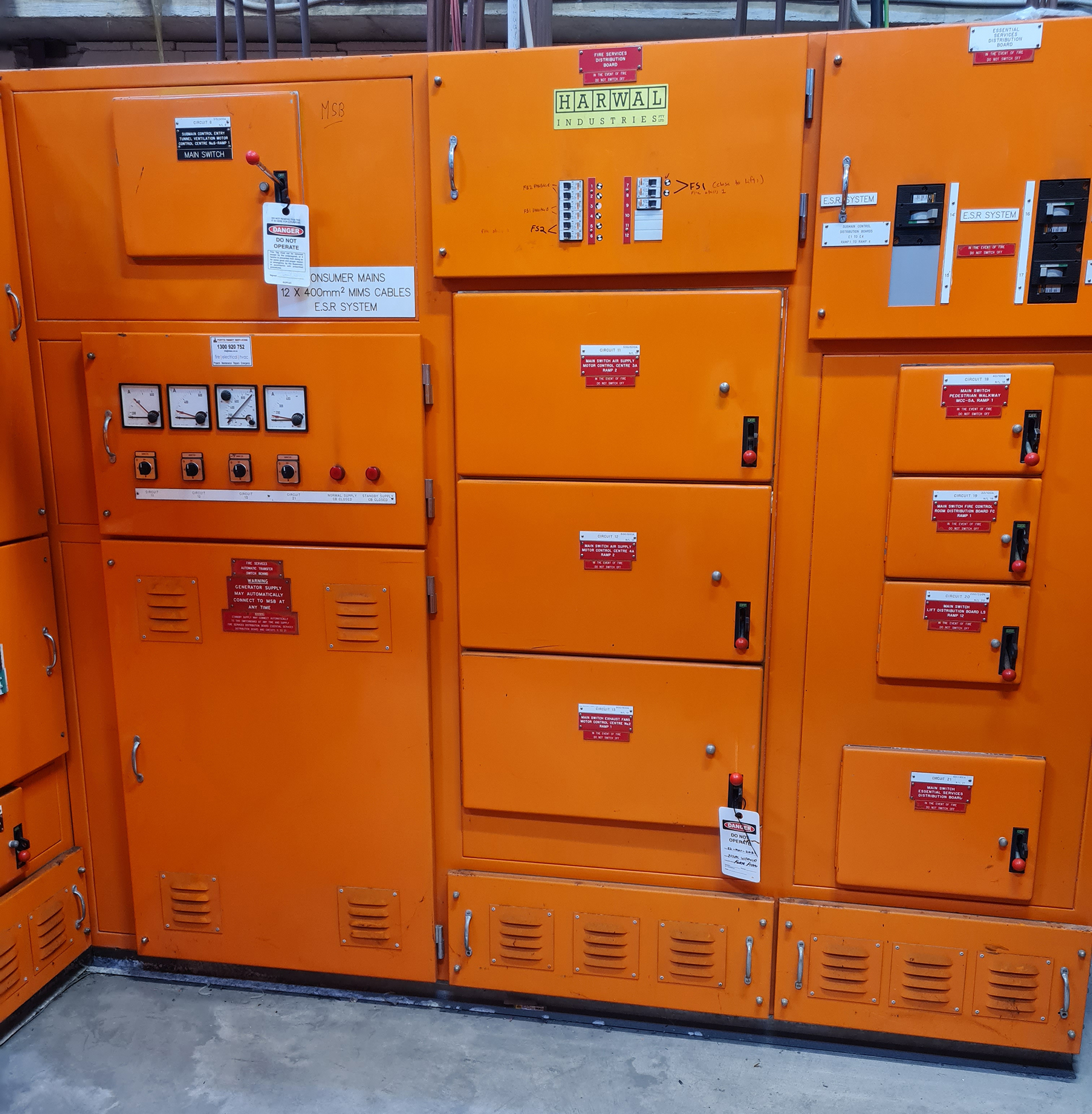
Mechanical Services Switchboards (MSSBs) are generally installed as either Essential Services Switchboards or Non-Essential Services Switchboards, depending on the building design and the operational requirements of the mechanical systems they serve.
Non-Essential Mechanical Services Switchboards typically supply day-to-day HVAC equipment including air handling units, package units, chilled water pumps, condenser water pumps, cooling towers, comfort ventilation systems and general building air conditioning.
Essential Services Mechanical Services Switchboards supply mechanical systems that are required to operate during a fire or other emergency. These commonly include:
- Stair pressurisation fans
- Smoke exhaust fans
- Smoke spill systems
- Car park smoke hazard management supply and exhaust fans
- Zone smoke control systems
- Relief air fans
- Fire mode dampers and associated actuators
- Other mechanical systems identified within the building’s fire engineering strategy
These switchboards are often supplied from the building’s Essential Services Electrical Switchboard (ESSB) or emergency generator system, allowing critical life safety equipment to continue operating during a mains power failure.
Unlike conventional HVAC switchboards, Essential Services MSSBs also require close integration with the building’s fire systems. They commonly interface with the Fire Detection and Control Indicating Equipment (FDCIE)—often referred to as the Fire Indicator Panel (FIP)—to automatically initiate fire mode operation in accordance with the building’s fire engineering design.
Depending on the building, this integration may include automatic shutdown of comfort air conditioning systems, operation of smoke exhaust and stair pressurisation fans, smoke damper control, fault monitoring, status indication and confirmation signals exchanged between the mechanical services controls, the Building Management System (BMS) and the FDCIE.
Because these systems form part of the building’s life safety infrastructure, any refurbishment or replacement project requires careful engineering, detailed planning and commissioning to ensure compliance is maintained throughout the works while minimising disruption to building operations.
Compliance and Australian Standards
Mechanical Services Switchboard upgrades should not simply replace ageing equipment—they should also consider current Australian Standards, building compliance requirements and future operational needs.
Depending on the building and the scope of works, a refurbishment may need to consider:
- AS/NZS 3000 — Electrical Installations (Wiring Rules)
- AS/NZS 61439 — Low-voltage switchgear and controlgear assemblies
- AS/NZS 3017 — Verification guidelines for electrical installations
- AS 1668.1 — Fire and smoke control in buildings
- AS 1668.2 — Mechanical ventilation in buildings
- AS 3009 — Emergency power supplies in buildings (where applicable)
- State electrical service and safety legislation
- Fire engineering requirements
- Building Management System integration
- Emergency generator interfaces
- Current fault level calculations
- Protection coordination and discrimination
- Arc flash risk assessment (where required)
- Energy metering requirements
- Safe isolation and maintenance access
Every project is different. A switchboard serving a shopping centre smoke exhaust system has very different operational requirements to one supplying a commercial office air conditioning plant.
WR8Tech evaluates each switchboard based on its operational function, compliance obligations and whole-of-life performance, rather than applying a one-size-fits-all solution.
When Should a Switchboard Be Refurbished?
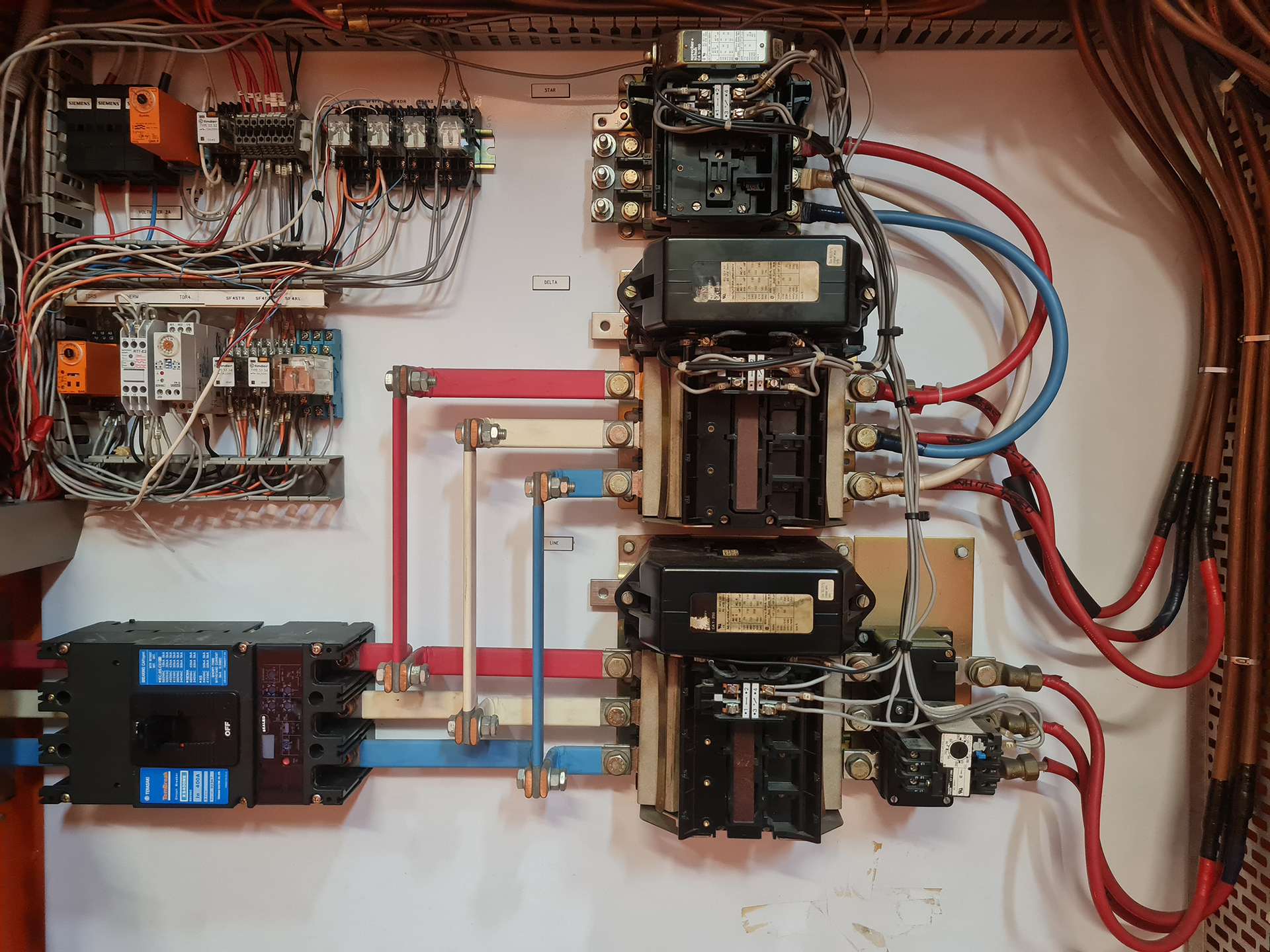
A refurbishment may be appropriate when the switchboard enclosure remains structurally sound but the internal electrical equipment has reached the end of its useful life.
Before any refurbishment begins, however, one of the first considerations is the construction of the existing switchboard itself.
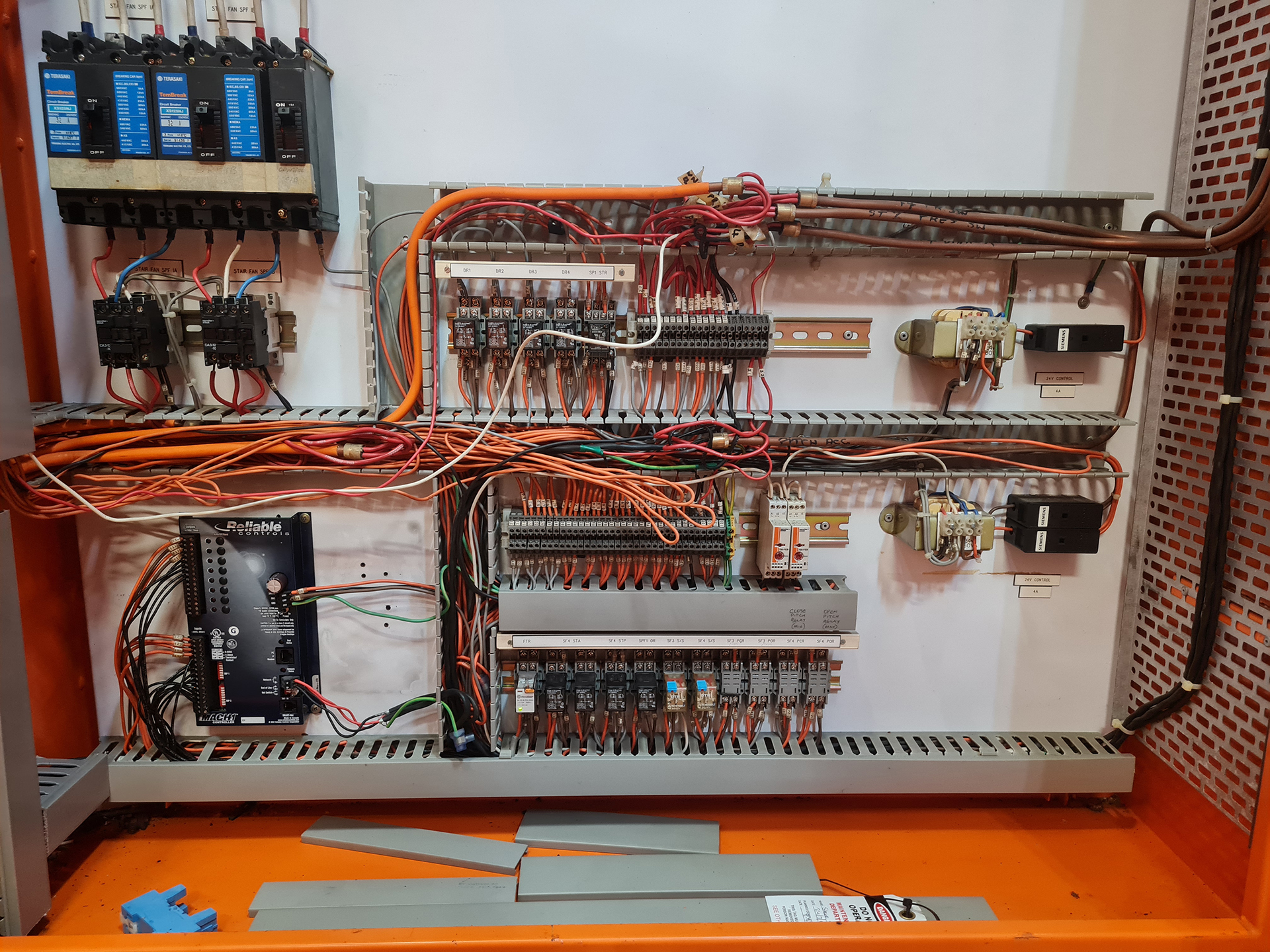
Many Mechanical Services Switchboards installed during the 1960s, 1970s and, in some cases, the early 1980s were manufactured with asbestos cement gear panels. These panels form the mounting surface for contactors, overloads, relays, terminals and other electrical equipment inside the switchboard.
This presents an important challenge during refurbishment projects.
Because the electrical equipment is fixed directly to the asbestos panel, it generally cannot be removed until the switchboard has been safely isolated and appropriate asbestos management procedures have been implemented. Removal of the asbestos gear panel must only be undertaken by appropriately licensed asbestos contractors in accordance with applicable workplace health and safety legislation.
For this reason, asbestos is often one of the first items assessed during a switchboard inspection, as it can significantly influence the project methodology, programme, cost and the decision between refurbishment and complete replacement.
Other common reasons to consider refurbishment include:
- ageing electrical components
- obsolete control equipment
- repeated maintenance issues
- poor wiring practices
- lack of accurate documentation
- increasing energy consumption
- limited capacity for future expansion
- repeated nuisance faults
- deterioration caused by heat or moisture
- non-compliance with current electrical or safety expectations
Many switchboards installed during the 1970s, 1980s and early 1990s continue to operate reliably. However, years of modifications, changing technologies and ageing components often mean that refurbishment becomes the most practical opportunity to improve reliability, maintainability and long-term building performance.
WR8Tech Insight
During inspections of older commercial buildings, one of the first things we look for is whether the switchboard has an asbestos gear panel. Identifying this early allows refurbishment projects to be planned correctly, avoiding unexpected delays, additional costs and safety risks once demolition work begins.
Engineering Before Replacement
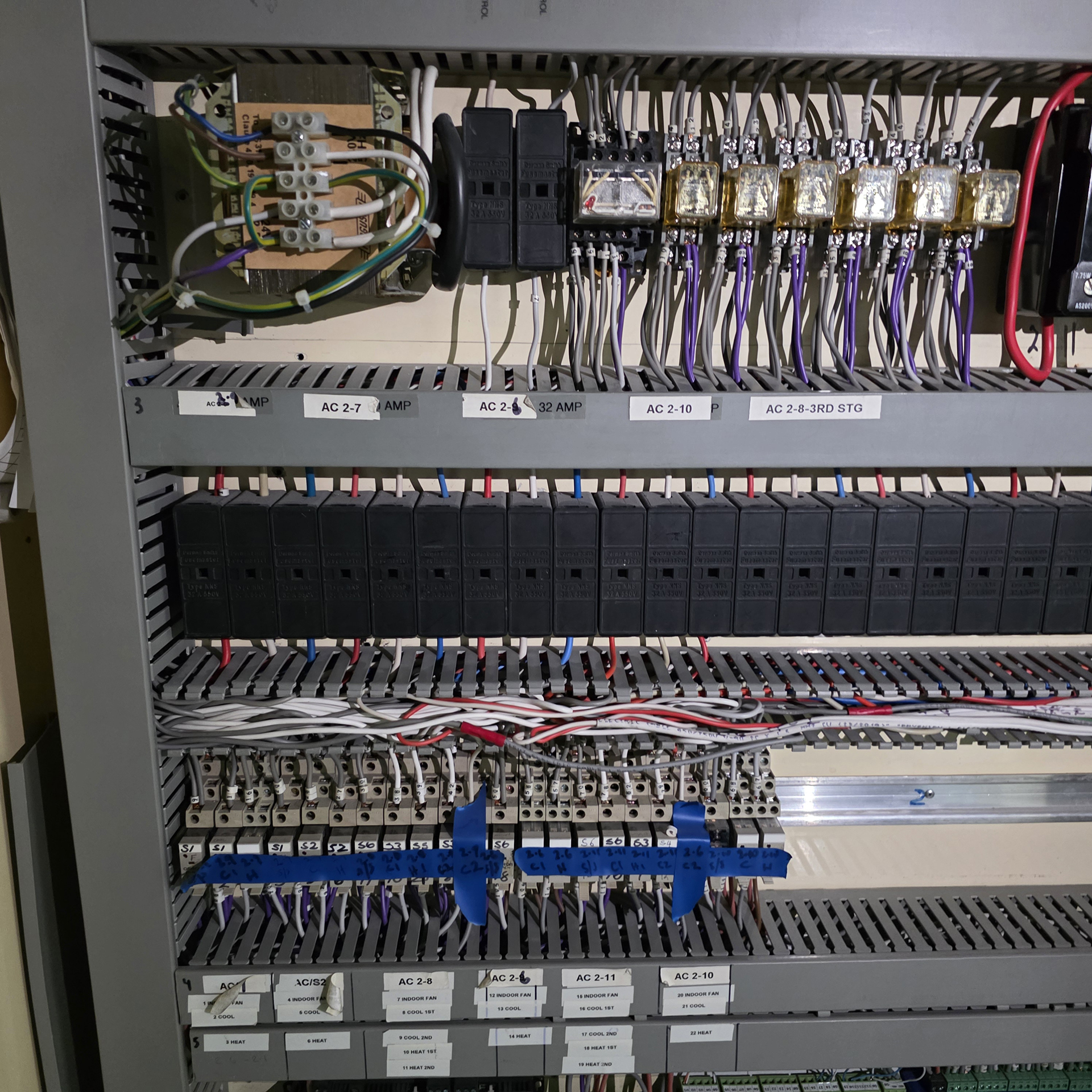
At WR8Tech, we don’t recommend replacing a Mechanical Services Switchboard simply because it is old. We first investigate its condition, assess the availability of replacement components, review its compliance with current standards, and evaluate the remaining service life. Only when refurbishment is no longer technically or financially viable do we recommend complete replacement. This engineering-first approach helps building owners make informed capital investment decisions.
Can the Existing Switchboard Be Saved?
Quite often, the answer is yes.
One of the first questions we ask during an inspection is whether the switchboard carcass—the steel enclosure, framework and doors—is suitable for refurbishment.
If the switchboard carcass remains structurally sound, refurbishment can often provide many of the benefits of a completely new switchboard while significantly reducing project costs and minimising disruption to building operations.
During our assessment we typically inspect:
- the overall structural condition of the enclosure
- signs of corrosion or water ingress
- door alignment and operation
- hinges, locks and latching mechanisms
- gland plates and cable entry arrangements
- internal mounting arrangements
- available space for future expansion
- compliance with current safety and access requirements
A switchboard with a straight, rust-free enclosure, properly aligned doors and sound structural integrity is often an excellent candidate for refurbishment.
Engineering the Best Outcome
A successful refurbishment is not simply about replacing old components.
Often, the greatest value comes from reviewing the original electrical design and correcting issues that have developed over decades of modifications.
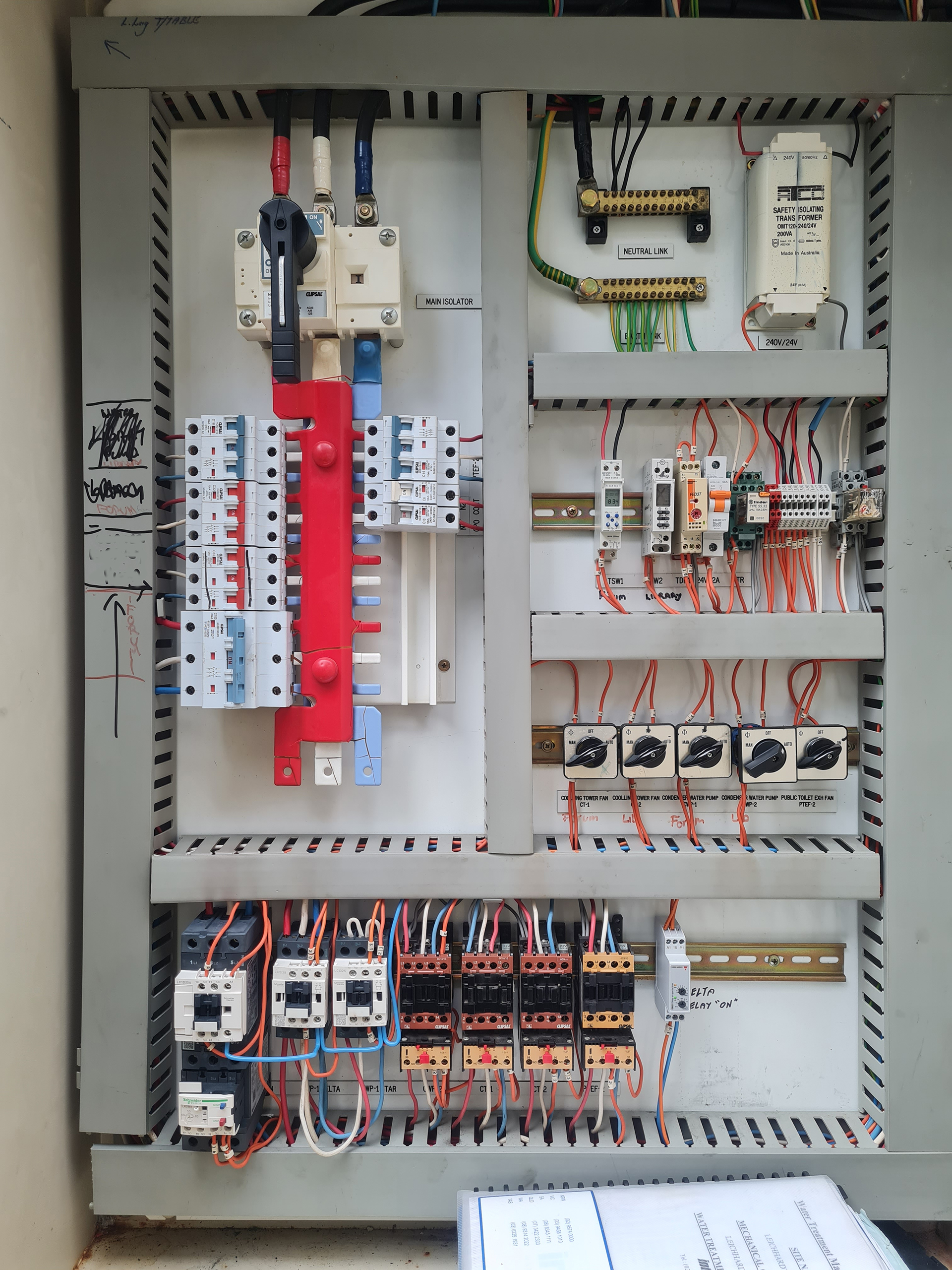
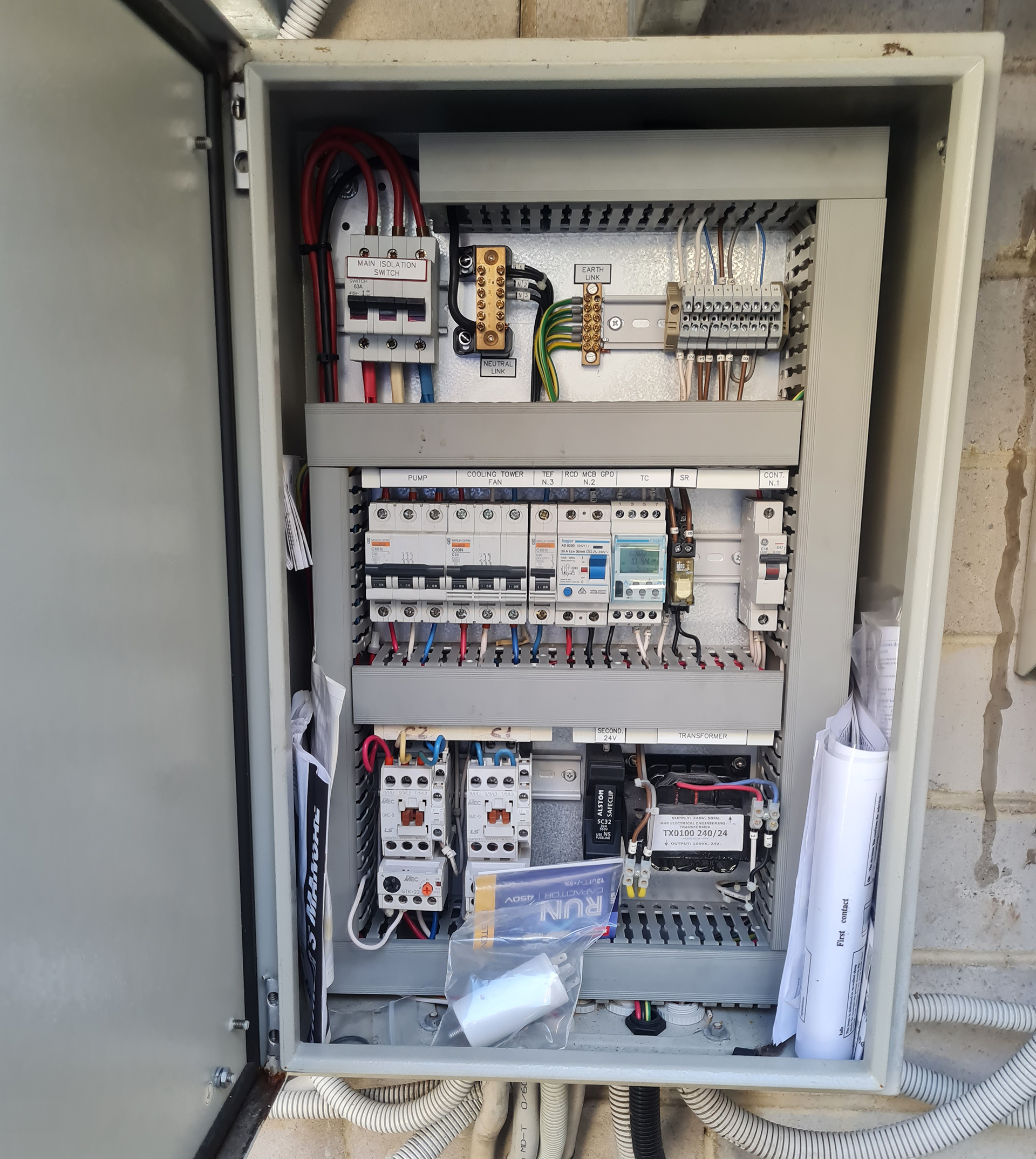
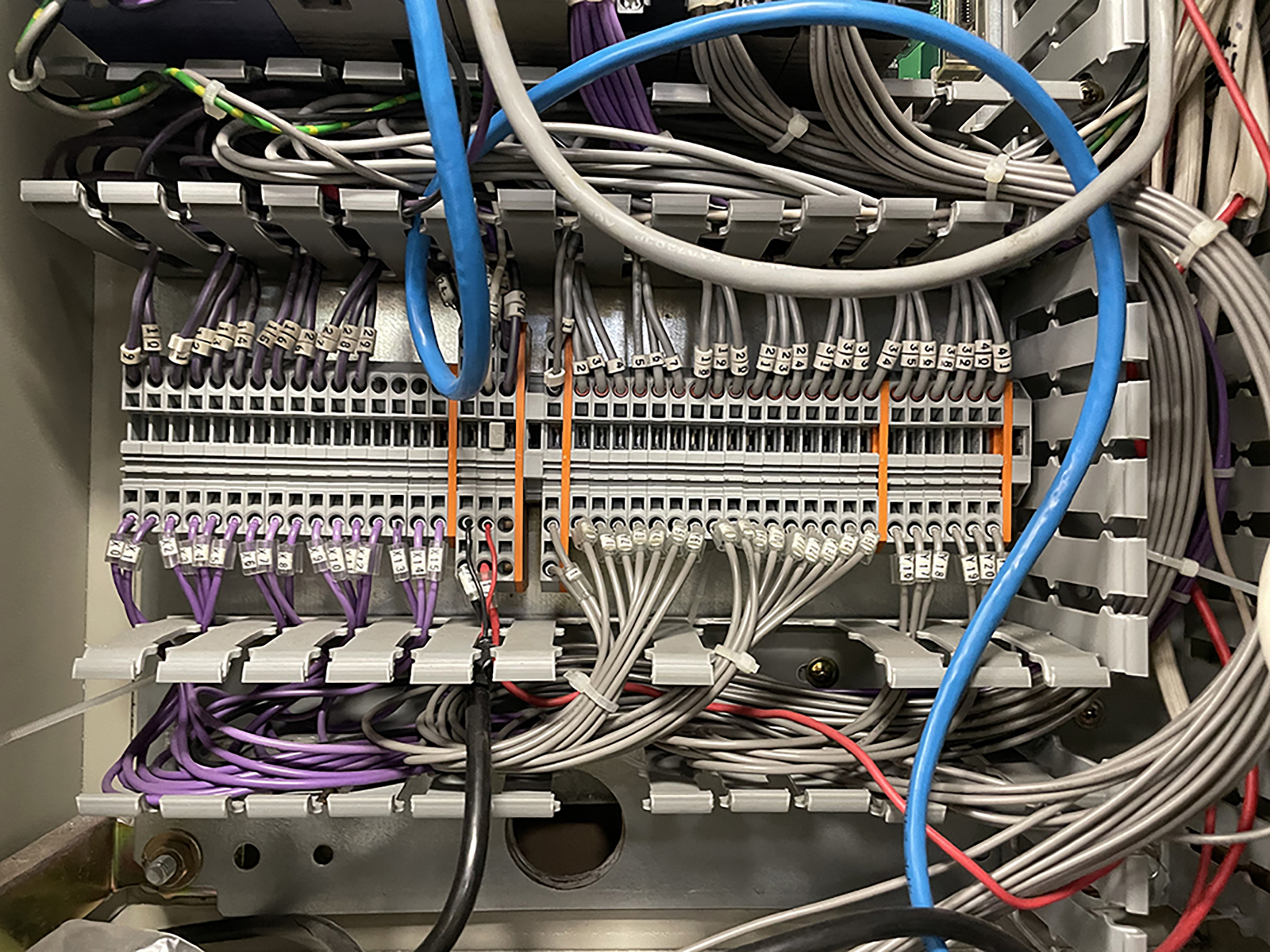
For example, we recently inspected an older Mechanical Services Switchboard where the control system had evolved over many years. The switchboard contained two separate control voltages—a 24 Volt AC control circuit and a 240 Volt AC control circuit—operating throughout the same panel.
While the switchboard remained operational, the mixed-voltage control design unnecessarily complicated maintenance, increased fault-finding time and made future modifications more difficult.
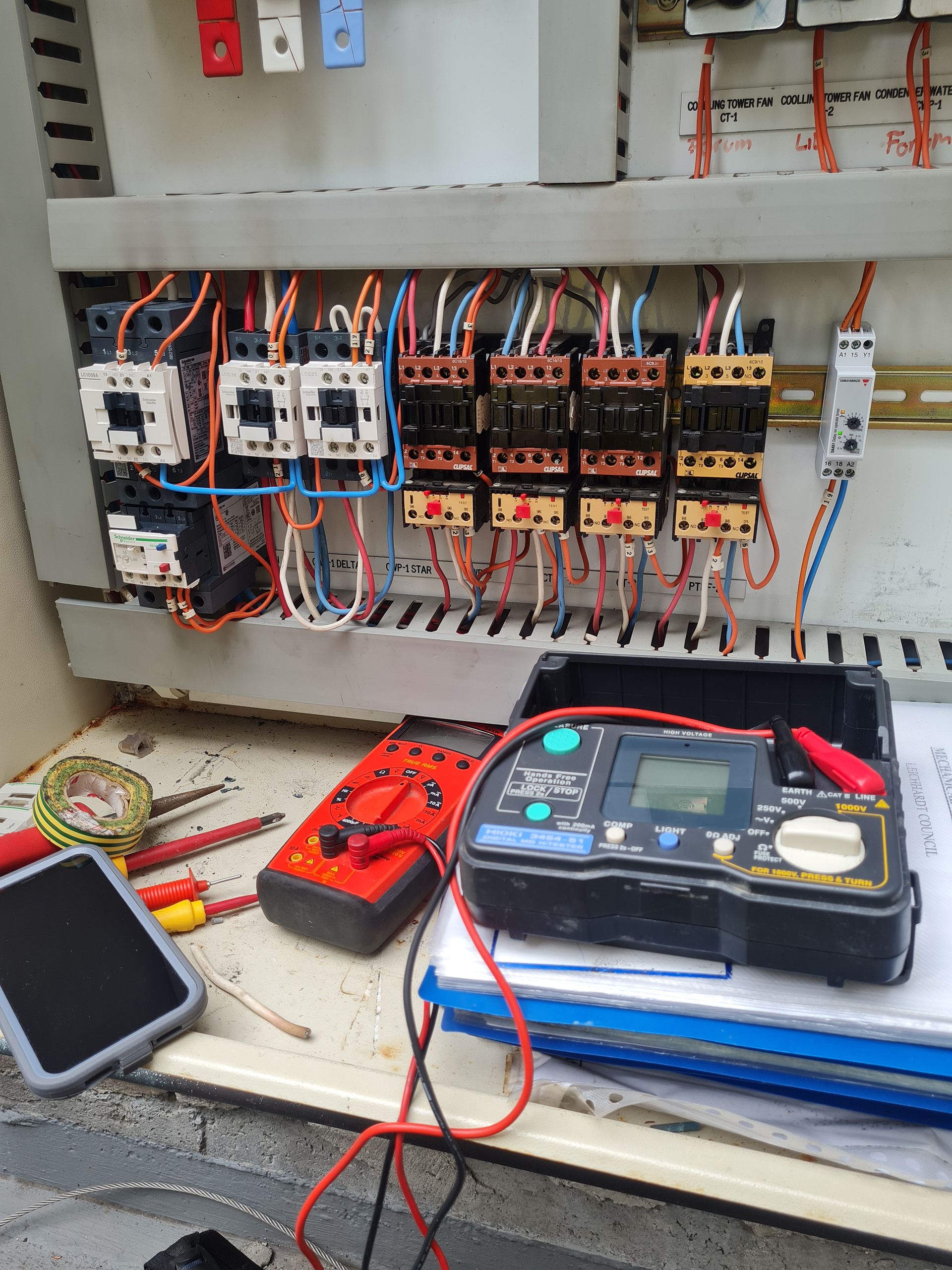
Rather than recommending complete replacement, we redesigned the control circuits, rewired the existing panel and standardised the control system to a single 24 Volt AC control voltage. A small number of contactors and associated control components were replaced as part of the upgrade.
The result was a safer, simpler and more maintainable switchboard at a fraction of the cost of complete replacement.
This type of engineering review is often where the greatest savings are achieved.
A Refurbishment May Include
Depending on the condition of the switchboard, refurbishment may include:
- replacement of ageing contactors, overloads and protective devices
- replacement of obsolete control relays and timers
- rewiring deteriorated control circuits
- rationalising complex or duplicated control logic
- standardising control voltages where practical
- installing modern motor protection
- upgrading cable terminations and cable management
- replacing damaged terminal strips
- installing Variable Speed Drives (VSDs)
- integrating with a modern Building Management System (BMS)
- improving documentation and producing accurate as-built drawings
Every switchboard is different. Some require little more than replacement of ageing control equipment, while others benefit from a complete redesign of the control philosophy while retaining the existing enclosure.
The objective is always the same—to deliver the safest, most reliable and most cost-effective outcome for the building owner.
When Replacement Is the Better Option
While many Mechanical Services Switchboards can be successfully refurbished, there comes a point where replacement becomes the safer, more reliable and ultimately more economical solution.
The decision is rarely based on a single issue. Instead, it is usually the result of years—or even decades—of deterioration, repeated modifications and environmental exposure that gradually compromise the integrity of the switchboard.
Common reasons replacement should be considered include:
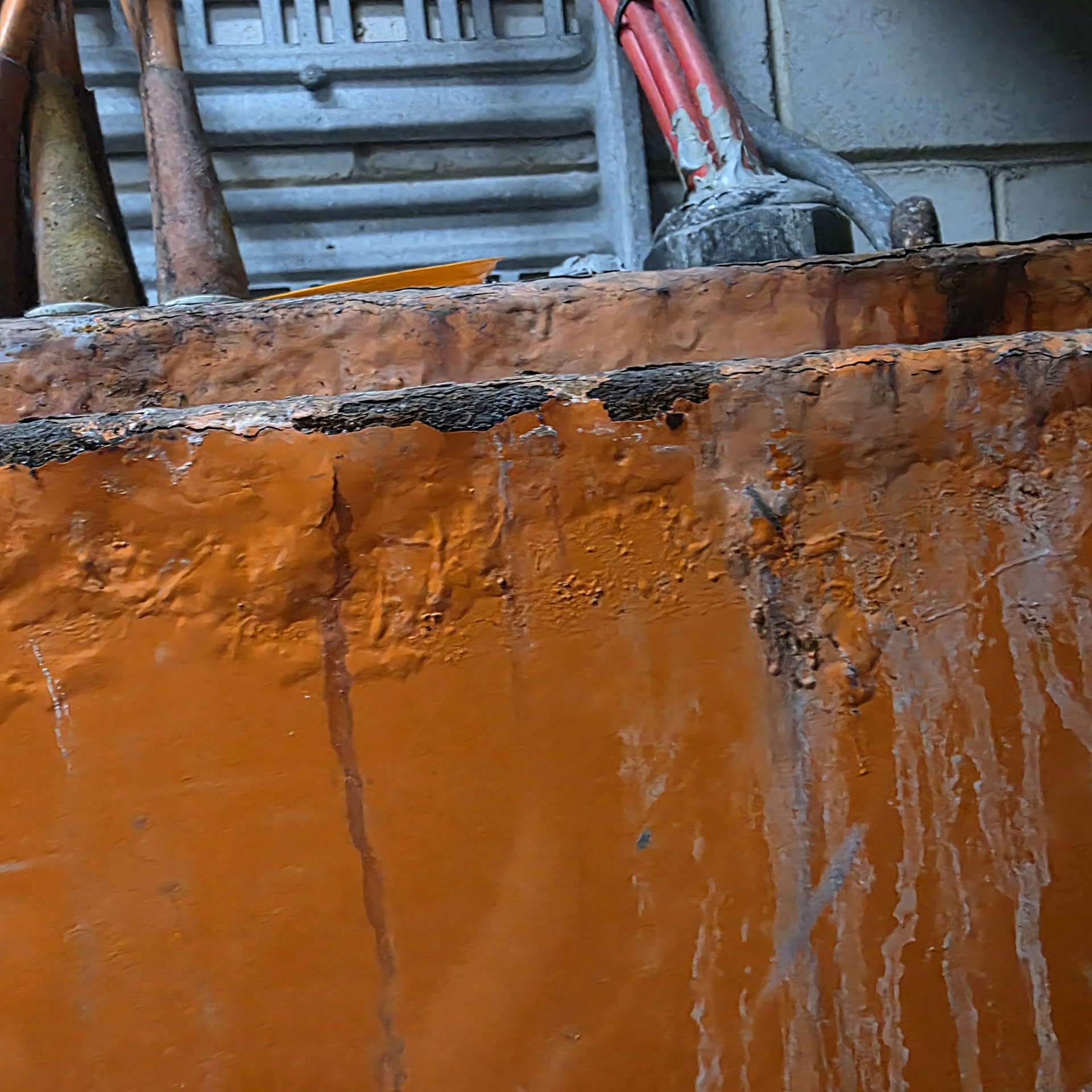
- Significant water ingress
- Corrosion of the enclosure or internal components
- Asbestos gear panels
- Structural damage to the switchboard carcass
- Inadequate fault ratings
- Limited physical space for future expansion
- Extensive undocumented modifications
- Obsolete switchgear and control equipment
- Poor cable management
- Non-compliance with current electrical or safety requirements
Water Ingress — One of the Biggest Enemies of Older Switchboards
One of the most common reasons we recommend replacement is water ingress.
This is particularly common in older commercial buildings throughout Sydney, especially in basement plant rooms, underground car parks and rooftop plant areas where switchboards have been exposed to moisture over many years.
Water rarely enters a switchboard in a single event. More commonly, it slowly finds its way through deteriorated roof flashings, failed sealants, damaged cable entries or ageing enclosure seals. Over time, even small amounts of moisture can bypass the enclosure’s protective barriers and begin affecting the internal electrical equipment.
In many underground car parks, groundwater can migrate through concrete walls and ceilings, while rooftop switchboards may be subjected to decades of wind-driven rain, UV exposure and thermal movement. As seals, gaskets and gland plates age, the enclosure gradually loses its ability to prevent moisture ingress. Environmental conditions such as moisture, heat and corrosive contaminants can significantly reduce the service life of electrical equipment if not properly managed.
Corrosion Doesn’t Stop at the Steelwork
The problem is not simply the presence of water—it’s what the water carries with it.
In many Sydney buildings, water passing through sandstone, concrete structures and underground environments can contain dissolved minerals, salts and other contaminants. As this moisture evaporates inside the switchboard, it leaves behind corrosive deposits that gradually attack steelwork, copper conductors, terminals and protective coatings.
Over time we commonly see:
- Rust forming on the switchboard carcass and internal mounting plates
- Corrosion of busbars and cable terminations
- Deterioration of protective coatings
- Oxidised terminal connections
- Reduced insulation resistance
- Damaged control equipment
- Increased heat generation caused by high-resistance electrical joints
These problems rarely develop overnight. They typically evolve over many years until faults begin appearing more frequently and maintenance costs continue to increase.
When Refurbishment Is No Longer Practical
Surface corrosion can often be repaired during a refurbishment. However, where corrosion has compromised the structural integrity of the enclosure, affected busbar systems or caused widespread deterioration of the internal equipment, replacement is usually the most practical long-term solution.
Similarly, if the switchboard has experienced repeated water ingress over many years, simply replacing the electrical components may not address the underlying problem. Unless the enclosure itself can once again provide adequate environmental protection, new equipment may be exposed to the same conditions that caused the original deterioration.
At WR8Tech, our objective is not simply to replace switchboards—we assess the condition of the enclosure, the electrical infrastructure and the operating environment to determine the most appropriate engineering solution for the building. Sometimes that means a carefully planned refurbishment. In other cases, complete replacement provides the lowest whole-of-life cost, improved reliability and a safer outcome for building owners and occupants.
WR8Tech Insight
We’ve inspected basement Mechanical Services Switchboards where the top of the enclosure appeared to be in good condition from the outside.
Once the roof panel was removed, years of slow water ingress had completely corroded the internal mounting rails, contactors and cable terminations. The leaks had developed so gradually that they had gone unnoticed until repeated electrical faults prompted an investigation.

Every Mechanical Services Switchboard has a history. Our job is to understand that history, identify the risks, and recommend the most practical engineering solution for the next stage of your building’s life.