
Estimated reading time: 35 minutes
Building Management Systems (BMS) | Building Automation Solutions
Commercial buildings rely on automation to control HVAC plant, monitor operating conditions, manage energy use, generate alarms and help building operators understand how their systems are performing.
A building automation system may include sensors, controllers, field devices, communications networks, control programming, graphics, alarms and connections to other building services. When these components are properly designed, integrated and commissioned, they can improve comfort, reliability, energy performance and operational visibility.
WR8Tech works with building owners, facility managers, strata managers, consultants and contractors to design, integrate, upgrade, commission and troubleshoot building automation and building management systems. Our experience spans the complete control environment—from electrical and mechanical plant in the field through to controllers, networks, BMS graphics, analytics and remote monitoring.
We place particular emphasis on existing commercial buildings, where ageing controls, incomplete documentation, obsolete equipment, poor integration and years of undocumented changes can make automation systems difficult to understand and maintain.
What Is a Building Automation System?
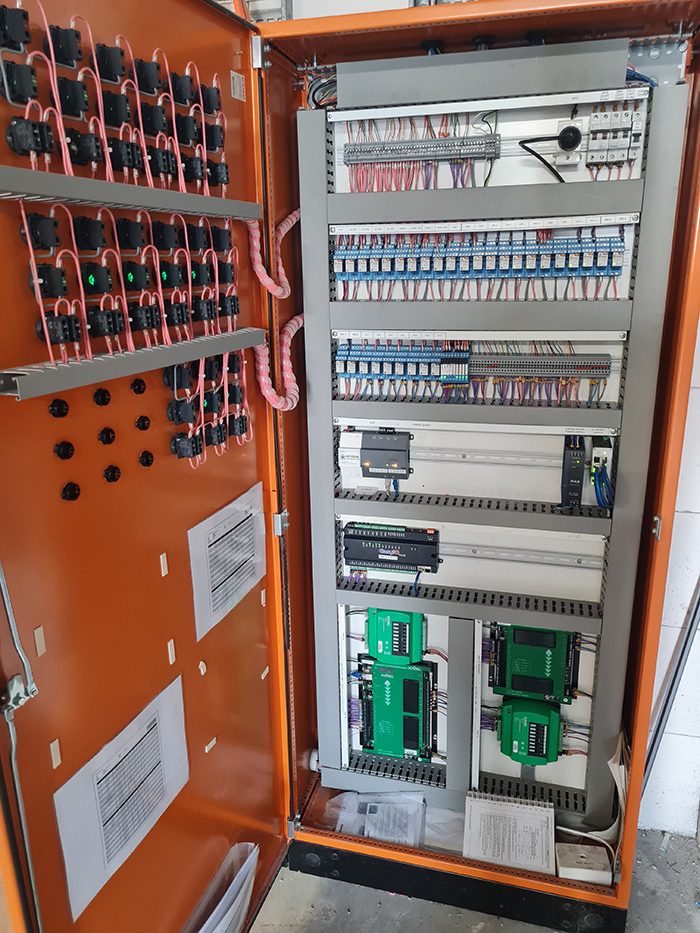
A building automation system, commonly referred to as a BAS, is a network of controllers, sensors, field devices, software and communications infrastructure used to monitor and control a building’s mechanical and electrical systems.
In commercial buildings, the BAS is most commonly responsible for controlling heating, ventilation and air conditioning equipment. Depending on the building and the system design, it may also monitor electrical metering, lighting, generators, pumps, water systems, indoor environmental conditions and interfaces with other building services.
The terms Building Automation System, Building Management System and Building Management and Control System are often used interchangeably. The terminology may vary between manufacturers, consultants and different parts of the industry, but each generally describes the technology used to automate, supervise and manage building operation.
A properly functioning system does more than start and stop equipment. It coordinates plant operation, maintains environmental conditions, records trends, generates alarms, manages operating schedules and provides building operators with information they can use to identify faults and improve performance.
The effectiveness of a building automation system depends on much more than the software displayed on the operator’s screen. Its performance is determined by the quality of the sensors, controllers, field devices, communications networks, control sequences, commissioning and ongoing maintenance behind it.
What a Commercial BAS Can Monitor and Control
A commercial building automation system can monitor and control a wide range of mechanical and electrical equipment. The exact scope depends on the building, the installed technology and the level of integration provided.
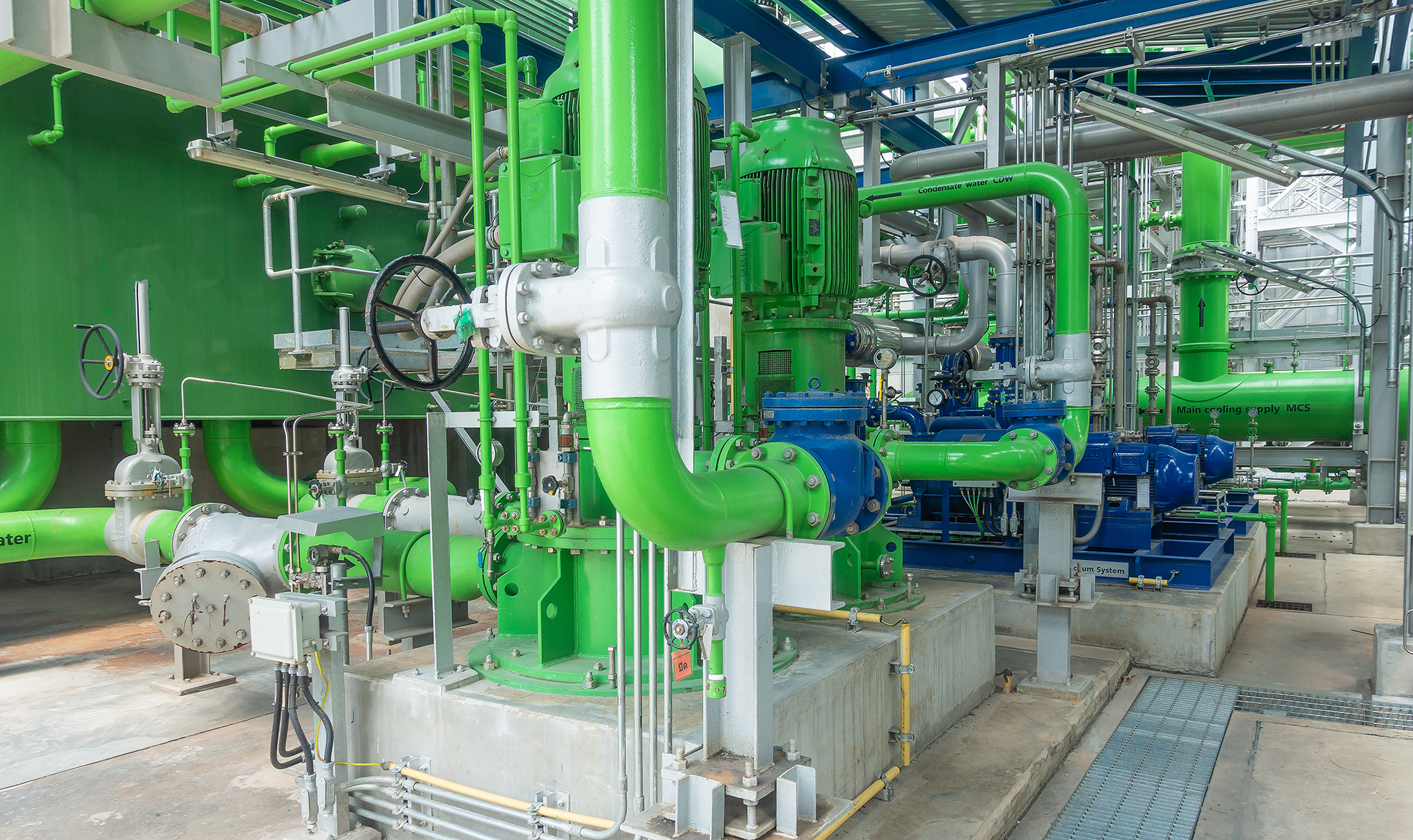
Heating, ventilation and air conditioning systems are commonly at the centre of a BAS. This may include air handling units, fan coil units, chillers, boilers, cooling towers, pumps, fans, variable speed drives, dampers, valves and packaged air conditioning equipment.
A BAS may also monitor or interface with:
- electrical meters and power monitoring equipment
- generators and automatic transfer systems
- lighting control systems
- car park ventilation and carbon monoxide monitoring
- water tanks, pumps and leak detection systems
- refrigeration and temperature-critical equipment
- indoor environmental sensors
- access control, lifts and other third-party systems
- fire alarm and life-safety interfaces
The level of control available varies between systems. Some equipment may be fully controlled by the BAS, while other equipment may provide only operating status, alarms, meter readings or limited high-level commands.
Effective automation is not achieved simply by connecting as many systems as possible. Each interface must have a clear operational purpose, reliable data and an appropriate response when a fault or abnormal condition is detected.
When properly designed and commissioned, building automation can improve operational visibility, identify faults earlier, coordinate plant operation, optimise schedules and help building managers make decisions using verified system data rather than assumptions.

WR8Tech Building Automation Services
Many commercial buildings already have a building automation or building management system installed. However, the system may no longer reflect how the building operates today.
Changes to tenancy layouts, HVAC equipment, operating hours, control strategies and connected services can gradually reduce the effectiveness of the original system. Documentation may be incomplete, alarms may no longer receive attention, and optimisation functions may never have been properly commissioned.
WR8Tech helps building owners, facility managers, strata managers, consultants and contractors improve the performance and reliability of both existing and new building automation systems.
Building Automation Design and Engineering
We develop practical automation and control solutions around the building’s mechanical and electrical systems, operational requirements and existing infrastructure.
This may include control strategies, points schedules, functional descriptions, system architecture, equipment interfaces and upgrade planning.
BMS Integration and System Interfaces
We connect controllers, mechanical plant, electrical meters and other compatible building systems using open communications protocols and appropriately engineered interfaces.
Each integration is developed around a clear operational purpose rather than simply displaying more information on the BMS.
Programming and Control Optimisation
We review and improve control sequences, operating schedules, plant staging, temperature reset strategies, economy cycles, demand control and other available optimisation functions.
Before changes are made, the existing system and plant operation must be verified so that the proposed strategy reflects the actual building.
Alarms, Trends and Operational Visibility
We configure alarms, trend logs and operator information to make the system more useful to those responsible for the building.
The objective is to help operators identify abnormal conditions, investigate recurring problems and distinguish genuine faults from unnecessary system noise.
Existing-System Upgrades and Modernisation
A complete replacement is not always necessary.
WR8Tech can assess existing controllers, field devices, networks, graphics and connected equipment to determine what can be retained, what should be upgraded and whether the work can be completed in stages.
Commissioning and Recommissioning
We test control sequences, sensors, field devices, communications, alarms and equipment responses to confirm that the system operates as intended.
For existing buildings, recommissioning can also identify programming errors, failed sensors, overridden points, incorrect schedules and control strategies that no longer suit the building.
Ongoing Technical Support
Building automation systems must continue to adapt as equipment, tenancy requirements and building operations change.
WR8Tech provides troubleshooting, system reviews, control modifications, remote support and ongoing optimisation to help maintain system performance over time.
The Parts of a Building Automation System
A building automation system is made up of several connected layers. Each layer has a different role, and the overall performance of the system depends on how well these components are selected, installed, programmed and commissioned.
01
Sensors and Field Devices
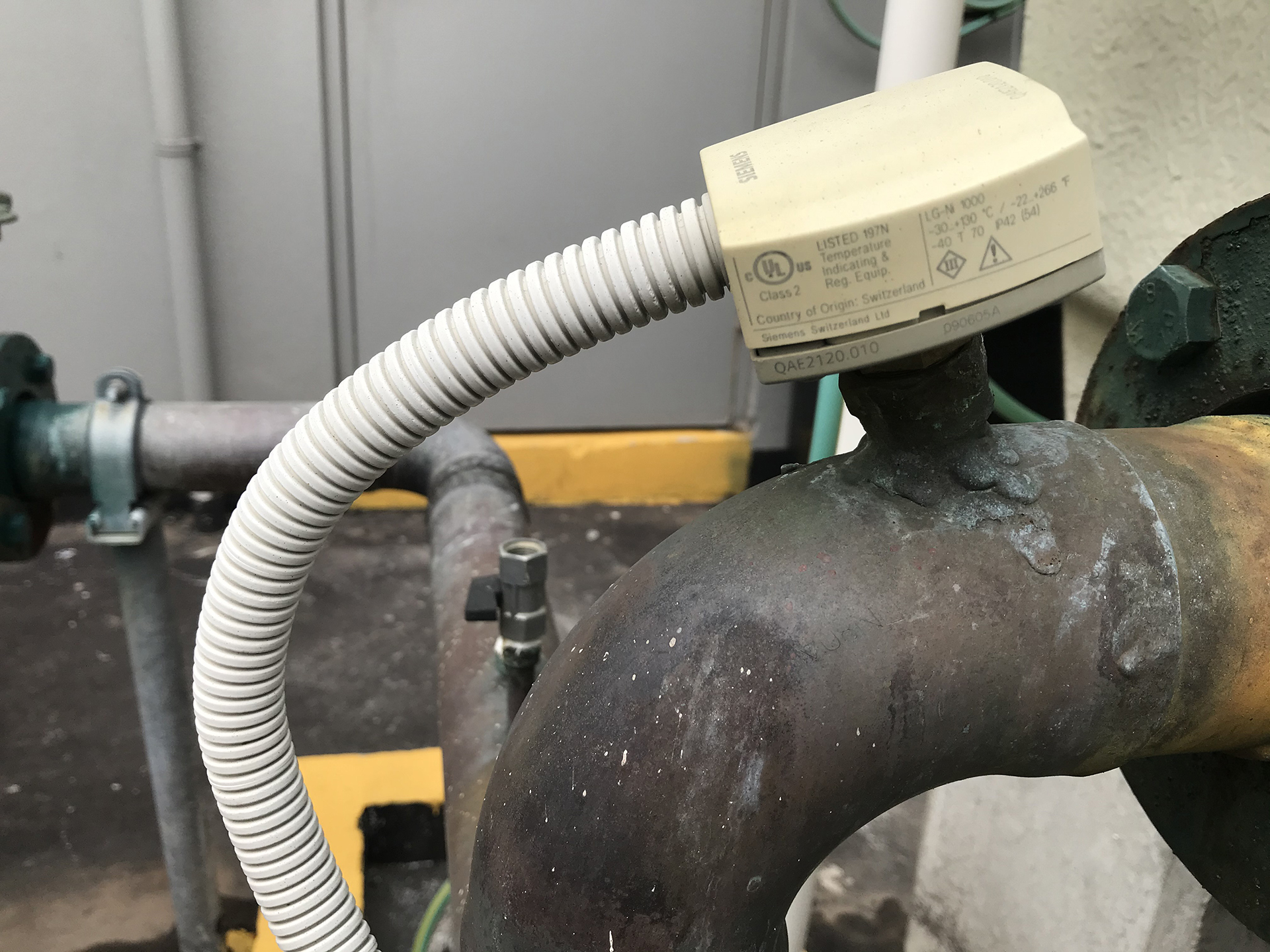
Sensors measure the conditions within the building and its mechanical and electrical systems.
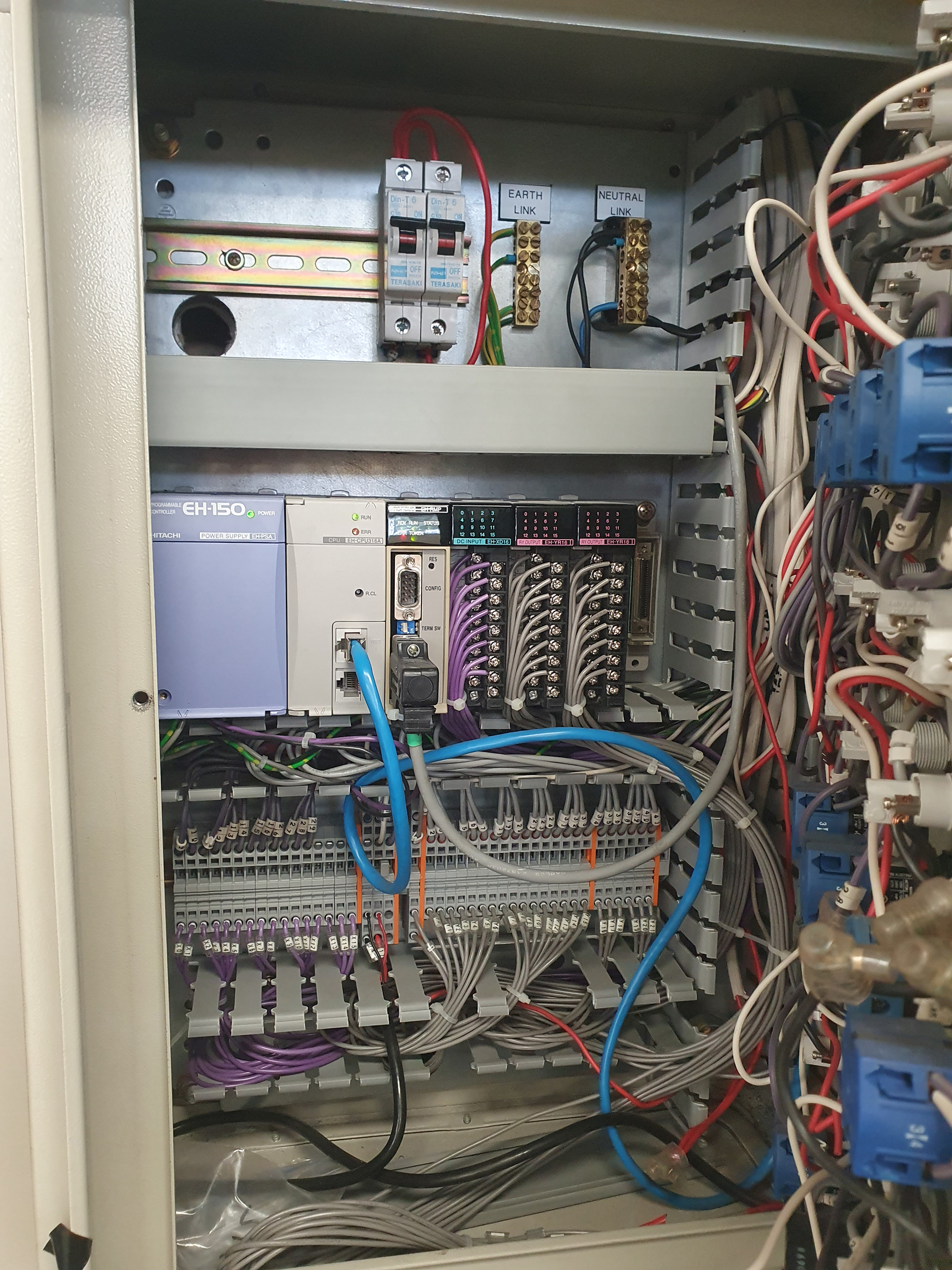
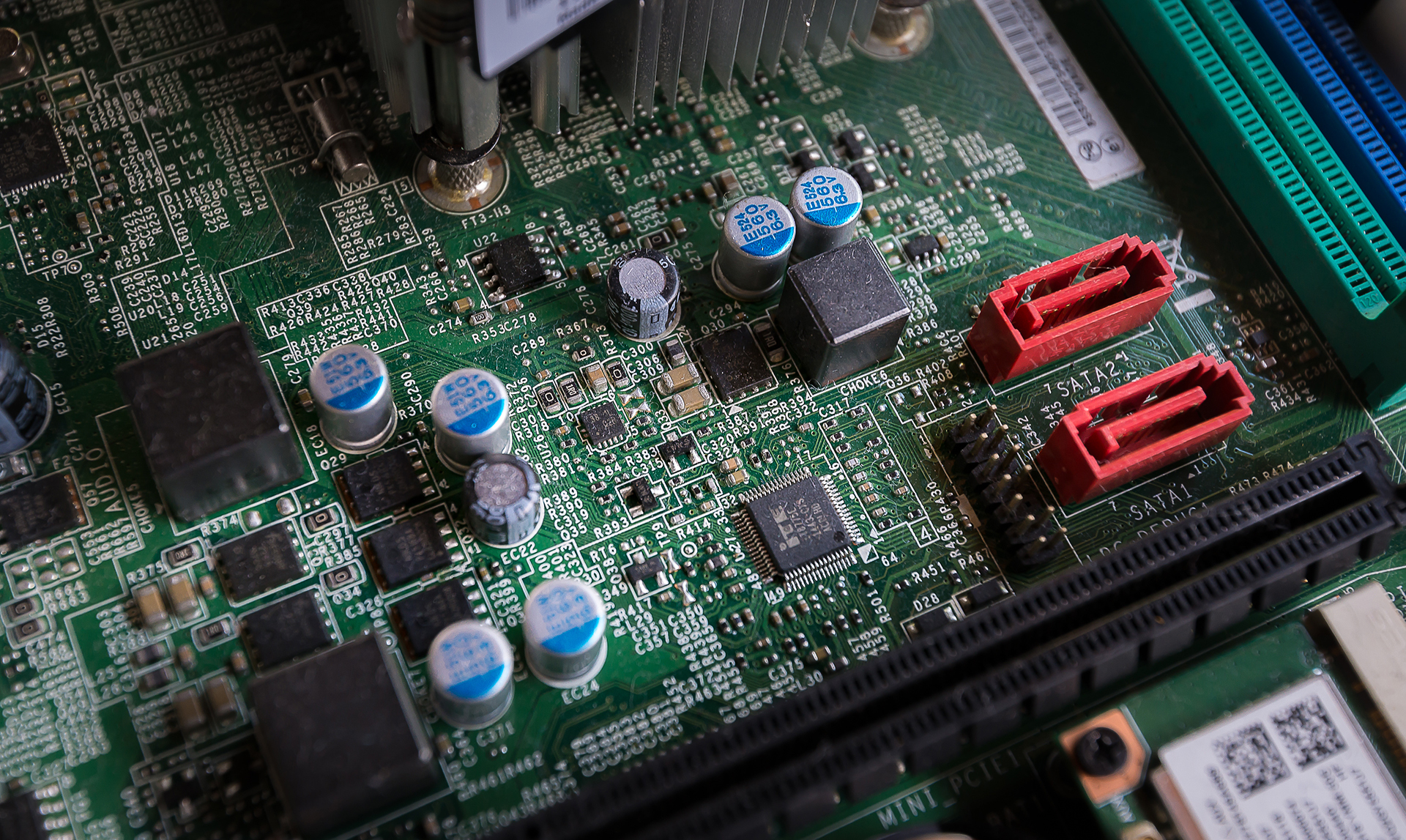
These may include temperature, humidity, carbon dioxide, pressure, flow, electrical demand, equipment status and water-level sensors. Other field devices, such as switches, relays, valves, dampers and variable speed drives, allow the automation system to respond to changing conditions.
Accurate control begins with accurate field information. A failed, incorrectly located or poorly calibrated sensor can cause equipment to operate inefficiently even when the programming appears correct.
02
Controllers
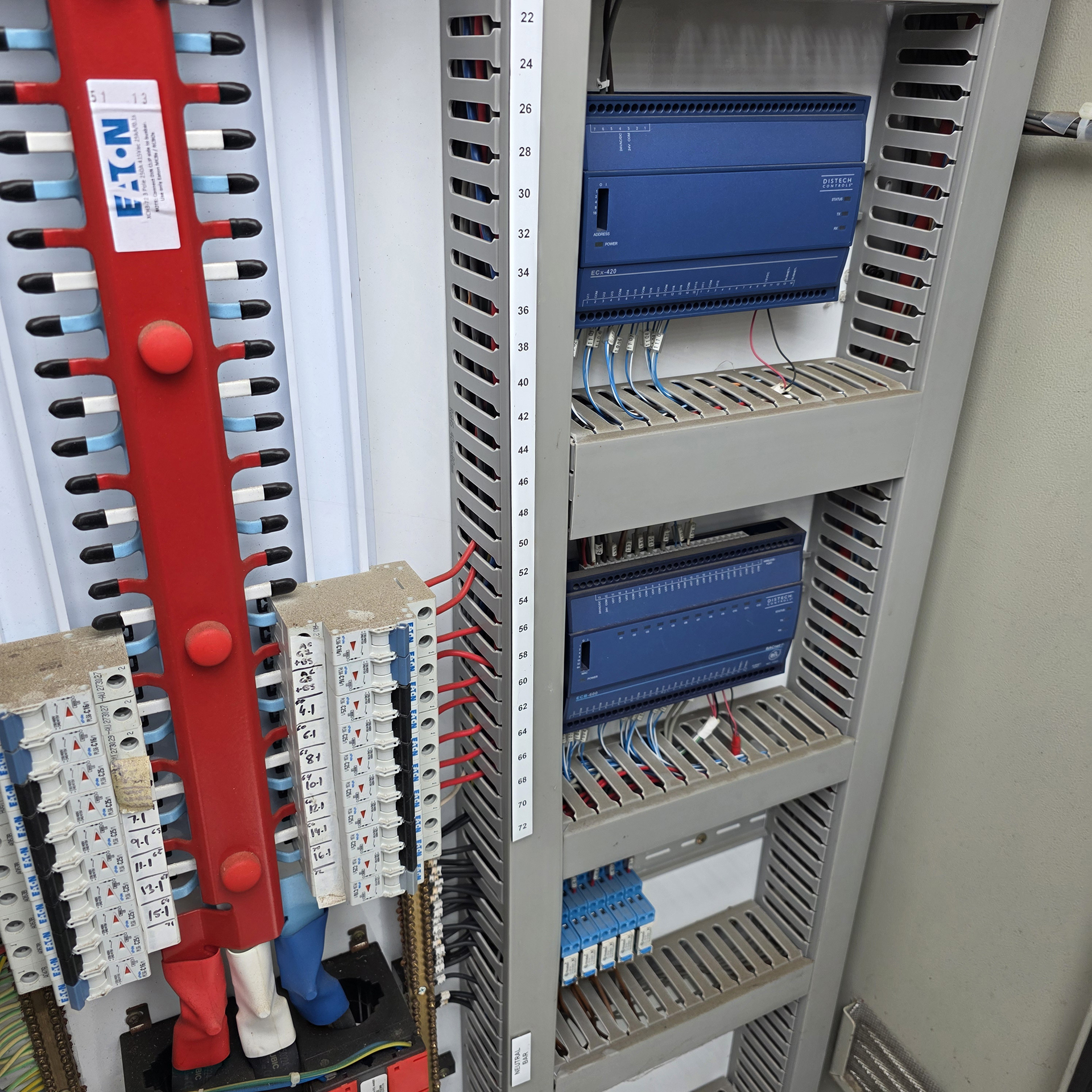
Controllers receive information from sensors, apply programmed control logic and send commands to equipment in the field.
They may control individual items of plant, such as an air handling unit, or coordinate multiple systems across a floor, tenancy or complete building.
Controllers continue to operate the building even when the central BMS workstation is unavailable, provided the system has been properly designed and programmed.

03
Control Programming and Functional Sequences
Control programming determines how the building responds to temperature, pressure, occupancy, time schedules, alarms and changing operating conditions.
This may include starting and stopping equipment, modulating valves and dampers, staging chillers or boilers, controlling fan speeds, resetting temperature setpoints and selecting economy modes.
The quality of the control sequence has a direct effect on comfort, energy use, plant reliability and fault response.
04
Communications Networks
Building automation components communicate across wired or network-based systems.
Common communications protocols include BACnet and Modbus, although many buildings also contain legacy or manufacturer-specific networks.
A reliable network allows controllers, meters, plant equipment and operator workstations to exchange information. Poor network design, addressing conflicts, failed cabling and incompatible devices can reduce system performance or make faults difficult to diagnose.

05
Operator Workstations and Graphics
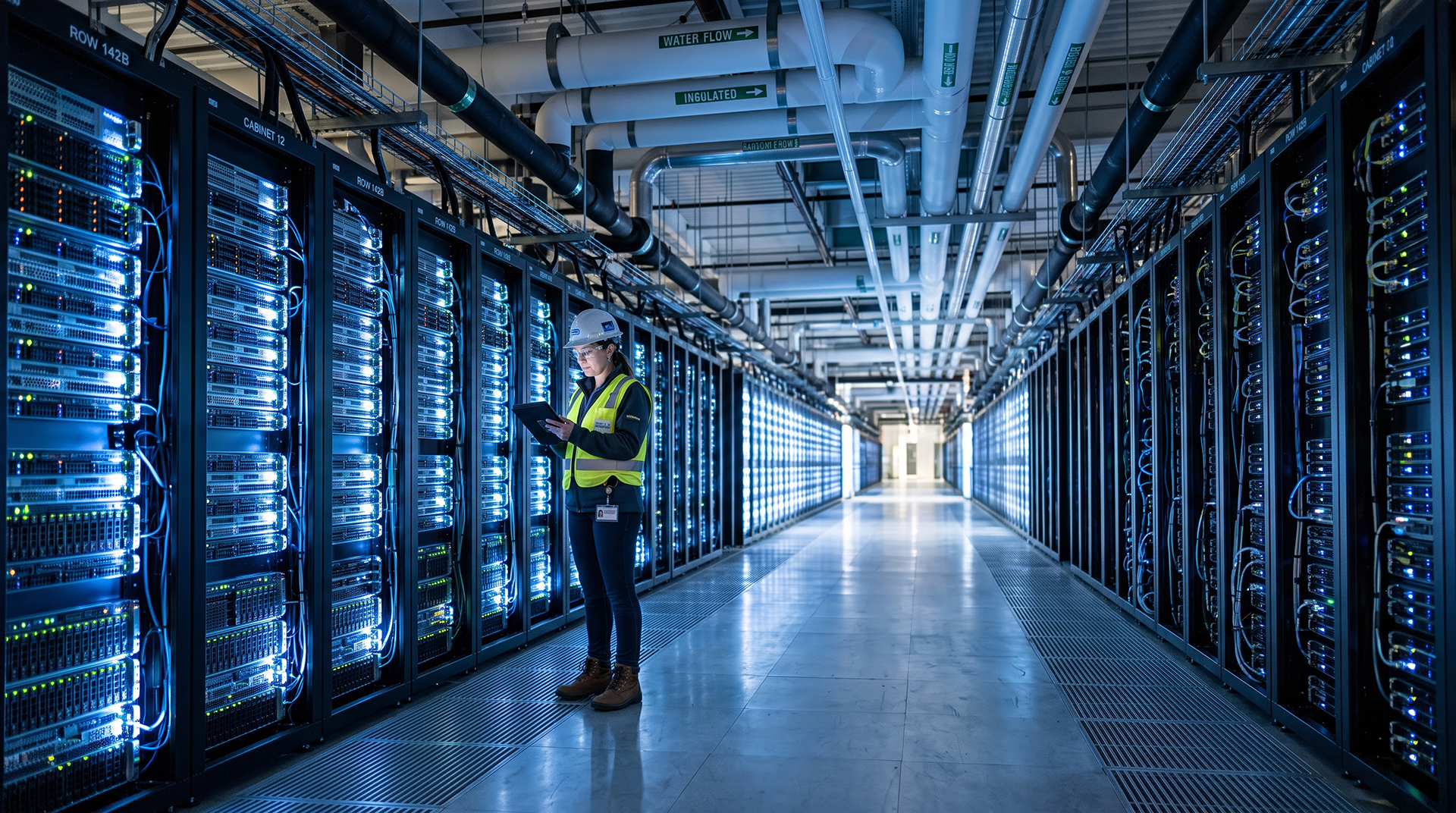
The operator workstation provides access to system graphics, alarms, schedules, trends and equipment information.
Well-designed graphics help building operators understand what is happening within the building. Poorly designed graphics may look modern while providing little useful information about actual plant operation.
The workstation is an important part of the system, but it is only the visible layer of a much larger control environment.
06
Alarms, Trends and Historical Data
Alarms notify building operators when equipment stops, conditions move outside acceptable limits or communication is lost.
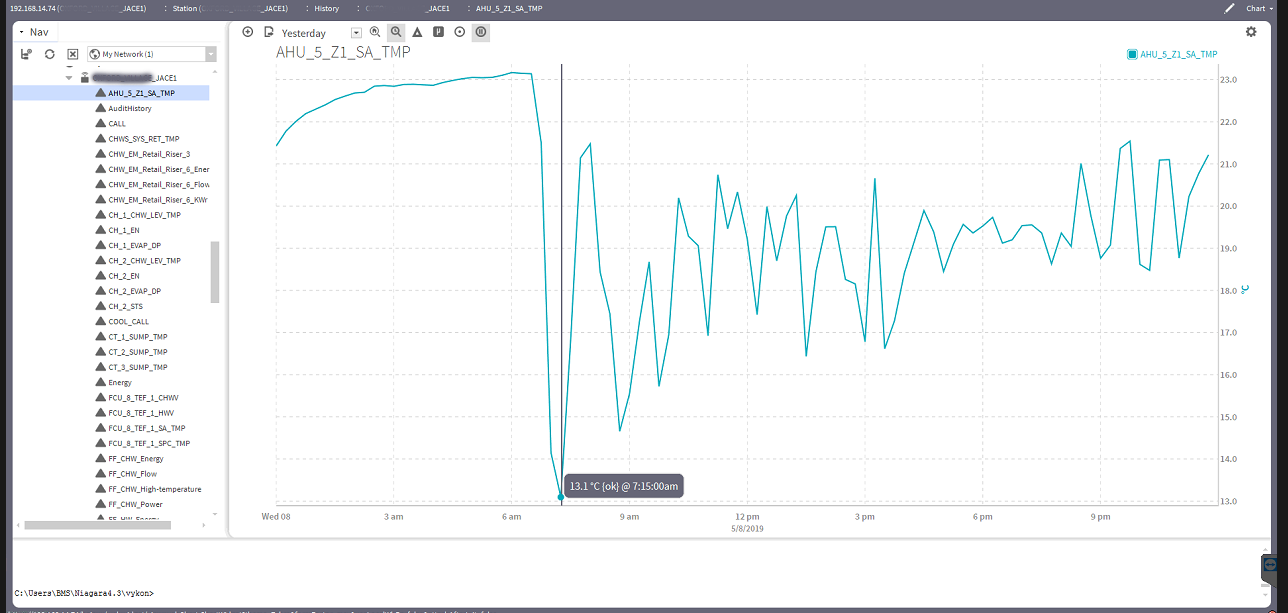
Trend logs record how temperatures, pressures, equipment states and control outputs change over time. This information can be used to investigate complaints, verify equipment operation, identify recurring faults and assess whether control strategies are working as intended.
For alarms and trends to be useful, they must be carefully selected and configured. Too many unnecessary alarms can hide the conditions that genuinely require attention.
07
System Interfaces
A building automation system may exchange information with chillers, packaged air conditioning equipment, electrical meters, generators, lighting controls, fire systems, access control and other building services.
These interfaces may provide full control, limited commands, equipment status, alarms or monitoring data.
Each interface should be designed around a specific operational requirement and should clearly define what the BAS can control, what it can monitor and how the connected systems will respond during a fault.
The Graphics Are Only the Visible Layer.
The graphics displayed on a building management system are important, but they represent only the visible layer of the building automation system.
Behind every graphic is a much larger control environment made up of sensors, controllers, field devices, communications networks, software, programming and mechanical or electrical equipment. The quality of the information shown on the screen depends entirely on how well these underlying components have been selected, installed, programmed and commissioned.
A modern-looking interface does not necessarily mean the building is being controlled effectively. Attractive graphics can still sit above inaccurate sensors, failed actuators, overridden control points, poor programming, unstable networks or equipment that has never been properly integrated.
The opposite can also be true. An older BMS front end may appear dated but continue to control the building reliably when the field devices, programming and control strategies remain sound.
For building owners and facility managers, the most important questions are not simply how the system looks, but whether:
- the sensors are accurate
- the equipment responds correctly
- alarms are meaningful and actionable
- control sequences reflect how the plant should operate
- trend data can be trusted
- overrides and faults are being identified
- connected systems are exchanging reliable information
- the system is delivering the intended operational outcome
The real performance of a building automation system is created in the field, within the controllers and through the control logic operating behind the graphics.
WR8Tech assesses the complete automation environment, from the physical equipment and field devices through to communications, programming, graphics, alarms and trend data. This helps determine whether the system is genuinely controlling the building or simply presenting information on a screen.
Building Automation for Existing Commercial Buildings
Building automation in an existing commercial building is very different from installing a system in a new development.
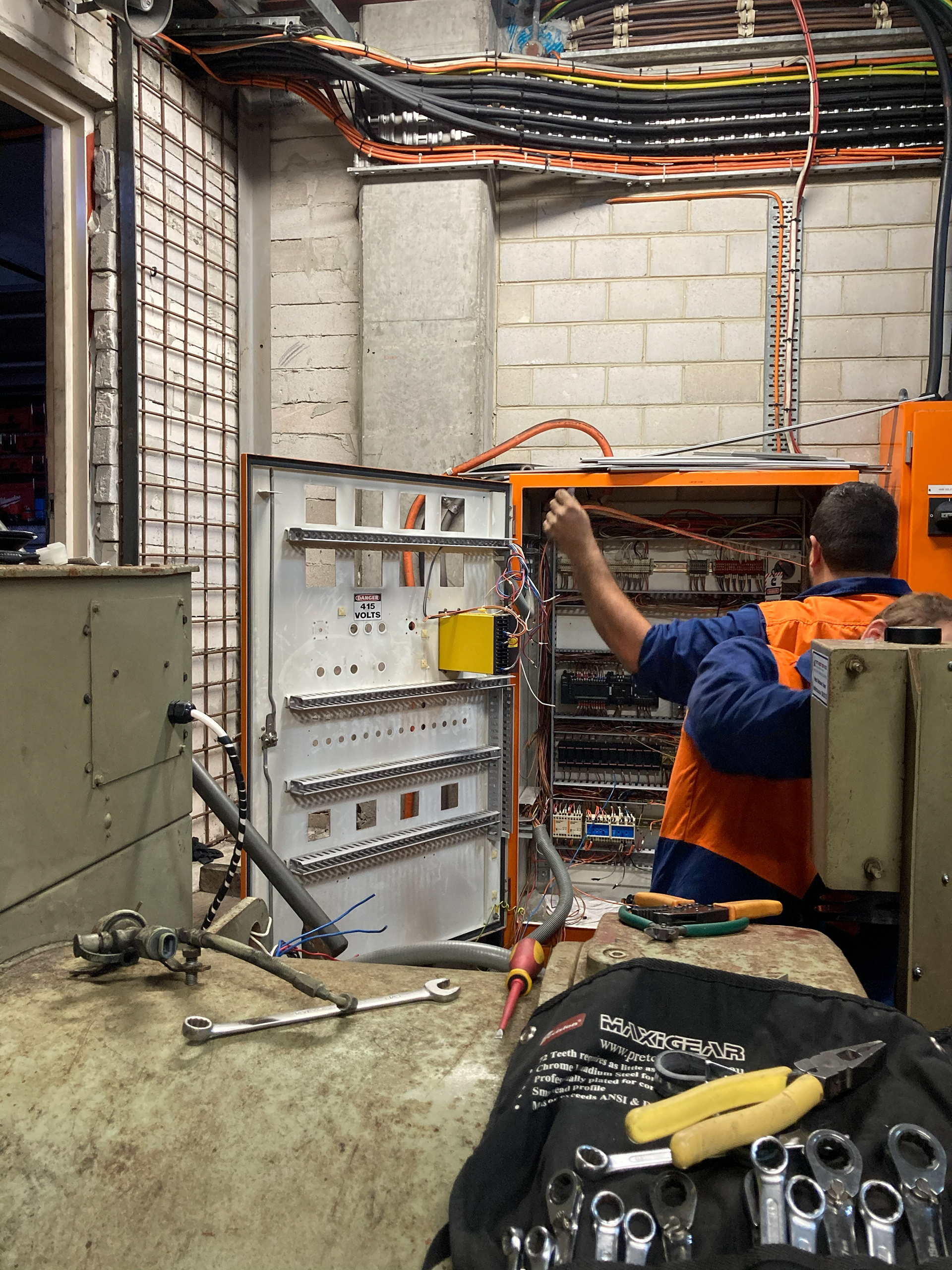
Existing buildings often contain equipment from different generations, manufacturers and contractors. Documentation may be incomplete, control sequences may no longer reflect current operation, and years of modifications can leave the system difficult to understand, support or upgrade. Common issues include:
- obsolete controllers and unsupported software
- inaccurate or failed sensors
- overridden control points
- disconnected field devices
- incomplete graphics and labelling
- undocumented programming changes
- unreliable communications networks
- equipment operating independently of the BMS
- alarms that are excessive, unclear or ignored
- control strategies that no longer suit the building
- systems that have been expanded without an overall integration plan
These issues do not always require the complete replacement of the building automation system. In many buildings, the most practical solution is to retain serviceable equipment, correct known faults, improve programming, replace selected controllers or field devices and modernise the system in planned stages.
A staged approach can reduce disruption, spread capital expenditure over time and allow critical parts of the system to be improved first. It can also provide a practical pathway away from obsolete or proprietary platforms without unnecessarily replacing equipment that still performs reliably.
Before recommending an upgrade, WR8Tech seeks to understand how the existing system is currently operating, what equipment remains serviceable and where the genuine operational risks are located. This may involve reviewing:
- installed controllers and field devices
- communications networks and system architecture
- control sequences and functional descriptions
- alarms, schedules and trend logs
- BMS graphics and operator access
- mechanical and electrical plant operation
- existing documentation and asset information
- current maintenance and support arrangements
- integration with third-party systems
This existing-building focus allows upgrades to be based on the actual condition and operational requirements of the building rather than assumptions about what must be replaced.
WR8Tech Building Automation Services
WR8Tech provides practical building automation services across the complete system lifecycle, from initial investigation and engineering through to installation, integration, commissioning, optimisation and ongoing technical support.
Our work may involve a complete building automation system, a staged upgrade, the integration of new equipment into an existing BMS or the investigation of a specific operational problem. Services may include:
- building automation system design and engineering
- BMS upgrades and system modernisation
- controller and field device replacement
- HVAC controls and mechanical plant automation
- BMS programming and control sequence development
- graphics, alarms, schedules and trend configuration
- BACnet, Modbus and third-party system integration
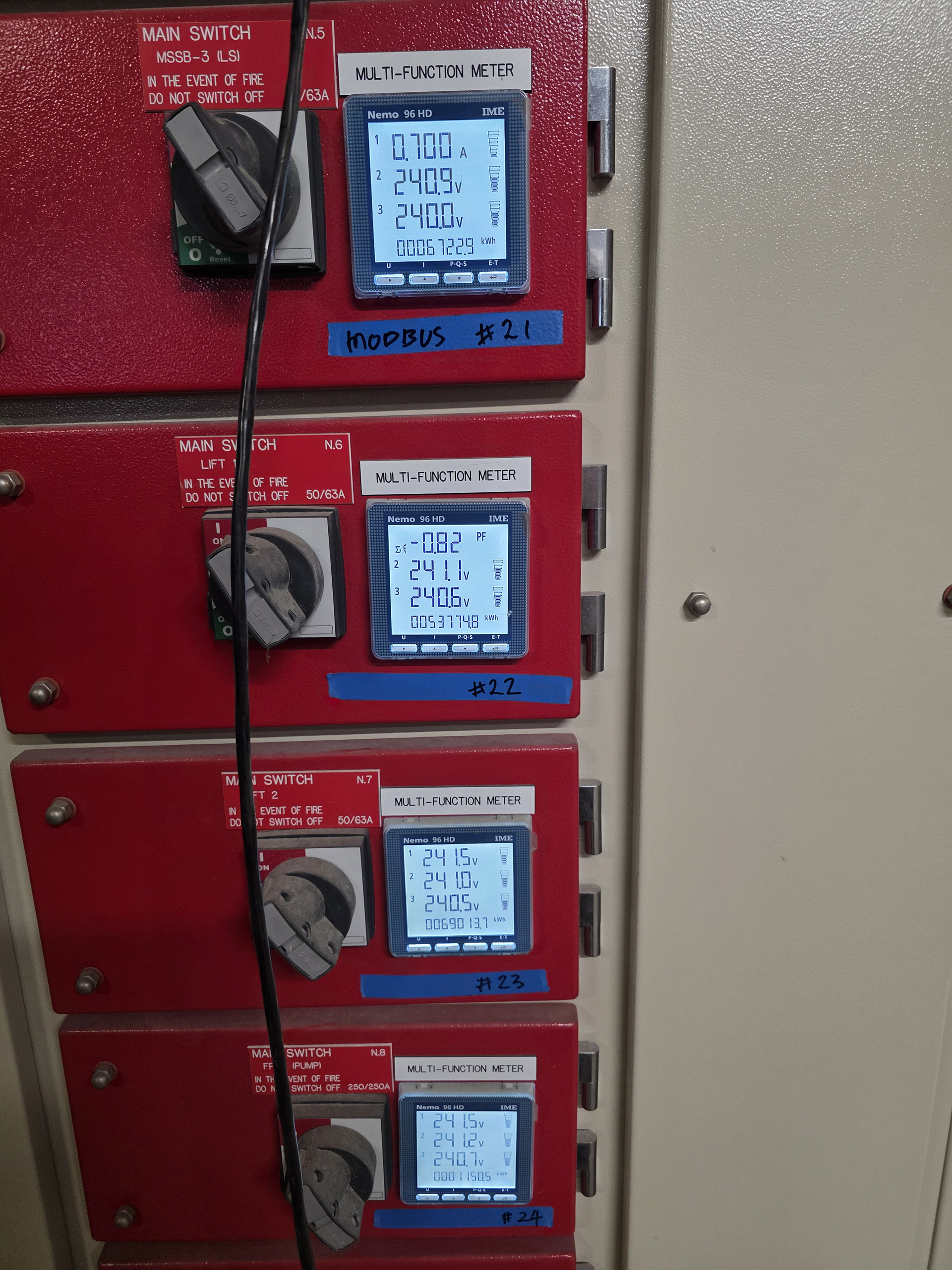
- electrical and energy metering integration
- commissioning and recommissioning
- system audits and condition assessments
- fault investigation and technical troubleshooting
- remote monitoring and alarm management
- optimisation of plant sequencing and operating schedules
- documentation, point schedules and functional descriptions
- support for consultants, mechanical contractors and facility managers
WR8Tech can work as the principal controls contractor, as a specialist subcontractor or as an independent technical adviser representing the building owner or facility manager.
Because our experience extends across electrical services, HVAC mechanical systems, mechanical switchboards, controls and building operations, we can assess problems that do not sit neatly within one trade or one manufacturer’s platform.
This is particularly important when an apparent BMS fault is actually being caused by a failed sensor, actuator, variable speed drive, electrical supply, mechanical defect, communications issue or incorrect operating sequence.
Our focus is not simply on installing more technology. It is on delivering a building automation system that is understandable, maintainable and capable of supporting the building’s actual operational requirements.
Independent and Vendor-Neutral Engineering
Building automation systems are often tied closely to a particular manufacturer, software platform or service provider. While this can simplify support in some situations, it can also limit competition, restrict access to information and make future upgrades more difficult or expensive.
WR8Tech takes a vendor-neutral approach wherever practical.
We assess the building, the installed equipment and the operational requirements before recommending a solution. This means we do not begin with the assumption that one manufacturer’s product must be installed throughout the entire building. Our recommendations may involve:
- retaining serviceable controllers and field devices
- replacing only failed or obsolete components
- integrating equipment from different manufacturers
- selecting open and widely supported communication protocols
- reducing unnecessary dependence on proprietary hardware
- improving access to programming, graphics and system documentation
- creating a staged pathway away from unsupported platforms
- allowing future contractors to understand and maintain the system
Vendor neutrality does not mean that every product is interchangeable or that the lowest-cost component is always suitable. Controllers, sensors, actuators and software must still be selected for their technical compatibility, reliability, availability and suitability for the application.
It does mean that building owners and facility managers should understand what they are buying, how the system is supported and whether they will remain dependent on a single provider for routine changes, maintenance or future expansion.
WR8Tech can also work with existing incumbent BMS contractors where their knowledge, access and platform support remain important. Our role may be to provide independent technical review, coordinate integration, verify performance or identify where additional competition and flexibility can be introduced.
The objective is not to replace a manufacturer simply for the sake of change. It is to create a building automation system that remains supportable, transparent and adaptable over its operating life.
Open Protocols and System Integration
Commercial buildings often contain equipment supplied by different manufacturers, installed by different contractors and commissioned at different stages of the building’s life.
Open communication protocols allow these systems to exchange information without requiring every device to come from the same manufacturer. Common building automation protocols include BACnet, Modbus and LonWorks, together with manufacturer-specific interfaces and gateways. Depending on the building, system integration may connect the BMS with:
- chillers, boilers and packaged HVAC equipment
- variable speed drives and mechanical switchboards
- electrical and energy meters
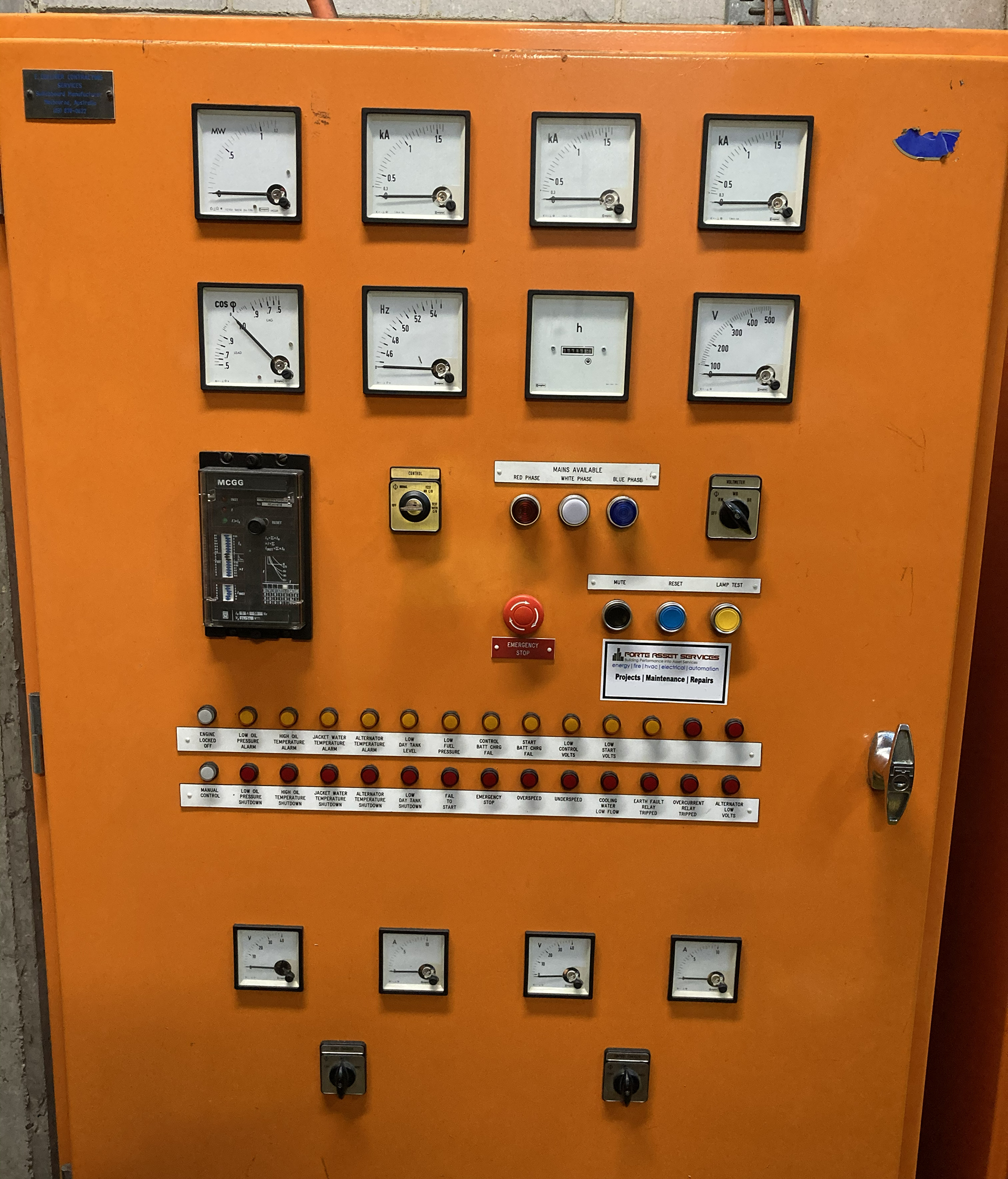
- generators and automatic transfer systems
- lighting control systems
- car park ventilation and carbon monoxide systems
- water tanks, pumps and leak detection
- access control and security systems
- lifts and vertical transport equipment
- fire alarm and life-safety interfaces
- specialist equipment and environmental monitoring systems
Integration can provide building operators with greater visibility, but the objective should not be to connect equipment simply because a connection is technically possible. Each interface should have a defined operational purpose. This may include monitoring equipment status, receiving alarms, recording energy use, coordinating operating modes or allowing the BMS to issue limited commands.
The quality of an integration depends on the accuracy of the data, the reliability of the communications network and the way the information is presented and used. A connected system that provides incorrect, incomplete or poorly labelled information may create more confusion rather than improving building operation.
It is also important to understand that an open protocol does not automatically create an open system. A BACnet or Modbus device may still be restricted by proprietary software, password controls, licensing arrangements, undocumented programming or limited access to the system database.
WR8Tech considers the complete integration pathway, including:
- protocol compatibility
- network architecture and addressing
- available data points
- read and write permissions
- alarm and command requirements
- communications reliability
- controller and gateway limitations
- point naming and documentation
- cybersecurity and access controls
- testing and commissioning responsibilities
Where practical, we aim to create integrations that are understandable, properly documented and capable of being supported beyond the original installation contractor.
Effective system integration allows different building services to share meaningful information while preserving the safe and reliable operation of each individual system.

Legacy Systems, Staged Upgrades and Modernisation
Many commercial buildings continue to operate with building automation systems installed ten, twenty or even thirty years ago.
Some of these systems remain reliable and continue to perform an important role. Others may be affected by obsolete controllers, unsupported software, failing field devices, unavailable replacement parts or a shrinking number of technicians able to maintain the platform. The age of a system alone does not determine whether it should be replaced.
A legacy BMS may still contain serviceable controllers, sensors, actuators, wiring and control strategies. Replacing the entire system without first assessing its condition can result in unnecessary capital expenditure, operational disruption and the loss of useful equipment.
At the same time, retaining an obsolete system without a clear plan can expose the building to increasing risks, including:
- controller or server failure
- unavailable replacement components
- loss of programming access
- unsupported operating systems
- unreliable communications networks
- incomplete backups and documentation
- dependence on a single service provider
- difficulty integrating new equipment
- limited remote access and cybersecurity controls
- reduced visibility of faults and system performance
WR8Tech assesses legacy building automation systems to determine what remains serviceable, what presents an immediate risk and what can be modernised progressively. A staged upgrade may involve:
- replacing failed or unsupported controllers
- installing a new BMS server or supervisory platform
- retaining compatible field devices and wiring
- converting selected systems to BACnet or another supported protocol
- installing gateways between old and new equipment
- upgrading graphics, alarms and operator access
- improving network architecture and communications reliability
- integrating new mechanical plant into the existing system
- documenting control sequences and system architecture
- creating backups and recovery procedures
- progressively migrating individual floors, plantrooms or systems
This approach allows the most critical risks to be addressed first while spreading capital expenditure across a practical upgrade program.
Staged modernisation can also reduce disruption within occupied buildings. Rather than replacing every controller and field device at once, upgrades can be coordinated around tenant requirements, plant shutdowns, refurbishment works and planned equipment replacement.
The transition between the existing and new systems must be carefully engineered. During a staged upgrade, both platforms may need to operate together for an extended period. Clear responsibility for alarms, commands, schedules, trend data and operator access is therefore essential.
The objective is not simply to replace old technology with new technology. It is to create a controlled pathway from an ageing or unsupported system toward a building automation platform that is reliable, understandable and supportable over the long term.
Commissioning, Recommissioning and Optimisation
A building automation system cannot be considered complete simply because the controllers are installed, the graphics are visible and the equipment can be started from the BMS.
Commissioning is the process of verifying that the system has been installed, programmed and integrated correctly, and that the connected mechanical and electrical equipment responds as intended. This may include checking:
- sensors and field devices
- controller inputs and outputs
- equipment start and stop commands
- valve and damper operation
- variable speed drive control
- alarm generation and prioritisation
- operating schedules
- trend logs
- plant sequencing
- safety interlocks
- network communications
- third-party system interfaces
- graphics and point labelling
- control sequences and functional descriptions
Commissioning should confirm not only that individual components operate, but that the complete system works together under normal, abnormal and changing operating conditions. For example, it is not enough to confirm that a chiller can start. The system should also be tested to verify that pumps, valves, flow proving, setpoints, staging, alarms and shutdown sequences operate in the correct order.
Recommissioning Existing Building Automation Systems
Recommissioning applies the same verification process to an existing system. Over time, buildings change. Tenancies are altered, equipment is replaced, operating hours are extended, control points are overridden and programming is modified. These changes can gradually move the system away from its original design intent. A recommissioning process may identify:
- sensors that have drifted out of calibration
- valves or dampers that no longer respond correctly
- equipment operating outside required hours
- conflicting control commands
- simultaneous heating and cooling
- unstable control loops
- incorrect setpoints
- unnecessary plant operation
- alarms that have been disabled or ignored
- sequences that no longer suit the installed equipment
- integrations that have stopped communicating
- control points left permanently in manual override
Many of these issues remain hidden because the equipment continues to run, even though it may be operating inefficiently or failing to maintain the intended conditions.
Optimising the System You Already Have
Building automation optimisation does not always require new hardware. Many systems already contain useful functions that have never been properly configured, commissioned or maintained. These may include:
- occupancy schedules
- optimum start and stop routines
- temperature and pressure resets
- plant staging
- demand-based ventilation
- load shedding
- chilled and heating water temperature resets
- static pressure optimisation
- alarm delays and prioritisation
- energy monitoring
- trend-based performance review
WR8Tech reviews how the system is operating before recommending changes. Where practical, we seek to improve the performance of the existing controls, programming and field devices before proposing unnecessary replacement.
Any optimisation strategy should be introduced carefully and verified through trend data, field testing and observation of the connected equipment. A change that appears logical within the software may create unintended consequences if the mechanical plant, sensors or operating conditions are not fully understood.
The objective is to produce a system that operates reliably, responds correctly and supports the actual needs of the building—not simply one that appears complete on the graphics.
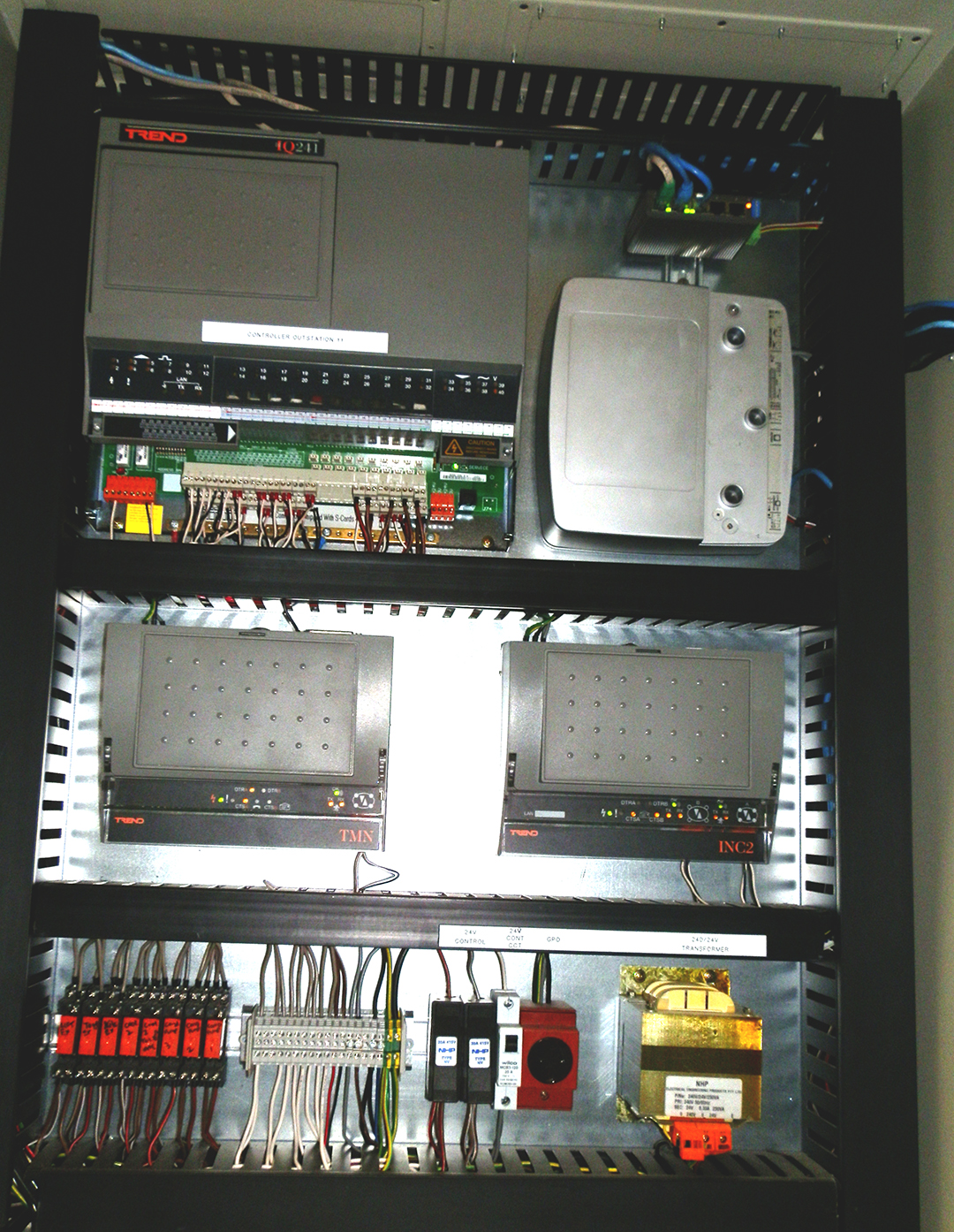


Remote Monitoring and Unsupervised Buildings
Many commercial buildings operate for long periods without a building manager, facility manager or technician permanently on site.This may include smaller office buildings, industrial facilities, retail sites, medical centres, car parks, residential strata properties and buildings with limited after-hours supervision.
In these environments, the building automation system can provide an important layer of operational visibility by monitoring plant conditions, equipment status, alarms and selected performance data remotely. Remote monitoring may include:
- HVAC plant operation
- temperature and humidity conditions
- equipment faults and shutdowns
- generator status
- pump and tank operation
- electrical and energy metering
- car park ventilation systems
- carbon monoxide levels
- refrigeration and temperature-critical equipment
- communications failures
- abnormal operating hours
- selected fire and life-safety interfaces
The objective is not simply to generate more alarms. It is to identify the conditions that genuinely require attention and ensure that the right information reaches the right person. A poorly configured remote monitoring system can quickly become ineffective. Excessive alarms, unclear descriptions, repeated notifications and faults without defined response procedures can lead to alarm fatigue and important events being overlooked. Effective remote monitoring therefore depends on:
- meaningful alarm priorities
- clear point descriptions
- appropriate delays and thresholds
- reliable communications
- escalation procedures
- defined responsibilities
- accurate contact information
- access to supporting trend data
- verification that the alarm reflects a genuine field condition
Remote access can also help technicians investigate faults before attending site. Reviewing alarms, trends, equipment status and operating conditions may help identify the likely cause, determine the urgency and ensure that the technician arrives with the appropriate information or replacement components.
However, remote visibility does not replace field inspection, maintenance or physical testing. A BMS may indicate that equipment has been commanded to operate without confirming that the mechanical equipment has actually responded correctly.
WR8Tech combines remote system access with practical knowledge of electrical services, HVAC plant, controls and field devices. This allows remote data to be interpreted within the context of how the building and equipment should physically operate.
For unsupervised buildings, the strongest outcome is not continuous access to every available data point. It is a reliable system that identifies abnormal conditions early, provides useful evidence and supports a clear operational response.
Building Analytics, FDD and AI
A building automation system produces large amounts of operational data, including temperatures, pressures, equipment status, alarms, energy use, operating hours and control responses.
On its own, this data does not automatically improve building performance. It must be accurate, properly structured and interpreted within the context of how the building and its mechanical and electrical systems are intended to operate.
Building analytics can help convert raw BMS data into useful operational information by identifying patterns, abnormal conditions and changes in system performance.

Fault Detection and Diagnostics
Fault Detection and Diagnostics, commonly referred to as FDD, uses rules, algorithms and system data to identify conditions that may indicate a control, mechanical or operational fault. Examples may include:
- heating and cooling operating at the same time
- equipment running outside approved hours
- sensors producing inconsistent readings
- valves or dampers failing to respond
- unstable control loops
- excessive plant cycling
- abnormal energy consumption
- equipment operating against closed valves or dampers
- incorrect plant sequencing
- setpoints that conflict with operating conditions
- systems remaining in manual override
- expected equipment responses not occurring
FDD can help building operators identify problems that may not generate a traditional alarm. It may also reveal gradual deterioration and inefficient operation that would otherwise remain hidden until occupants complain, energy use increases or equipment fails.
However, fault detection is only as reliable as the data being analysed. Inaccurate sensors, poor point naming, missing trend data, incorrect control logic or incomplete system integration can produce misleading results.
AI as an Analytical Layer
Artificial intelligence can provide an additional analytical layer above the building automation system.
AI may assist with recognising patterns, comparing equipment behaviour, identifying anomalies, prioritising faults and reviewing large volumes of operational data more quickly than a person could manually. It may also support:
- predictive monitoring
- equipment performance comparisons
- energy-use analysis
- fault prioritisation
- automated reporting
- identification of recurring operational issues
- detection of gradual changes in system behaviour
AI does not replace the BMS, controllers, sensors or field devices. It also does not replace the technical knowledge required to confirm why a fault has occurred or determine the appropriate corrective action.
For example, analytics may identify that a temperature is not changing when a valve is commanded open. Further investigation may still be required to determine whether the cause is a failed actuator, seized valve, incorrect sensor, wiring fault, programming issue or a problem with the mechanical system.
Data Must Be Verified Before It Is Trusted
Before advanced analytics, FDD or AI can provide meaningful results, the underlying building data must be reviewed and verified.This may involve checking:
- sensor accuracy
- point descriptions and naming conventions
- equipment status signals
- command and feedback relationships
- trend intervals and data history
- alarm configuration
- control sequences
- system timestamps
- communications reliability
- the physical operation of connected equipment
WR8Tech approaches analytics from the building outward rather than from the software inward.
Our electrical, HVAC, controls and commissioning experience helps us determine whether the data reflects the actual condition of the plant and whether an identified fault is technical, mechanical, operational or simply the result of poor information.
Building analytics, FDD and AI can significantly improve visibility, but their value depends on the quality of the building automation system beneath them.
Reliable field devices, accurate data, effective programming and properly commissioned control sequences must come first.
Our Building Automation Project Process
Building automation projects are most successful when the existing conditions, operational requirements and responsibilities of each party are understood before equipment is selected or programming begins. WR8Tech follows a practical process that can be adapted to suit new installations, existing-system upgrades, integration projects, commissioning works and fault investigations.
Understand the Building and Its Operational Requirements
We begin by understanding how the building is used, how the existing plant operates and what the owner, facility manager, consultant or contractor needs the automation system to achieve.
This may include reviewing:
building operating hours and occupancy patterns
tenant and environmental requirements
existing HVAC and electrical plant
known faults and operational concerns
energy and sustainability objectives
compliance and reporting requirements
remote access and monitoring needs
future refurbishment or upgrade plans
The objective is to establish a clear operational purpose for the project rather than starting with a particular product or platform.
Review the Existing System
Where an existing BAS or BMS is already installed, we assess the condition and capability of the current system. This may involve reviewing:
- controllers and field devices
- sensors, actuators and equipment feedback
- BMS servers and supervisory devices
- software versions and licensing
- communications networks
- point schedules and system databases
- graphics, alarms, schedules and trends
- functional descriptions and control sequences
- third-party integrations
- backups, passwords and system documentation
The review helps determine what can be retained, what requires correction and what presents an immediate operational or support risk.
Develop the Control and Integration Strategy
The next stage is to define how the building should operate and how the various systems should communicate. This may include developing or reviewing:
- control sequences
- equipment staging
- operating schedules
- alarm priorities
- network architecture
- integration points
- read and write permissions
- energy optimisation strategies
- remote monitoring requirements
- interfaces with electrical, mechanical and third-party systems
Clear control intent is essential. Without it, contractors may program the system based on assumptions, equipment defaults or incomplete information.
Define the Scope and Responsibilities
IBuilding automation projects often involve several parties, including mechanical contractors, electricians, switchboard manufacturers, equipment suppliers, consultants, IT providers and incumbent BMS contractors.
WR8Tech helps define:
the equipment being supplied
who installs each device
who provides power and communications cabling
who supplies sensors, actuators and controllers
who programs each system
who provides integration data
who witnesses testing
who is responsible for final commissioning
what documentation and access must be provided at handover
Clearly defined responsibilities reduce omissions, duplicated work, delays and disputes during delivery.
Installation, Programming and Integration
Once the design and scope are agreed, the system can be installed, programmed and integrated. Depending on the project, this may involve:
- controller installation
- sensor and field device installation
- switchboard and control wiring
- network configuration
- BMS programming
- graphics development
- alarm and trend configuration
- equipment interfaces
- protocol gateways
- server or supervisory platform upgrades
- remote access configuration
Installation should remain coordinated with the mechanical and electrical works so that the automation system reflects the actual equipment installed on site.
Testing and Commissioning
Each part of the system should be tested from the field device through to the BMS interface.
Testing may verify:
- physical inputs and outputs
- sensor readings
- equipment commands and feedback
- valve and damper operation
- alarms and interlocks
- operating schedules
- plant sequencing
- communications
- third-party integrations
- graphics and point descriptions
- trend logs
- failure and recovery conditions
Where practical, testing should confirm how the system responds under realistic operating conditions rather than simply demonstrating that points appear on the screen.
Documentation and Handover
A building automation system should not be handed over as a collection of equipment and software that only the installing contractor understands. Handover documentation may include:
- system architecture diagrams
- controller and equipment schedules
- point lists
- functional descriptions
- network details
- software and database backups
- operating instructions
- alarm and escalation information
- user access details
- commissioning records
- outstanding defects
- recommended maintenance requirements
The level of documentation should be appropriate to the size and complexity of the building, but it must be sufficient for the owner and future service providers to understand the system.
Ongoing Review and Optimisation
Building automation should continue to be reviewed after the initial installation or upgrade.
Seasonal changes, tenant alterations, equipment replacement and operational changes can all affect how the system should perform. Ongoing review may include:
- trend analysis
- alarm review
- seasonal tuning
- schedule adjustments
- sensor verification
- control-loop tuning
- energy performance review
- fault investigation
- software backups
- documentation updates
- recommissioning of modified systems
This process helps ensure that the system continues to support the building rather than gradually becoming disconnected from its actual operation.
Why WR8Tech
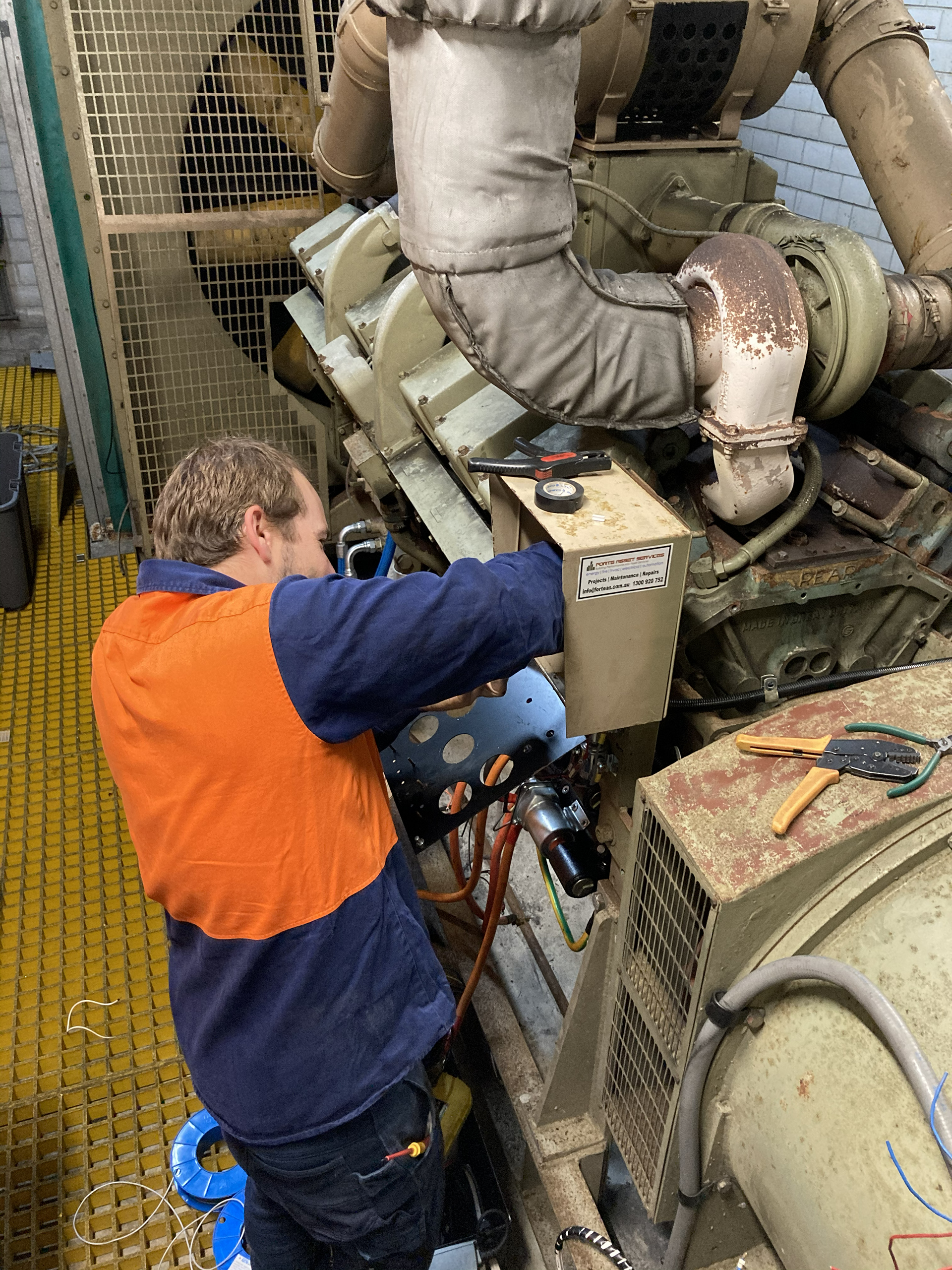
Building automation problems rarely sit within one discipline. A fault that appears on the BMS may be caused by programming, communications, electrical wiring, a failed sensor, a mechanical defect, an actuator that is not responding or equipment that has been installed differently from the original design.
WR8Tech brings together practical experience across building automation, electrical services, HVAC controls, mechanical plant, energy metering, commissioning and commercial building operations. This broader technical perspective helps us investigate the complete system rather than treating every problem as a software issue.
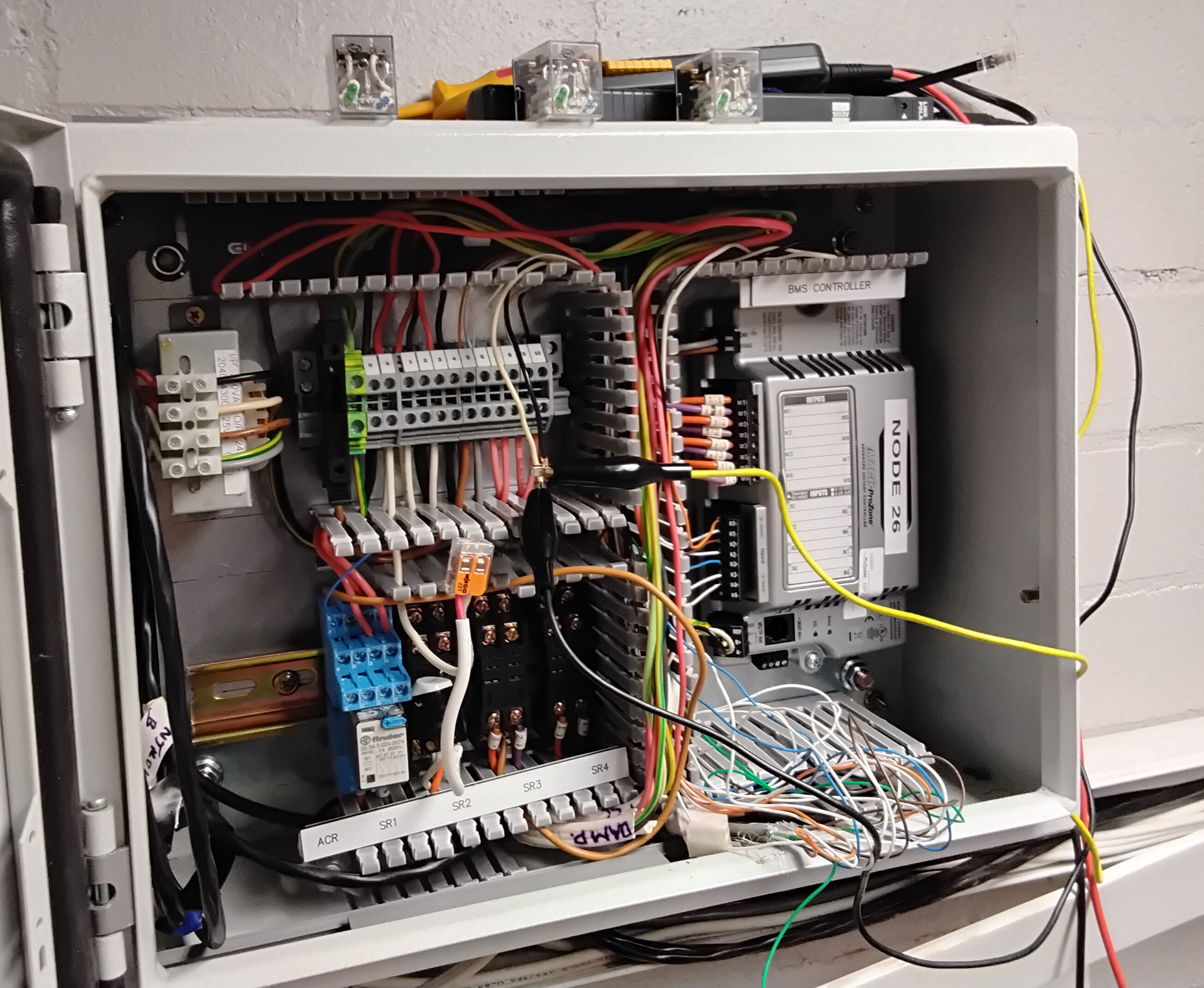
Practical Experience Across the Complete Control Environment
Our experience extends from the equipment installed in plantrooms and switchboards through to controllers, networks, BMS graphics, trend logs and remote monitoring platforms. This allows us to assess:
sensors and field devices
control wiring and electrical interfaces
mechanical switchboards
HVAC plant and equipment
controllers and supervisory devices
BACnet, Modbus and other communications networks
control sequences and programming
graphics, alarms and trend logs
energy and electrical metering
third-party system integrations
By understanding how the physical equipment should operate, we can interpret what the BMS is showing and determine whether the available data can be trusted.
Existing-Building Experience
Many of the buildings we work with are not new. They may contain ageing controllers, mixed manufacturers, undocumented modifications, incomplete drawings and plant that has been upgraded at different times by different contractors.
WR8Tech is experienced in working within these conditions.
We seek to understand what is already installed, what remains serviceable and where the genuine risks are located before recommending replacement or major capital works.
This can support a more practical upgrade strategy that retains useful equipment, addresses priority risks and avoids unnecessary disruption.
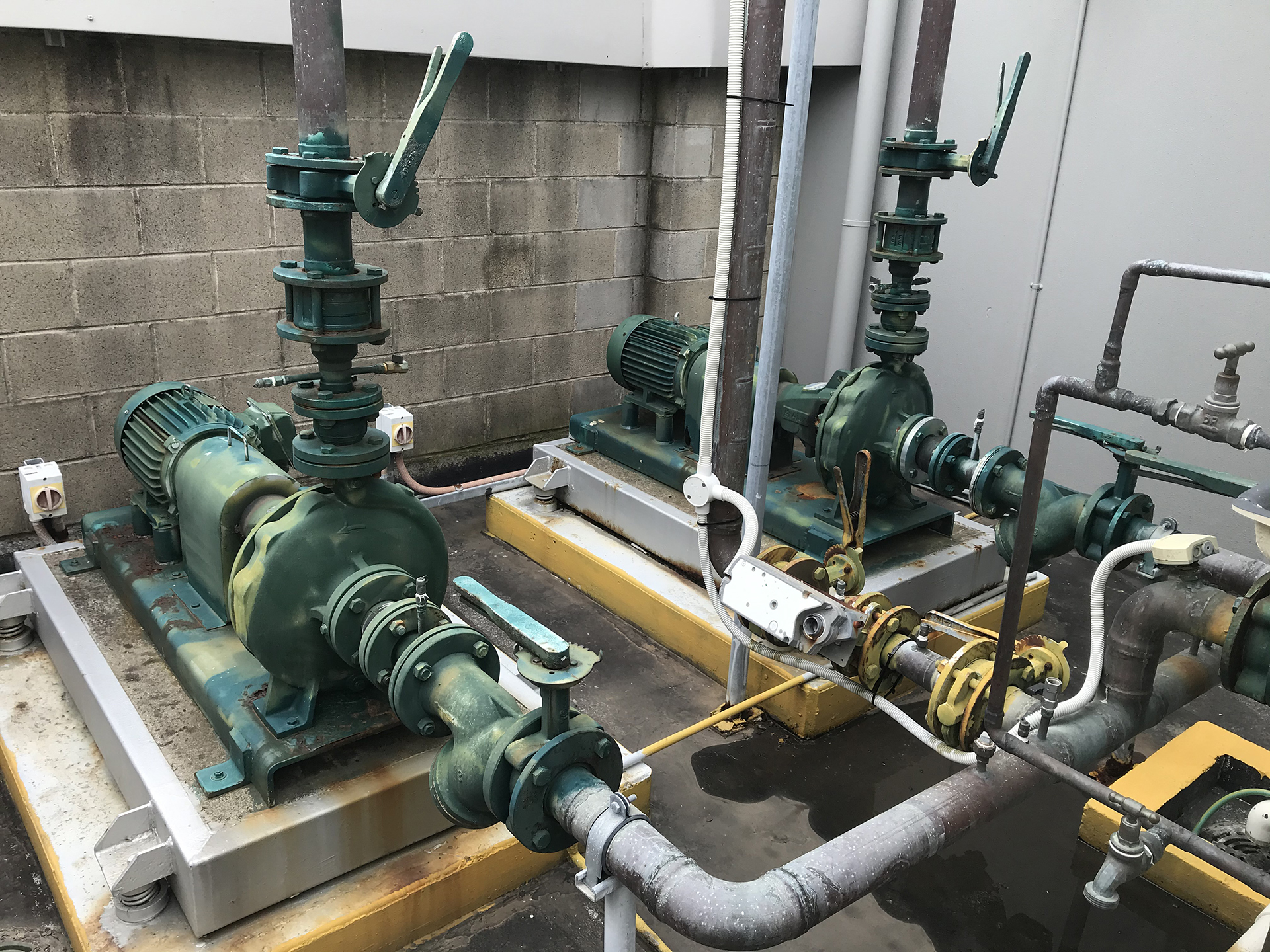
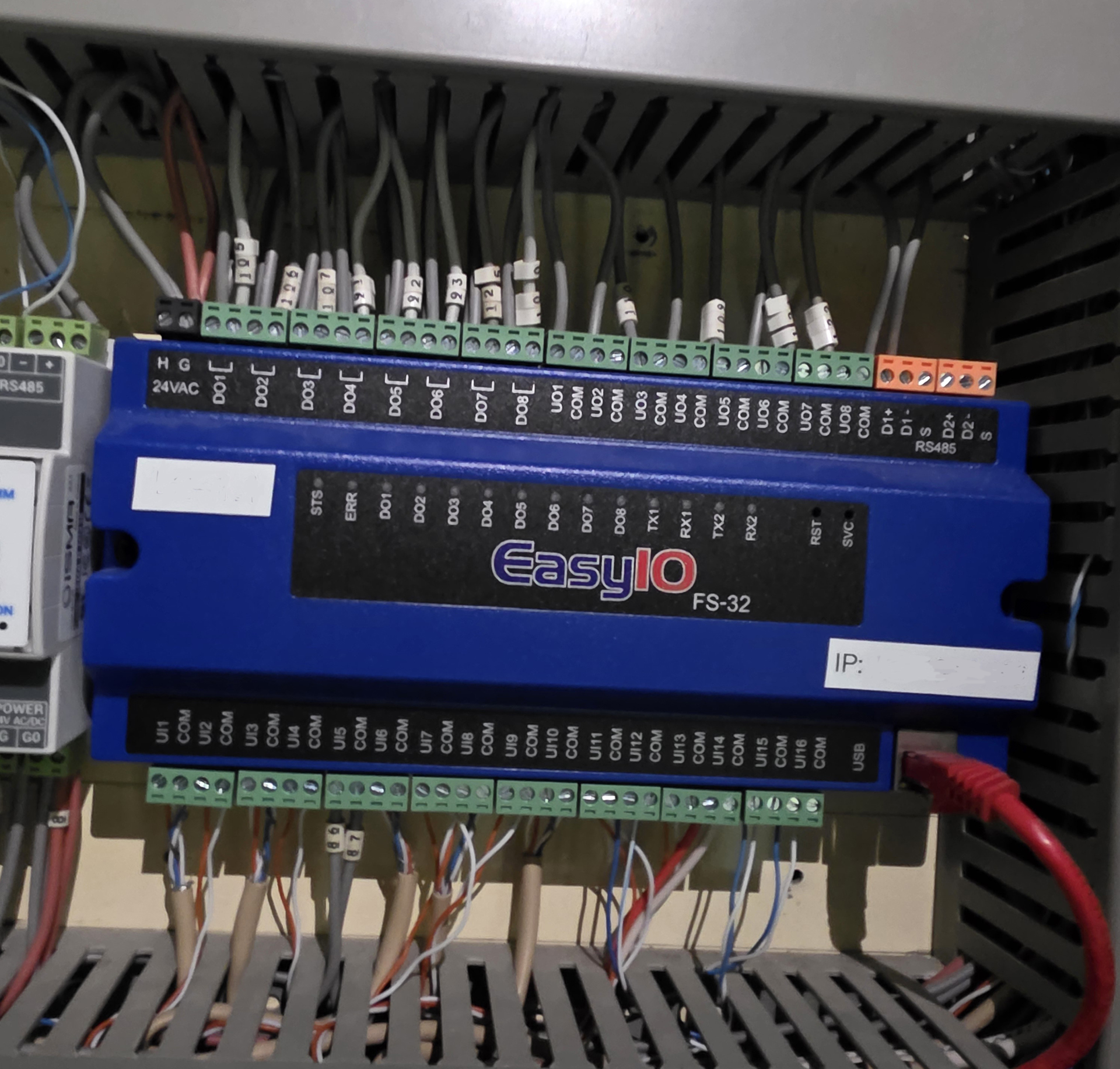
Independent and Vendor-Neutral Advice
WR8Tech is not committed to forcing every project toward a single manufacturer or platform.
Where practical, we assess solutions based on compatibility, reliability, supportability and the operational needs of the building.
This may involve retaining an existing system, working with an incumbent BMS provider, integrating equipment from several manufacturers or developing a staged migration pathway away from obsolete technology.
The objective is to provide building owners and managers with a system they can understand, maintain and adapt over time.
Engineering Before Presentation
A modern front end can improve usability, but the quality of a building automation system is determined by what is happening behind the graphics.WR8Tech places emphasis on:
- accurate sensors and feedback
- effective control sequences
- reliable communications
- meaningful alarms
- verified trend data
- appropriate plant operation
- clear documentation
- proper commissioning
We focus on whether the system is actually controlling and monitoring the building correctly—not simply whether the interface looks complete.
A Practical Approach to Fault Finding
Building automation faults can be difficult to isolate when several contractors are responsible for different parts of the system.
The BMS contractor may identify a mechanical issue. The mechanical contractor may suggest the problem is controls-related. The electrician may find that power is available, while the system still fails to operate.
WR8Tech’s cross-disciplinary experience allows us to investigate across these boundaries and help identify where the fault is actually located. This is particularly valuable for intermittent problems, integration failures, unreliable plant operation and faults that have remained unresolved after repeated service visits.
Support for Owners, Managers, Consultants and Contractors
WR8Tech can work directly for:
- building owners
- facility and property managers
- strata managers
- consultants and engineers
- mechanical contractors
- electrical contractors
- equipment suppliers
- incumbent BMS service providers
Our role may include design, installation, programming, integration, commissioning, troubleshooting, technical review or independent verification. The scope can be tailored to the building, the project and the responsibilities of the other parties involved.


Focused on Building Performance
Our objective is not simply to install controllers or connect points to a graphic.
It is to help create building automation systems that are reliable, understandable and capable of supporting the building’s operational requirements.
That means considering how the system will be used, how faults will be identified, how future contractors will access the information and how the building can continue to evolve without losing control of its automation infrastructure.E
- BMS and Commercial Asset Performance
- BMS High-level Interface Explained
- BMS Maintenance Services
- BMS Victoria
- Commercial Lighting Control, Building Automation & Smart Lighting Systems
- High Level and Low Level Interfaces
- HVAC Controls & Building Automation
- HVAC Digital Controls
- Independent BMS Engineering Support for Facility Managers
- Independent BMS Support for Building Managers
- Legacy BMS Systems in Sydney & Melbourne
- Obsolete BMS Systems – Sydney & Melbourne
- Smart Buildings