AI for Unsupervised Buildings
Using Artificial Intelligence to Improve Building Performance, Reduce Risk and Support Smarter Operations
Modern commercial buildings are generating more data than ever before. Building Management Systems (BMS), HVAC equipment, electrical infrastructure, energy meters, water meters, security systems, access control, lifts, lighting systems and car park ventilation systems all produce valuable operational information every minute of every day.
The challenge is that most unsupervised buildings have nobody actively reviewing this information.
As a result, faults often remain hidden for weeks or months, energy waste goes unnoticed, maintenance becomes reactive, and building performance gradually declines.
Artificial Intelligence (AI) is changing this.
Rather than replacing facility managers, building managers or service contractors, AI provides an additional layer of intelligence that continuously reviews building data, identifies abnormal behaviour and highlights issues before they become major problems.
For owners and operators of unsupervised commercial buildings, AI has the potential to significantly improve visibility, efficiency and operational reliability.
What Is an Unsupervised Building?
An unsupervised building is any property that does not have dedicated building management personnel on site throughout normal operating hours.
Examples include:
- Commercial office buildings
- Strata apartment buildings
- Regional shopping centres
- Industrial facilities
- Data centres
- Warehouses
- Car parks
- Medical facilities
- Educational campuses
- Government buildings
Many of these buildings rely heavily on automation systems but have limited day-to-day oversight.
AI can help bridge this gap.
How AI Works in Commercial Buildings
AI systems analyse large volumes of historical and real-time building data to identify patterns that humans may not immediately recognise.
Rather than simply generating alarms when equipment fails, AI can identify subtle changes in performance that often occur weeks or months before a failure occurs.
This allows building owners and facility managers to move from reactive maintenance towards predictive maintenance.
Typical data sources include:
- Utility billing information
- Building Management Systems (BMS)
- HVAC systems
- Energy meters
- Water meters
- Lighting control systems
- Access control systems
- Lift monitoring systems
- Car park ventilation systems
- Weather data
- Occupancy information

Predictive Maintenance
One of the most valuable applications of AI in unsupervised buildings is predictive maintenance.
Traditional maintenance strategies generally fall into two categories:
Reactive Maintenance
Equipment is repaired after it fails.
This approach often results in:
- Tenant complaints
- Emergency call-outs
- Increased repair costs
- Equipment downtime
- Operational disruption
Scheduled Maintenance
Equipment is serviced at predetermined intervals regardless of actual condition.
While effective, this approach can sometimes result in unnecessary maintenance activities.
Predictive Maintenance
AI continuously analyses equipment performance and identifies indicators of future failures.
Examples include:
- Chiller efficiency decline
- Fan bearing deterioration
- Pump performance degradation
- Excessive motor current
- VSD faults developing
- Sensor drift
- Valve failures
- Abnormal temperature control
By identifying these issues early, maintenance can be planned before major failures occur.

Energy Management and Optimisation
Many commercial buildings consume significantly more energy than necessary.
In many cases, building owners are unaware because the increase occurs gradually over time.
AI can analyse:
- Electricity consumption
- Gas consumption
- Water usage
- Occupancy patterns
- HVAC performance
- Lighting operation
- Weather conditions
The system can then identify:
- Excessive after-hours operation
- Simultaneous heating and cooling
- Inefficient plant operation
- HVAC scheduling issues
- Lighting left on unnecessarily
- Energy spikes
- Abnormal utility consumption
This creates opportunities to improve NABERS performance, reduce operational costs and lower carbon emissions.
Detecting Hidden Faults
Many building faults never generate traditional alarms.
Examples include:
Chiller Efficiency Drift
A chiller may continue operating normally while gradually becoming less efficient.
AI can identify declining performance trends long before tenants notice comfort issues.
Water Consumption Anomalies
A leaking valve, running toilet or failed irrigation controller may not trigger an alarm.
AI can identify unusual water consumption patterns and highlight potential leaks.
Air Conditioning Performance Issues
A building may maintain temperature while using significantly more energy than expected.
AI can identify abnormal equipment behaviour that traditional alarms overlook.
Sensor Drift
Temperature, pressure and flow sensors can slowly drift out of calibration.
AI can compare expected performance against actual performance to identify inaccurate readings.


Occupancy-Based Building Control
Occupancy has a major influence on building performance.
AI can analyse:
- Access control data
- Lift activity
- Lighting usage
- HVAC demand
- Tenant activity patterns
This information can help optimise:
- Air conditioning schedules
- Ventilation rates
- Lighting operation
- Energy consumption
- Cleaning schedules
- Security staffing
Rather than operating buildings based on assumptions, AI allows building services to respond to actual usage patterns.
AI Does Not Replace People
Despite media attention surrounding artificial intelligence, successful commercial buildings still require experienced people.
AI does not replace:
- Facility Managers
- Building Managers
- Property Managers
- Service Contractors
- Building Owners
Instead, AI helps these stakeholders make better decisions using better information.
The most successful outcomes occur when AI is combined with practical building operations experience and a strong understanding of HVAC, BMS, energy management and building services infrastructure.

Contractor Performance Monitoring
Another emerging application of AI is contractor performance analysis.
For unsupervised buildings, it can be difficult to determine whether maintenance contractors are delivering value.
AI can assist by monitoring:
- Response times
- Fault recurrence
- Equipment reliability
- Maintenance effectiveness
- Energy outcomes
- Asset performance trends
This provides building owners and facility managers with objective performance data that supports better decision-making.
AI and Building Management Systems (BMS)
A modern Building Management System provides an excellent foundation for AI implementation.
The BMS already collects information from multiple building systems, including:
- HVAC
- Mechanical services
- Electrical systems
- Energy meters
- Water systems
- Car park ventilation
- Fire interfaces
- Lift monitoring
- Lighting controls
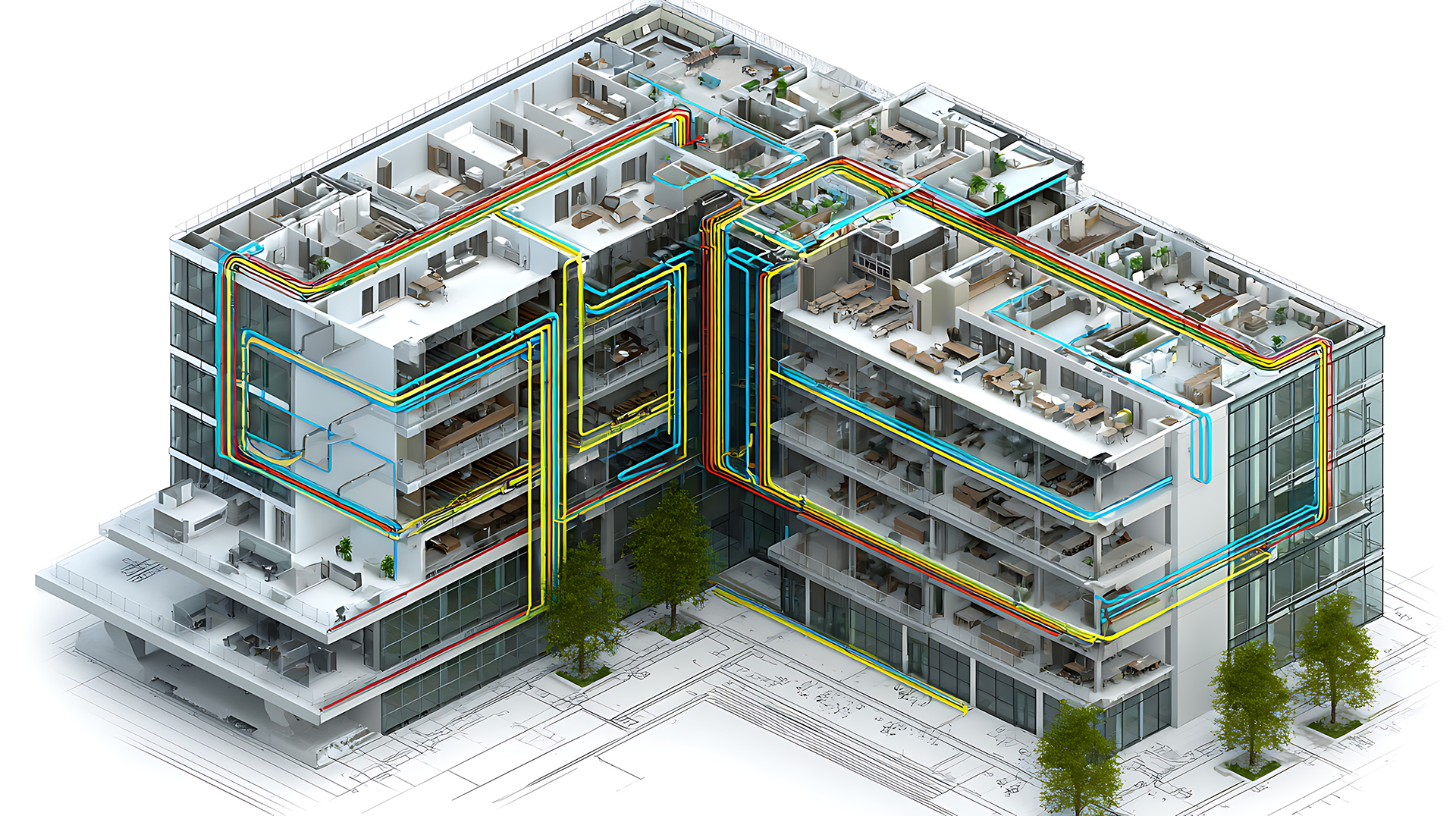
AI can sit above the BMS and analyse the data being collected.
Importantly, many AI solutions do not require replacement of the existing BMS.
Older systems can often be enhanced by:
- Adding data collection
- Improving connectivity
- Integrating energy meters
- Deploying cloud-based analytics
- Implementing dashboard reporting
This makes AI accessible even for older commercial buildings.

The Future of Unsupervised Buildings
As commercial buildings become increasingly connected, AI is expected to become a standard component of building operations.
Future applications are likely to include:
- Predictive fault detection
- Automated energy optimisation
- Intelligent occupancy management
- Water conservation monitoring
- Carbon reporting
- Asset lifecycle forecasting
- Contractor performance benchmarking
- Automated maintenance recommendations
For building owners, the goal is simple:
Reduce risk, improve performance, lower operational costs and gain greater visibility over building operations—even when nobody is on site.
Links to similar topics