
When an Old BMS Stops Being a Maintenance Issue and Becomes a Business Risk
Many commercial buildings continue operating on Building Management Systems installed 15, 20, 25 or even 30 years ago.
In many cases these systems still perform their basic functions reasonably well. The air conditioning starts and stops, alarms are generated, schedules operate, and occupants remain comfortable.
Because the system is still operating, many building owners assume there is little urgency to consider upgrades or replacement.
Unfortunately, this assumption can become very expensive.
The true cost of an obsolete Building Management System is often not apparent until something fails.
When that day arrives, building owners can discover that they are no longer managing technology.
Instead, the technology is managing them.
Understanding the Difference Between Old and Obsolete
One of the biggest misconceptions in the building industry is that old automatically means obsolete.
This is not true.
We regularly encounter systems that are 15, 20 and even 25 years old which continue to provide reliable service.
Age alone is not the issue.
The real question is whether the system remains supportable.
Can spare parts still be obtained?
Can competent engineers still work on it?
Are software backups available?
Can the system be expanded?
Can new equipment be integrated?
Can the owner obtain reasonable value for maintenance expenditure?
When the answer to these questions starts becoming “no”, the discussion should move away from maintenance and towards strategic planning.
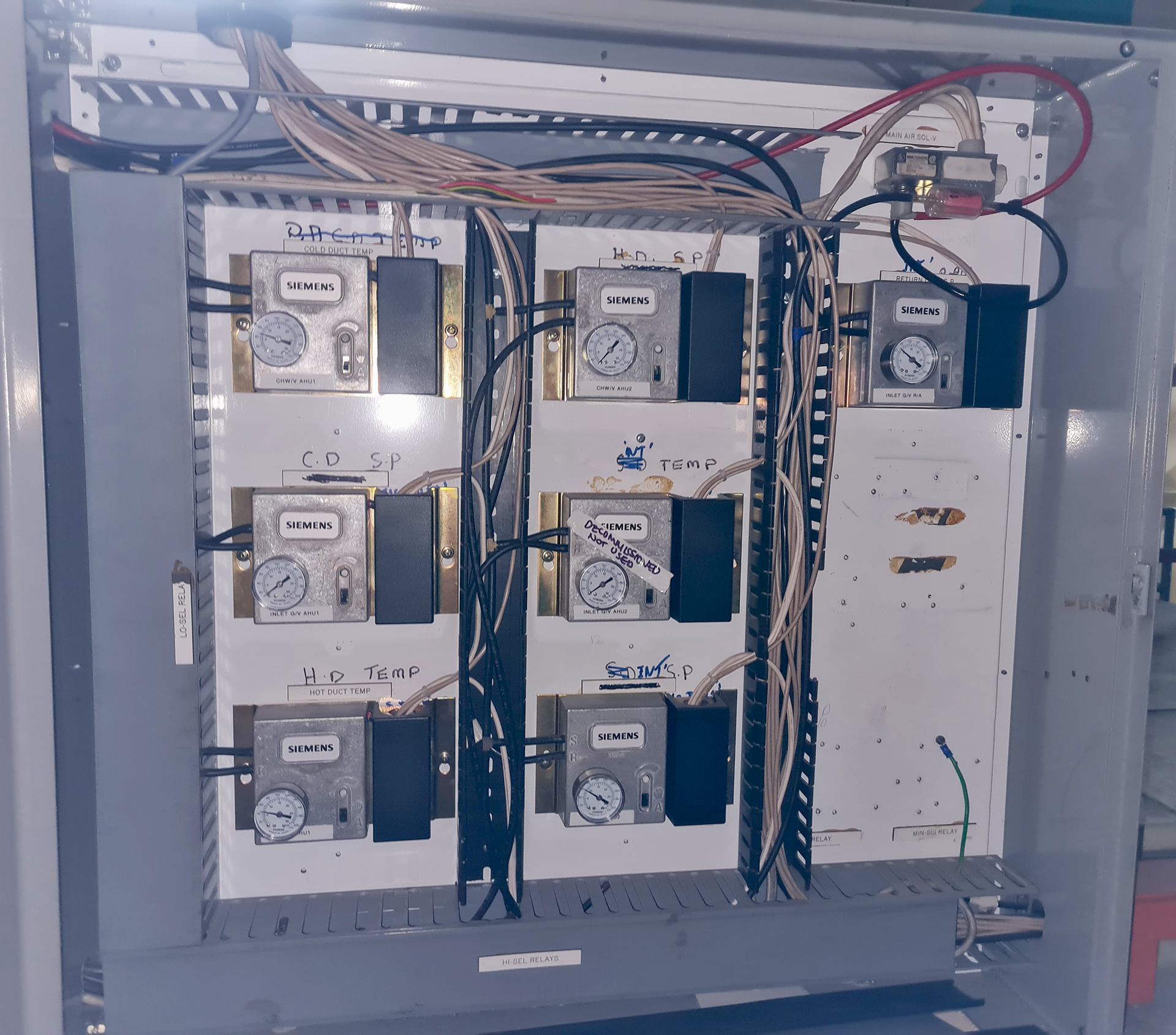
The Hidden Cost of Ageing Electronics
As electronic equipment ages, the challenge is often not the software or programming.
The challenge becomes the physical hardware itself.
Controllers, power supplies, communication cards and processors eventually reach an age where replacement parts become scarce or unavailable.
Manufacturers discontinue products.
Specialist engineers move on.
Supply chains disappear.
Suddenly a relatively small failure can create a major business problem.
We have seen this issue across many industries, including elevators, fire systems, industrial controls and Building Management Systems.
A Real-World Example
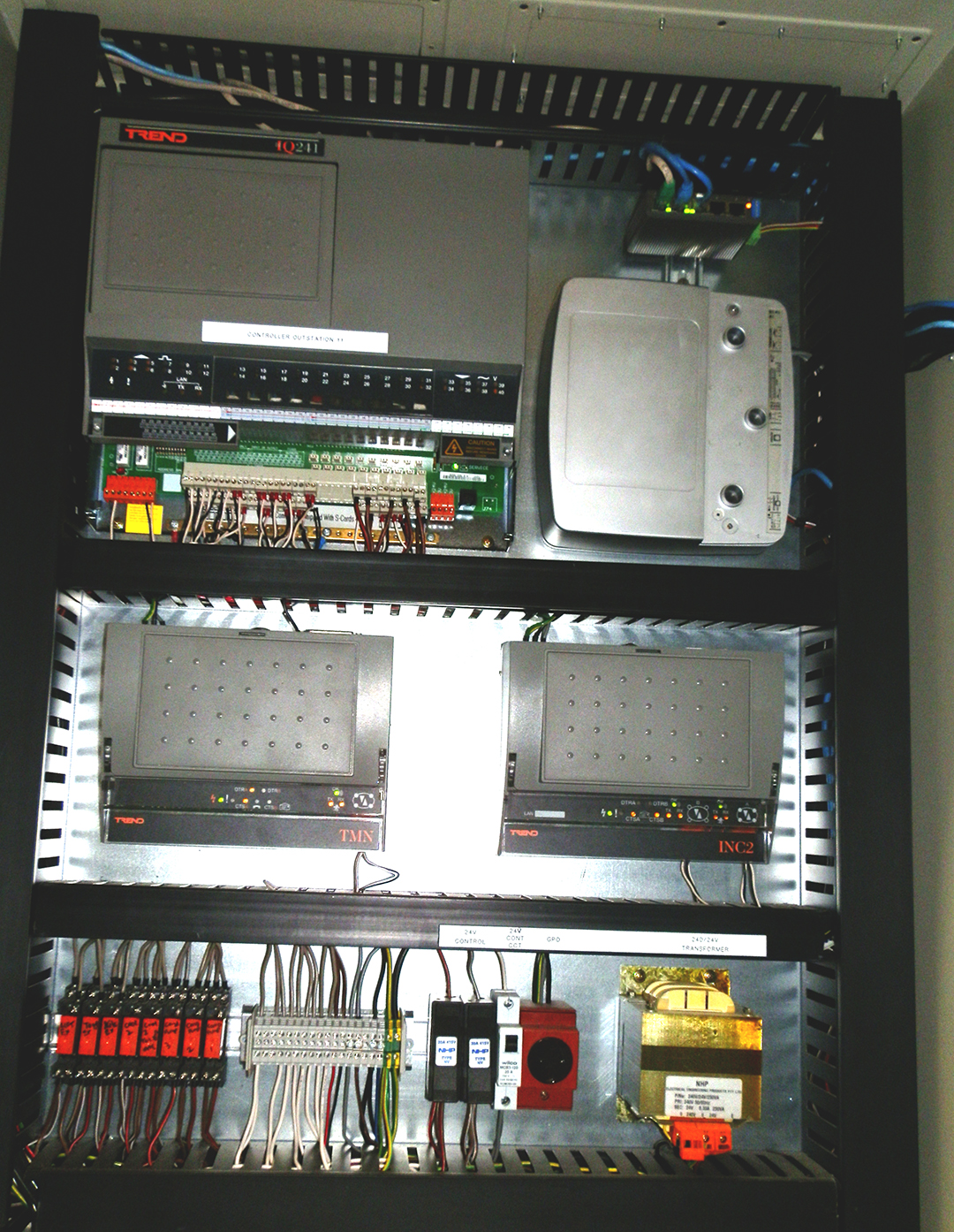
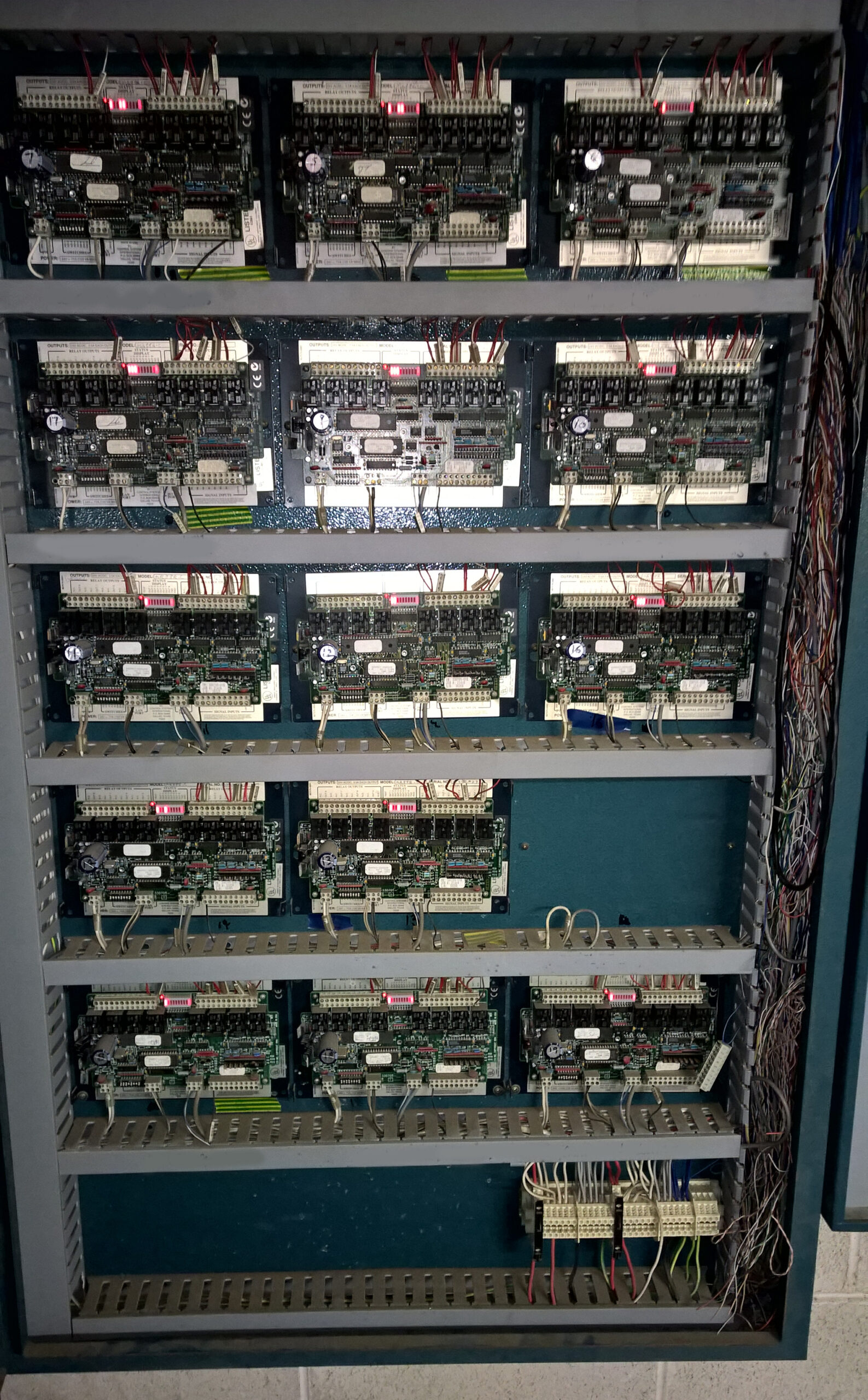
Several years ago, we were engaged to investigate ongoing faults within an older hotel Building Management System dating back to the early 1990s.
The system was enormous by today’s standards.
A single controller occupied a panel approximately 600mm x 600mm.
The power supply consisted of a large transformer and capacitor assembly roughly the size of a shoebox.
The BMS equipment occupied its own dedicated switchboard almost the size of a cupboard.
The hotel engineering team had become increasingly frustrated by what they referred to as “ghost faults”.
One day the system would operate perfectly.
The next day controllers would lock up, communications would fail, or random alarms would appear.
A reset would often restore operation temporarily, only for another seemingly unrelated fault to occur days or weeks later.
After extensive investigation, the issue appeared to be occurring at the electronic component level.
As semiconductor devices age, their electrical characteristics begin to drift outside their original design tolerances.
Signals that were once clearly interpreted as a digital “0” or “1” become increasingly difficult for ageing electronics to process reliably.
The result is intermittent faults that can be almost impossible to diagnose.
The controller appears healthy.
Then it fails.
Then it works again.
Then it fails somewhere else.
The Replacement Shock
The obvious solution was to source a replacement controller.
Unfortunately, the controller had been obsolete for many years.
After searching internationally, a replacement unit was eventually located in the United Kingdom.
The cost was approximately $24,000.
The warranty was only three months.
Even more concerning was the fact that nobody could confirm whether the controller was genuinely new old stock, refurbished stock, or simply one of the last remaining units available anywhere in the world.
We provided the supplier correspondence directly to the client.
There was no mark-up on the equipment. We were prepared to charge labour only because we wanted the client to clearly understand the situation.
The reality was uncomfortable.
The manufacturer no longer trusted the product enough to offer a meaningful warranty.
The supply chain had effectively disappeared.
The market for spare parts no longer existed.
The building owner was being asked to spend $24,000 on a single obsolete controller with only a three-month warranty.
For a hotel operating under tight capital budgets, this expenditure required approval from senior management because it could not reasonably be justified as routine maintenance.
The hotel engineer did not like the situation.
The facility manager did not like the situation.
The general manager certainly did not like the situation.
Most importantly, the owner did not like the situation.
The building had become trapped by its own technology.
The Knowledge Problem Nobody Talks About
Most discussions about obsolete Building Management Systems focus on spare parts and hardware.
In reality, the bigger risk is often the loss of knowledge.
The engineers who commissioned the system may have retired.
The technicians who maintained it may have moved on.
The original manufacturer may have changed ownership several times.
The contractor who installed it may no longer exist.
Over time, the people who understood the system simply disappear.
The original engineer retires.
The service technician leaves.
The facility manager changes jobs.
The building engineer moves on.
Eventually the building owner is left with a system that nobody fully understands.
When Documentation Becomes More Valuable Than Hardware
We have encountered buildings where the controller itself was still operating correctly, but nobody could explain:
- Why certain control sequences existed.
- Why equipment started in a particular order.
- Which alarms were critical.
- Which points had been overridden years earlier.
- Which sensors had been abandoned.
- What modifications had been made over the life of the building.
- Where the latest software backups were stored.
The knowledge had simply been lost.
The building continued operating, but nobody really understood how or why.
The Risk of Tribal Knowledge
Many older buildings rely heavily on what is commonly referred to as “tribal knowledge”.
There may be no drawings.
There may be no software backups.
There may be no commissioning records.
The system works because someone remembers how it works.
The problem is that people eventually leave.
When they do, they take decades of experience with them.
One of the most common warning signs we encounter is when building staff say:
“Only Bob knows how that works.”
Or:
“You’ll need to wait for Steve to come back from leave.”
Or:
“That engineer retired years ago.”
These comments may sound harmless.
In reality they represent significant operational risk.
If a critical building system depends upon a single individual, the building no longer controls the technology.
The technology controls the building.
When Obsolescence Becomes a Business Risk
Eventually the discussion changes.
The question is no longer:
How do we maintain this system?
The question becomes:
How long can we realistically continue relying on this system?
At that point the risk extends far beyond the BMS itself.
Equipment reliability declines.
Fault finding becomes slower.
Maintenance costs increase.
Energy performance deteriorates.
Tenant complaints become harder to resolve.
Capital planning becomes less predictable.
The BMS may still be operating, but the risk profile of the building is steadily increasing.
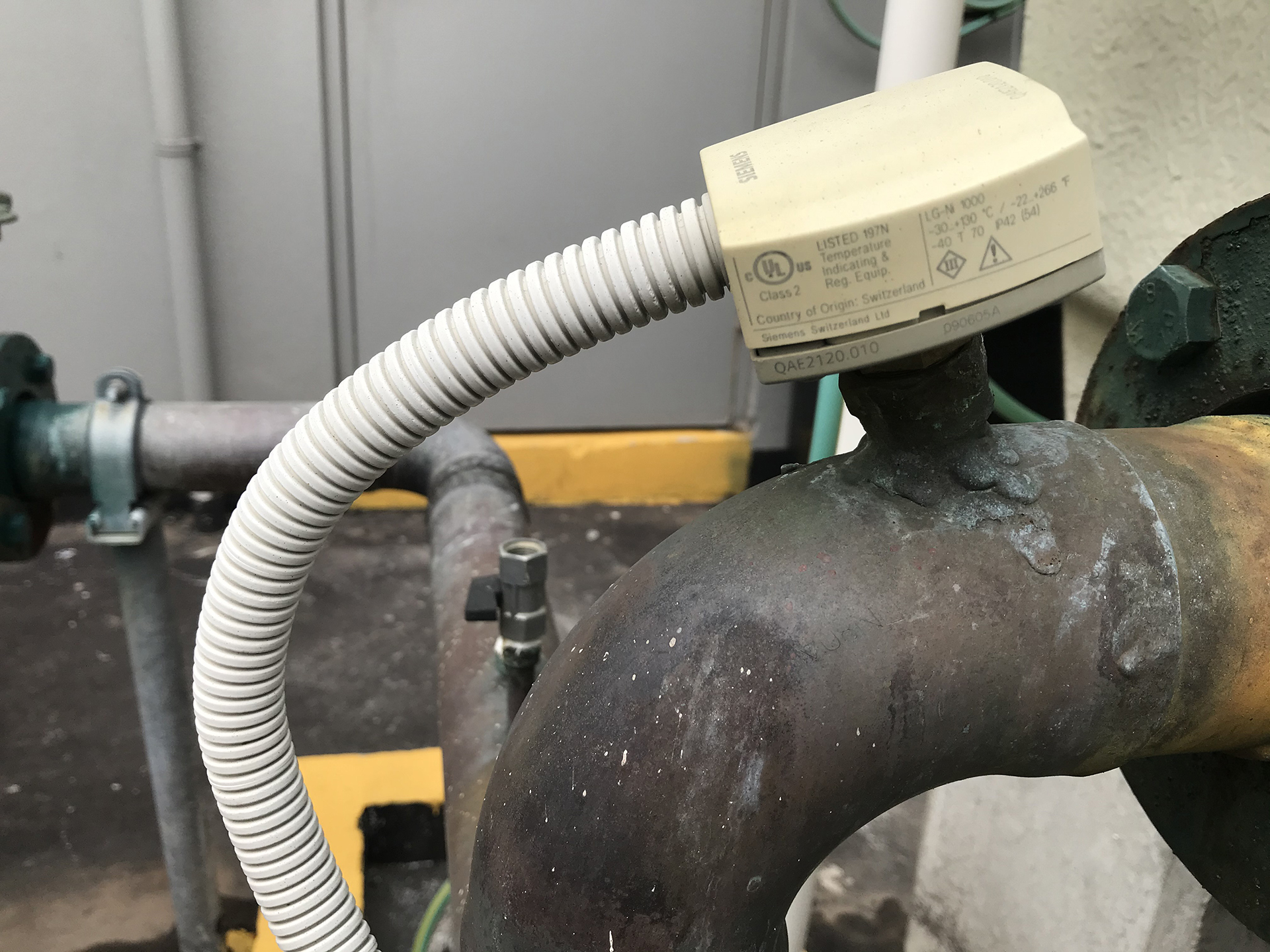
Recovering Lost Knowledge
The best time to recover system knowledge is before it disappears.
Building owners should consider:
- Developing a technology asset register.
- Securing all software backups.
- Obtaining engineering databases.
- Recovering passwords.
- Updating network drawings.
- Documenting control strategies.
- Identifying critical equipment dependencies.
- Creating a technology roadmap for future upgrades.
These documents often become more valuable than the hardware itself.
A controller can usually be replaced.
Knowledge is much harder to replace once it has been lost.
Plan Before Failure Forces the Decision
Not every ageing Building Management System requires replacement.
Many older systems can continue delivering reliable service for years when properly maintained and supported.
However, every building owner should understand the difference between an ageing system and an obsolete system.
The best time to develop a migration strategy is before a critical component fails.
Once a building becomes dependent on rare spare parts, retired engineers and undocumented programming, the owner has already lost much of their flexibility.
Technology should support the building.
The building should never become hostage to its technology.
Conclusion
Obsolescence is not simply a technical issue.
It is an asset management issue.
It is a business continuity issue.
It is a risk management issue.
The hidden cost of an obsolete Building Management System is rarely the controller itself.
The true cost is the increasing loss of flexibility, supportability, knowledge and choice.
At WR8Tech, we help building owners, property managers and facility managers understand the condition of their Building Management Systems, identify obsolescence risks and develop practical long-term strategies that avoid costly surprises.
Because the best time to plan for obsolescence is before the next critical component fails.
Estimated reading time: 8 minutes
[…] good news is that many buildings suffering from operational Sick Building Syndrome are not fundamentally broken. They simply require investigation, optimisation, and a better understanding of how the building […]