
Most commercial buildings in Sydney, Melbourne, Canberra, Brisbane, Adelaide and Perth are operating today with systems that have evolved significantly since the building was originally commissioned.
Over time, tenants change, building usage changes, equipment is replaced, software is upgraded, and maintenance contractors modify operating strategies to solve immediate problems. While each change may be justified at the time, the cumulative effect often causes the building to drift away from its original design intent.
The result is a building that still functions, but not necessarily efficiently.
Air conditioning systems consume more energy than expected. Car park ventilation systems operate continuously. Building Management Systems generate nuisance alarms. Energy meters are installed but rarely analysed. Equipment runs longer than required. Operators lose confidence in the data being presented to them.
This is where Building Systems Recommissioning can deliver significant value.
Beyond Traditional HVAC Recommissioning
Historically, recommissioning focused primarily on mechanical services systems such as air conditioning, chilled water plants, boilers, cooling towers, air handling units and variable air volume systems.
Modern commercial buildings require a broader approach.
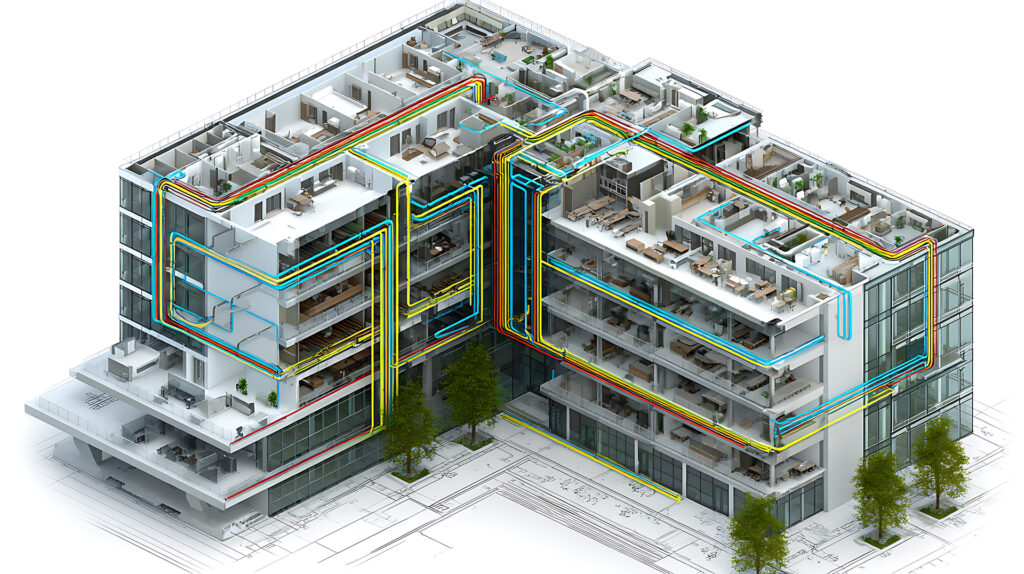
Today’s buildings contain multiple technology platforms operating simultaneously. These systems generate valuable operational data, yet the information is often fragmented across different manufacturers, software platforms and communication networks.
Building Systems Recommissioning reviews the entire operational ecosystem rather than a single discipline.
The objective is to ensure that building systems communicate correctly, control strategies remain aligned with the building’s operational requirements, and the available data is being used effectively to support operational decisions.

The Importance of Building Management Systems
The Building Management System is often the central nervous system of a commercial building.
In many buildings, the BMS has been expanded, modified and reconfigured numerous times over its operational life. Graphics become outdated, control sequences are no longer understood, trend logs are disabled, and temporary software overrides become permanent.
It is common to discover:
- Sensors reading incorrectly
- Control loops hunting
- Equipment operating outside schedule
- Failed field devices
- Incorrect alarm parameters
- Poor plant sequencing
- Legacy programming no longer required
In some cases, building operators have simply stopped trusting the BMS altogether.
A recommissioning project restores confidence in the system by validating operation, reviewing programming logic, testing field devices and confirming that equipment is responding correctly.
Communication Networks and Protocol Verification
One of the most overlooked aspects of recommissioning is the communication network itself.
Modern buildings often contain multiple protocols operating together, including BACnet/IP, BACnet MS/TP, Modbus RTU, Modbus TCP/IP, LonWorks, M-Bus, KNX, DALI and numerous proprietary communication platforms.
When communication issues develop, building operators may lose visibility of critical equipment without immediately realising it.
Recommissioning should verify the health of these networks and confirm that all connected devices are communicating reliably.
Typical issues include communication timeouts, duplicate network addresses, incorrect baud rates, failed routers, damaged field wiring, network congestion and devices that have been offline for extended periods.
Without reliable communications, the quality of operational data is compromised, making effective building management almost impossible.
Energy Metering and Building Analytics
Many commercial buildings have invested heavily in energy metering infrastructure over the past decade.
Electricity meters, water meters, gas meters and thermal energy meters are commonly installed throughout modern facilities. Unfortunately, many sites only use these systems for basic utility reporting.
Recommissioning provides an opportunity to validate meter accuracy, confirm communication pathways and analyse historical consumption patterns.
The process often identifies hidden energy waste that has existed for years.
Examples may include after-hours operation, simultaneous heating and cooling, excessive ventilation rates, poor equipment scheduling, failed control valves, incorrect temperature setpoints or inefficient plant sequencing.
When energy data is combined with BMS trend logs, a much clearer understanding of building performance emerges.
Car Park Ventilation and Carbon Monoxide Systems
Car park ventilation systems represent one of the most commonly overlooked opportunities for recommissioning.
Many systems installed throughout Australia continue to operate using outdated control philosophies or partially failed equipment.
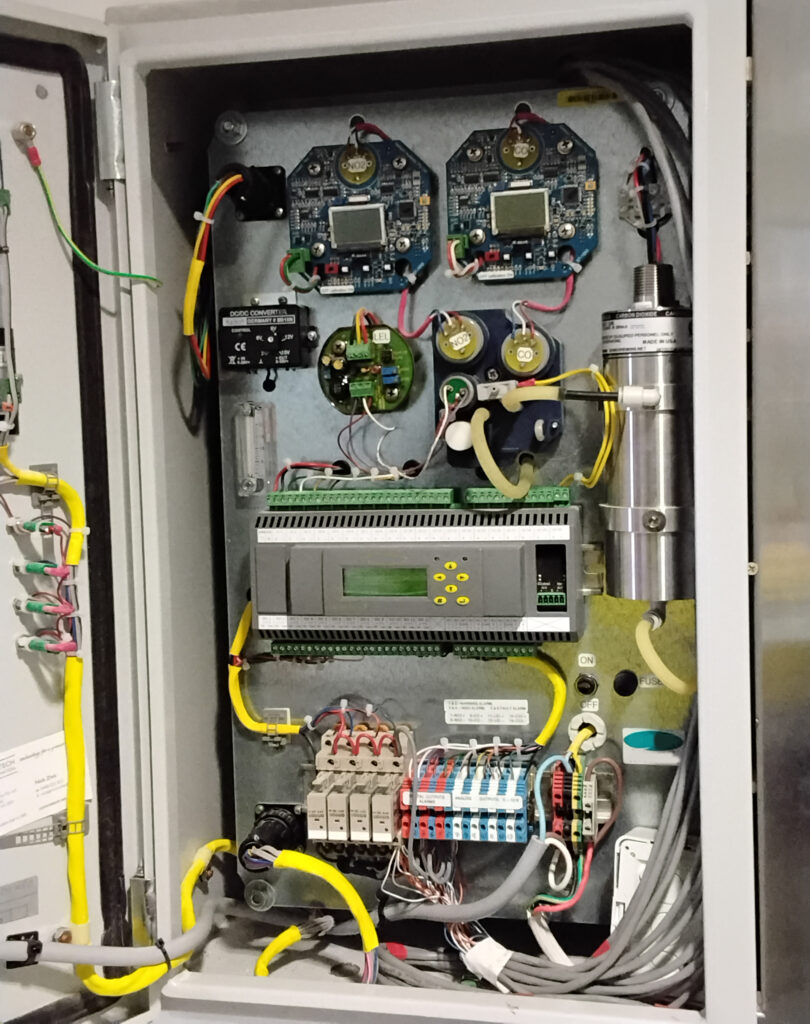
It is not unusual to find carbon monoxide sensors that have drifted out of calibration, failed sensors that have not been replaced, ventilation fans operating continuously, incorrect alarm thresholds or control systems that no longer comply with current operational requirements.
In some buildings, the car park system may technically operate while consuming substantially more energy than necessary.
A recommissioning review can verify sensor performance, confirm fan operation, validate alarm sequences, assess control strategies and ensure the system remains aligned with the requirements of AS 1668.2 and current operational expectations.
Given the significant fan energy associated with large car parks, optimisation opportunities can often deliver meaningful operational savings.
Mechanical Electrical Systems and Plant Integration
Many building performance issues occur not because individual assets have failed, but because multiple systems are no longer working together effectively.
Variable speed drives may be operating at fixed speeds. Mechanical electrical switchboards may have experienced modifications without corresponding BMS updates. Chillers, boilers, pumps and cooling towers may no longer operate under the original sequencing strategy.
Plant integration is particularly important in older buildings where numerous upgrades have occurred over many years.
Recommissioning investigates these interactions to ensure that all systems continue to operate as a coordinated platform rather than as isolated pieces of equipment.
Data-Driven Building Performance
The greatest value of recommissioning often comes from understanding what the building is actually doing rather than what operators believe it is doing.
Through trend analysis, equipment runtime reviews, alarm history analysis, network diagnostics, energy data evaluation and functional testing, building owners gain a clear picture of operational performance.
This information can then be used to prioritise maintenance activities, support capital expenditure planning, improve occupant comfort and reduce operational risk.
Unlocking Hidden Value
The most sustainable building is usually the one that already exists.
Before replacing major equipment, building owners should understand whether their existing systems are operating correctly and whether the available technology is being fully utilised.
Building Systems Recommissioning provides a structured engineering approach to identifying hidden inefficiencies, restoring operational confidence and improving the performance of commercial buildings.
For many properties across Sydney, Melbourne, Canberra and throughout Australia, the greatest opportunity is not replacing assets.
It is making existing assets perform the way they were originally designed to operate.
[…] These buildings are often the most difficult to manage because there is no single catastrophic failure to point to. Instead, there are dozens of small issues that gradually erode the building’s performance and increase operating costs. […]