
Why Some BMS Contractors Avoid Obsolete Systems—and What Building Owners Should Do Next
Across many commercial buildings in Sydney and Melbourne, ageing Building Management Systems are still responsible for controlling critical plant such as HVAC, pumps, boilers, and ventilation systems. So the question beckons, Why Most BMS Contractors Avoid Obsolete Systems
However, when these systems begin to fail, many BMS contractors are reluctant to work on them.
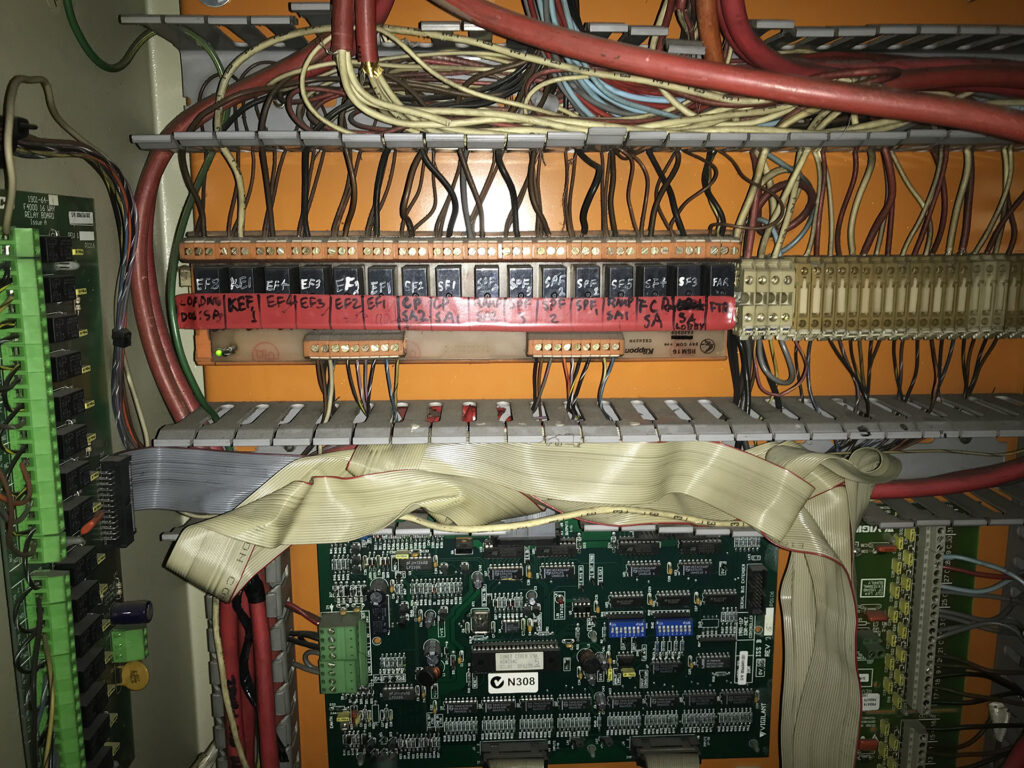
This is because obsolete systems can be complex, poorly documented, and difficult to troubleshoot. Hardware may no longer be manufactured, software platforms may not run on modern computers, and original installers may no longer support the system.
For many contractors, the easiest response is simply:
“The system is too old — it needs to be replaced.”
While a full replacement may sometimes be necessary, it is not always the most practical or cost-effective solution for building owners.
The Reality of Ageing BMS Systems
Many older systems can continue to operate reliably for years if they are properly maintained and carefully upgraded where required.
Often the real issues are caused by:
- Failing field devices such as sensors and actuators
- Electrical faults or wiring issues
- Obsolete controllers that can be selectively replaced
- Poor graphics or monitoring that hides faults
- Lack of proper trend logging and alarms
Without the right expertise, these problems can easily be mistaken for a complete system failure.
Why Field Controllers and Sensors Fail Over Time
Field controllers and sensors do not last forever. Like all electronic equipment, they gradually degrade with age and environmental stress.
At the core of every controller or sensor are semiconductors made from silicon, which contain millions of tiny electronic switches called transistors. These transistors are built using two types of semiconductor material known as N-type and P-type silicon. When combined together at a microscopic level, they form the digital logic that allows a controller to interpret signals, process data and control equipment.
Over many years of operation, several factors begin to affect these semiconductor components:
- Thermal cycling (heating and cooling)
- Electrical stress and voltage spikes
- Moisture and contamination
- Material fatigue inside the silicon structures
As the semiconductor devices age, the electrical characteristics of the transistors can slowly drift. This can lead to leakage currents and unstable switching thresholds within the microchips.
Digital systems operate by interpreting voltages as either a logic “0” or a logic “1.”
For example, a controller may interpret:
- Low voltage = logic 0
- Higher voltage = logic 1
When semiconductor components begin to deteriorate, the voltage thresholds can become less distinct. Leakage and drift may cause signals to sit in an undefined region between 0 and 1, making the controller misinterpret signals.
This is why ageing field equipment often begins to show symptoms such as:
- Intermittent faults
- Random resets or communication errors
- Illogical behaviour in control sequences
- Sensors reporting inconsistent values
These issues can be extremely difficult to diagnose because the equipment may work correctly most of the time, only failing intermittently as internal electronic conditions drift.
For this reason, many building automation systems that are 15–20 years old begin to show increasing reliability issues, even when the wiring and installation are still sound.
Replacing ageing controllers and sensors before complete failure helps maintain reliable operation of HVAC systems, energy monitoring, and critical building services.
A Different Approach
WR8TECH specialises in diagnosing and stabilising ageing and obsolete BMS systems.
Instead of immediately recommending full system replacement, we investigate the true condition of the system, including the electrical infrastructure, controllers, communications, and field devices.
Our combined expertise in BMS systems and electrical fault investigation allows us to identify the root cause of problems that are often hidden behind intermittent alarms or system instability.
This means building owners can often:
- Extend the life of their existing BMS
- Avoid unnecessary capital replacement costs
- Improve reliability of critical building services
- Plan upgrades in a staged and controlled manner
The Specialist Others Call
Many building systems reach a point where they are considered “too old” or “too difficult” to maintain.
This is where WR8TECH operates.
We specialise in legacy and obsolete BMS platforms, helping commercial landlords and property managers stabilise ageing systems, resolve complex faults, and plan practical modernisation strategies.
For many buildings across Sydney and Melbourne, this expertise has allowed systems to continue operating reliably long after other contractors recommended replacement.
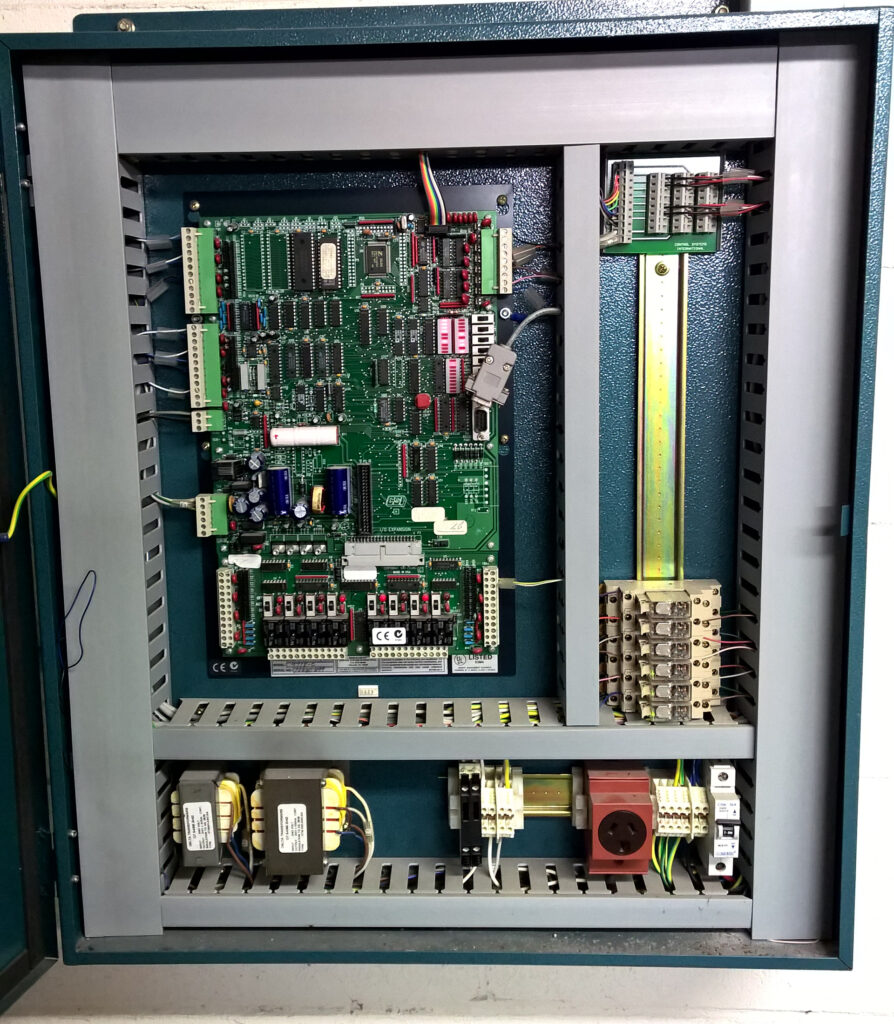
When a Specialist Level Sensor Would Not Operate
Here is one example of where WR8Tech was called in to assist a larger contractor when a specialist sensor could not be made operational. this system was not obsolete, but brand new
The site had a relatively complex pumping system incorporating a secondary expansion tank approximately four metres high. A glass level column beside the tank provided a visual indication of the water depth, but the existing BMS control logic required the tank level to be measured continuously and displayed as a percentage of its total capacity.
Conventional float switches were not suitable because they would only indicate predetermined high or low levels. The BMS needed an accurate, continuous measurement of the water depth at any given time.
An ifm LW2120 level transmitter was selected for the application. This type of specialist sensor uses technology also applied in demanding marine and industrial environments. As the instrument was brand new, the initial assumption was that the problem was more likely to involve its installation, wiring or configuration than a defective sensor.
Our first inspection identified a misunderstanding in the field wiring. We corrected the wiring and retested the 4–20 mA output signal, but the sensor still did not operate as required.
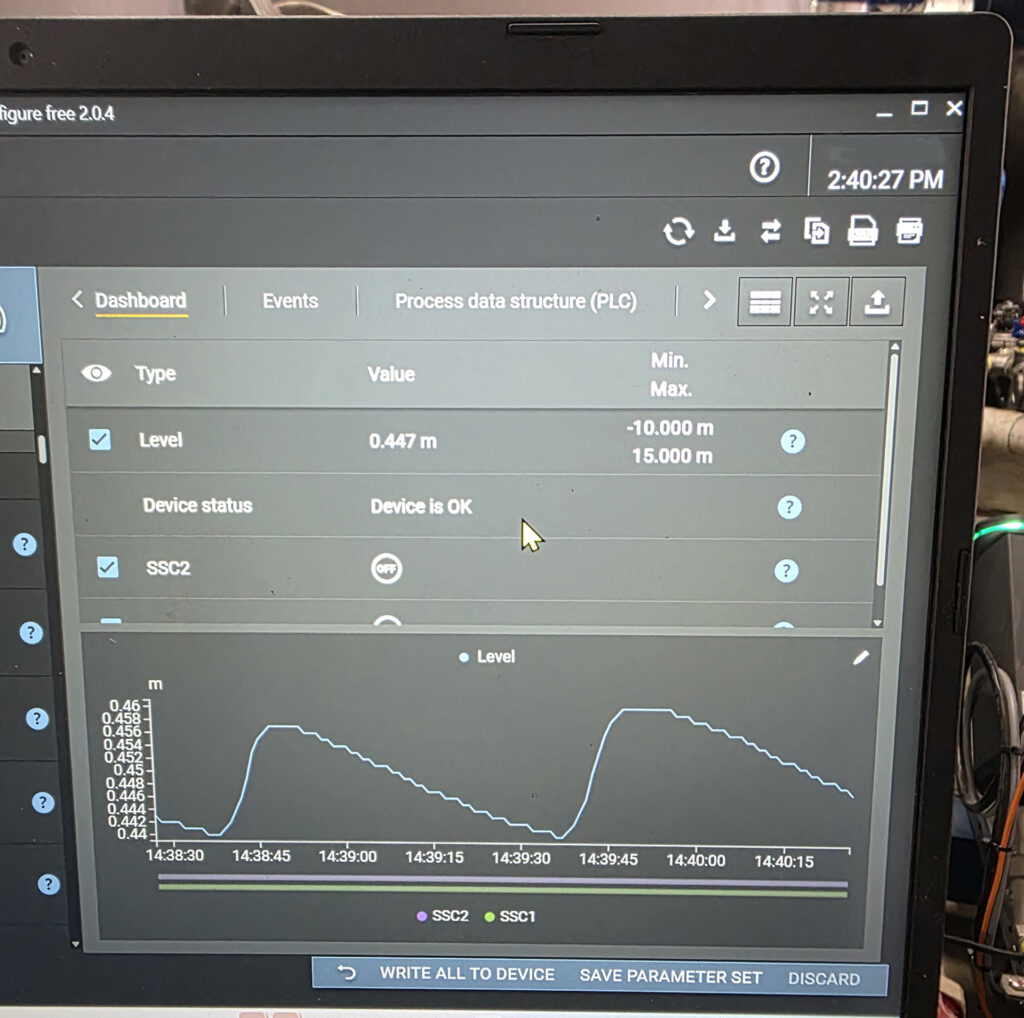
We investigated further, consulted the original equipment manufacturer and established that the transmitter needed to be configured specifically for this application. Using a laptop and the appropriate configuration software, we set up and commissioned the sensor correctly.
We then drained and refilled the tank while monitoring the level signal. The results were plotted live as a graph, allowing us to confirm that the transmitter was responding correctly throughout the tank’s operating range.
The final result was a stable, highly accurate continuous level signal that could be integrated into the existing BMS and displayed as a percentage of the tank capacity. It was an impressive sensor—but, like many specialist devices, correct wiring alone was not enough. Understanding its configuration, output signal and relationship with the older BMS was essential.
When a New pH Transmitter Would Not Operate
Another example involved a new pH transmitter that could not be made operational. Because the instrument was new, the problem was more likely to be associated with its installation or wiring than with the transmitter itself.
The device was a two-wire, loop-powered 4–20 mA transmitter. In this type of arrangement, the same two conductors supply power to the instrument and carry the measurement signal back to the control system.
We began by checking the field wiring and the connection to the control input. This investigation identified a polarity issue at the transmitter. After making a minor wiring correction, the transmitter powered up and operated correctly.
The repair itself was straightforward once the fault was identified. The more important part was understanding how a two-wire 4–20 mA current loop operates and methodically checking the complete circuit. Even a brand-new instrument will not work if its polarity or loop wiring is incorrect.
Dealing With an Obsolete or Unfamiliar BMS?
Before replacing the entire system, let WR8Tech investigate the problem. We troubleshoot older controls, specialist sensors and difficult integrations to identify what can be repaired, recommissioned or retained.
[…] Why Most BMS Contractors Avoid Obsolete Systems […]
[…] Why Most BMS Contractors Avoid Obsolete Systems […]